It’s Going To Be An Interesting Year

2016 is in full swing. The schools are back here, Nairobi traffic has returned to its normal snail pace and for those who got away, their holiday is a mere memory.

Our Christmas was a non-event, we just ended up at a restaurant. Pete’s been  helping a mate, which means he was away from 6.30am until 8pm EVERY DAY, with the car. It has meant very long and lonely days when there’s nowhere to go and no car to get there.

Me – my computer and I spent lots of hours together getting ready for the year. Exciting, not.

I know I shouldn’t be complaining because it’s the only time in the whole year that I’ve had down time. But down time by yourself and all of your friends are out of town can be downright boring.

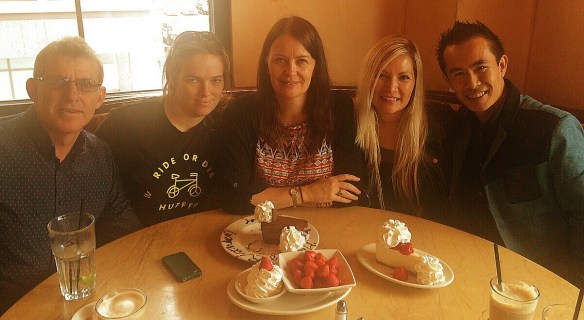
Now that Christmas and New Years is over I thought I would share on why this will be a very interesting year for us.

Our youngest daughter and her husband are expecting their first child (a girl) in March, however because she has gestational diabetes they may induce her early. I’ve been really honoured that she wants me in the delivery room with them. We’ve managed to scrap the funds together by selling off some old items and a friend gave us some money which meant I could get a ticket to New Zealand.

han

Liz has to return to Australia to keep getting her disability pension, but that’s not till the end of March. There’s no point in Pete staying behind by himself for months on end. We did that in 2014 for 7 weeks and it’s not much fun.

So we have a plan.

Pete will fly back with Liz and spend a week in Australia to meet up with some donors and help out an elderly couple of friends. If we can’t rent our apartment out we’ll put  our stuff in storage at our friends warehouse.

Because we’ll be gone until September.

What we’re going to do is take an absolute break in April. Usually when we go back we see our family for about one night. It’s shameful really but trying to catch up with everyone is near impossible.

For the next 8 weeks we will then be on the road speaking at schools, churches and Rotary Clubs. It’s also a great opportunity to meet with our personal supporters and try to raise more funds.

After NZ we pretty much do the same throughout Australia. At least New Zealand is small to get around, Australia takes a long time to get from A to B.

suitcase

I hope to be able to set up a charity in New Zealand and start a team there. We have lots of Kiwi connections and I believe we can really get something going well there.

We have a great team here in Nairobi. It’s all set up for them to take up the opportunity to show us what they’ve got.

I’m sure after 4 months on the road we’ll be glad to throw away the suitcases and head home to Kenya. I’m certainly not looking forward to our first winter in 4 years. But I am looking forward to raising funds for our projects.

Most of all I’m looking forward to seeing my daughter for the first time in 14 months and of course, cuddling our grand daughter.

I look forward to sharing our weekly updates with you. I hope if you are one of my readers that you’ll want to meet up with us while we’re in Australasia.

It will be weird though. When we went to the US last year everything was so foreign and I have a feeling that it will be the same when we head back home. So much has changed and so have we.

You can find our video announcement HERE


Coming Home

I once asked some friends who were returning to Australia after two years of volunteering in Tanzania “How long do you think it will take you to get used to being there?” Their answer was a couple of months.

After spending 6 weeks in the US, I can verify that answer. We were just getting used to the conveniences of life and how things worked in another world.

But now we’ve returned home.

Home is where the majority of my family is. Hannah is with her husband Luke in New Zealand, awaiting the birth of their first child next year. That leaves Pete, Liz and I.

home

We were all a bit anxious about returning because we knew what we were heading into. It will be home for a few more years. We were looking forward to a more familiar world and definitely not living out of a suitcase.

Home, a 4 letter word that means so much more than that.

Our first morning here was interesting. None of our showerheads were working, so I ended up having a bucket shower. One where you fill a bucket with boiled water and pretty much pour it over yourself a few times. I realized afterwards that I had forgotten to pull out the tap so water came out of the showerhead.

shower

We thought our internet had pretty good speed, until we went overseas. Now it feels painstakingly slow. It’s way better than dialup but also much slower than what we experienced in the US.

Coming home meant unpacking an entire houselot of furniture from a spare room. Because the floors had been sanded and repolished all of the cupboards were full of red dust. You could tell that the workers had thumbed through our clothes hanging up because their fingerprints were all over the place. We also discovered they had stolen our very good iron and used our TV stand as a ladder. We knew because there was paint all over it. To say we weren’t happy campers is an understatement. And this was just Monday.

Of course, you can’t live in their world any more without the internet, but guess what wasn’t working when we returned? This meant trips down to the mall to visit our friendly staff at Zuku who worked it all out for us.

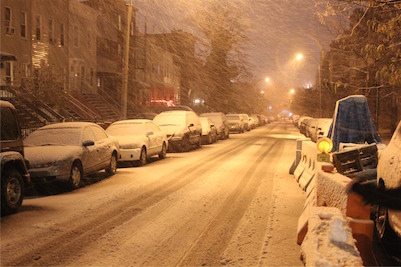
Jetlag, unpacking, buying food, meetings on day 3, all were a bit much. Before Liz headed off to volunteer at her preschool I insisted that she put up the Christmas tree to keep her busy. Liz had absolutely no worries about jetlag. She slept like a baby, while Pete and I got about 2 hours sleep and stayed awake the remainder of the night. We’ve never had such jetlag in our entire lives, and we’ve done a lot of travelling. It took an entire week to get back to normal.

Coming home also meant that we were broke.

We stayed two weeks too long on our trip. While we had a couple of schools in that time, it really put the financial pressure on us. We didn’t realize how expensive the US was going to be for public transport and food. We stretched ourselves way further than ever before. We don’t have a credit card to fall back on, no savings that we could dig into. What we had is what we had and with the fall in the Aussie dollar there wasn’t much bang for your buck.

dollar

Coming home meant coming back to very little freedom. This has been my biggest challenge to date. No more walking around at night. Always having our bags and cars checked at church and shopping malls. Having to take off my jewellery before walking out in public. Locking the metal gate and door every time you step out, even to get rid of the garbage.

The loss of freedom is something I haven’t got used to. A friend who lives here but is in New Zealand over the Christmas break, couldn’t help but send me a post of Facebook post to say she had just walked home at 10pm at night. I miss freedom.

But – this is home.


mass


Why we chose to move to Africa

I’ve heard some real doozies about why people think we moved to Kenya, here are some samples:

  • To be a missionary
  • To go and drill wells
  • To live somewhere hot
  • You like Africa more than Australia
  • To get away from issues
  • To prove something
  • To go on a working holiday


These are just some of the weird things people have said to our faces.

globe

We stated from the start that we felt we had skills that could help people help themselves. We also could keep a closer eye on our projects as all the people we had dealt with in the past we had known, but herein it was new territory. Everyone we had contact with was told why we were moving but I guess some people just don’t get it. And to be honest,

Pete has a long history in the building/farming/construction/business area. If you need something practical done, Pete’s the man to get onto it. He has valuable practical knowledge that most people don’t. He’s able to take a problem and work it through to make sure it works.

Originally he volunteered with an organization that works with streetboys. After a few years though he couldn’t see himself as more than a fixer-upper. In his words, he might as well move back to Australia and make some money and at least have job satisfaction. So, he moved on.

kili 9

I was unsure where I would fit volunteering so joined the same organization as Pete. I ended up working in an office. I was looking forward to being part of a team. While it was good for a while I was trying to split myself between them and BeyondWater, which we had started in Australia.

So while we came here for one thing, we’ve ended up doing something quite different. Now, both Pete and I are developing a team here in Kenya. We’re on the ground living life as Kenyans do, learning every day about how we can be more effective and building networks.

DSCF1362

So here’s my short answers to people’s perceptions:

To be a missionary – every person of faith is a missionary (one who is sent out) to make a difference wherever they are. Our intention here is not to ‘convert’ people but to befriend them.

To go and drill wells – I have not, nor probably never will drill a well. That’s why we employ people to do it.

To live somewhere hot – think about that one. It’s much hotter in Australia, here in Nairobi our temperature goes from around 13 and sometimes hits 30. That’s not hot.

You like Africa more than Australia – not sure why people think like this. I don’t love a country, I love my family and we could probably live anywhere. We happen to be in Kenya for a purpose.

To get away from issues – everybody has issues and they follow you wherever you go.

To prove something – people with ego’s don’t last long here. The romantic notion of living in a developing country wears off pretty fast – and we’re not young so there’s not a lot to prove.

To go on a working holiday – Pete’s dad always asks how our holiday is going. I don’t know many people who go on a holiday for 3+ years. This definition would mean you work for a few months then go on holiday. We work and are able to stay because we have friends and family who give us money each month. Our visa allows us to volunteer only – as in you work but don’t get paid.

So now you know. Why did you move to where you are living?

truck up hill

What I’ve learned about the US

We’ve spent 5 weeks in different parts of the US and a few more days in Canada. The main reason for coming was to get into the heads of people to see what they knew about Africa, water projects and how they felt about giving to projects there.

flag

What we learnt is that the majority of people know very little and only 40% of people there hold a passport. When we watched the news it was all slanted so that everything revolved around America. For example, when a hotel in Western Africa was attacked by terrorists, it was stated that it was an American hotel. It was a hotel owned by an American, that doesn’t make it American. Everything on TV is about the US.

I understand that it’s a huge country but when we were talking with students they know zero about the wider world. At one university a student mentioned that her father was Kenyan, she had been there twice – and that Kenya was an island. Hmm….

liz n tower

We’ve also learned that most of the people we talked abhorred Muslims. I’m sure this is fed by the biased media but we got the feeling that people fear in a huge way every Muslim. People were so shocked that we have many Muslim neighbours and are happy to live amongst them.

Before we went to the US, we ourselves were slightly biased against Americans. Many of the ones we’ve met in East Africa are loud, bossy and act as if they own the world. They drive around with the flashiest cars, have a lavish lifestyle and never get their hands dirty.

Now we’ve been here for a while, we’ve seen another side. People are more than happy to go out of their way to point you in the right direction. They are very hospitable and are even interested in finding out about Africa. Maybe because we were visitors we were treated extra nicely but we’ve been around long enough to know when someone is sucking up to you. Today we met a lady from Nigeria who was putting her story out there real thickly as soon as she knew we were from East Africa. Within the first minute she wanted to become Facebook buddies and then proceeded to tell us that she was missionary and a whole story to go with that.

Howard 6

The US is quite an expensive place to travel in. Well, when you’re on a super strict budget anyway. It probably cost us $100 a day to be here, and that’s on top of accommodation. It cost as much to eat out as Kenya, taxis are way more expensive but clothing is a much better price. Tipping is a total rip off. In Kenya we only tip if we get good service and maybe one or two dollars. Here it’s between ten and twenty percent. When you see a price for something, it doesn’t include tax, which is very easy to forget about. As much as possible we’ve tried to catch trains and buses, but it still adds up. To get to our friends house tonight cost us $10 one way. That’s pretty good but when you’ll be doing that trip twice a day for a week, you can see why we’ll be eating rice and beans when we return home.

We kept reminding ourselves that this is an investigative trip and not a holiday. Sure, we’ve fitted in a few fun things but this was all about the future for our organization, BeyondWater and trying to break into the US as a new market. Our next step is to build a team of interested people, then form a legal charity and return in a couple of years. One obvious thing is to build a US website, with American spelling and everything linking BeyondWater to have a US identity.

ive a dream

This trip has given us a small insight into what life is like here, some of the challenges and ways of life here. We hope we from this that we have a broader mindset of the American culture and will continue to build our friendships there.

To all of our old friends who we’ve reconnected with, it’s been a blast. For all of our new friends, what a pleasure it’s been to get to know you. Let’s do it all over again in a couple of years.

with trung and gloria

Travelling on a Shoestring

We love to travel, any where, any time. When we made the decision to move to Kenya I felt I had to kill the travel bug. You can’t volunteer somewhere, relying on donors to put food on the table, and be jet setting around the globe. It just isn’t right.

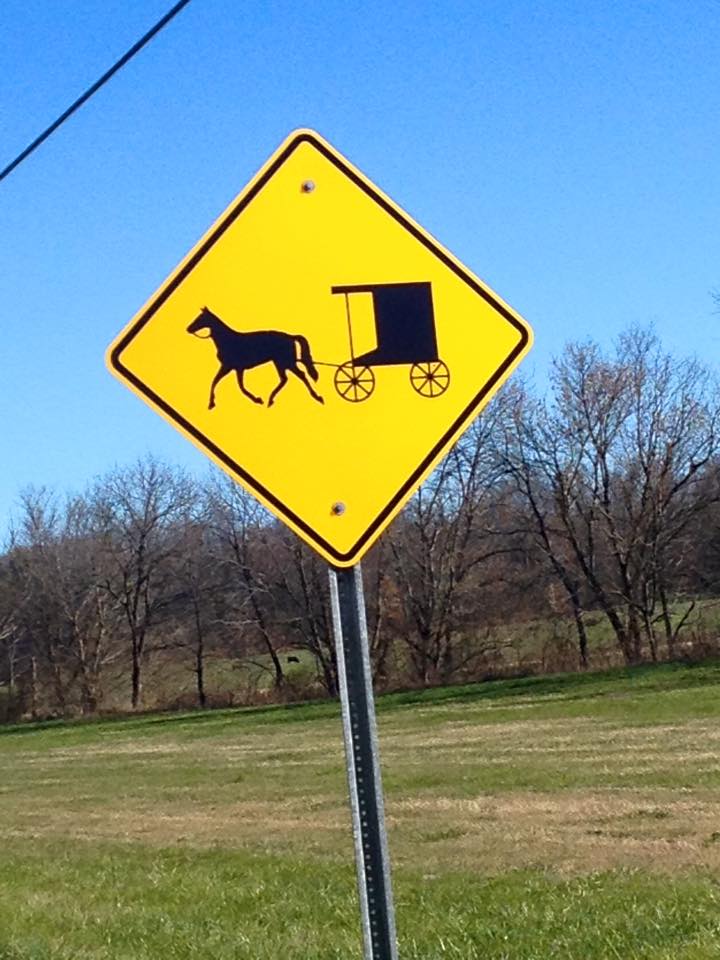
I wanted to see the Niagara Falls, the pyramids of Egypt and even visit an Amish farm.

whole falls

We’ve just completed 3 years in Kenya and about to start another 3 year stint. However, since we’ve moved there we’ve travelled more than ever before. So I thought I’d put together some tips for travelling on a super tight budget.

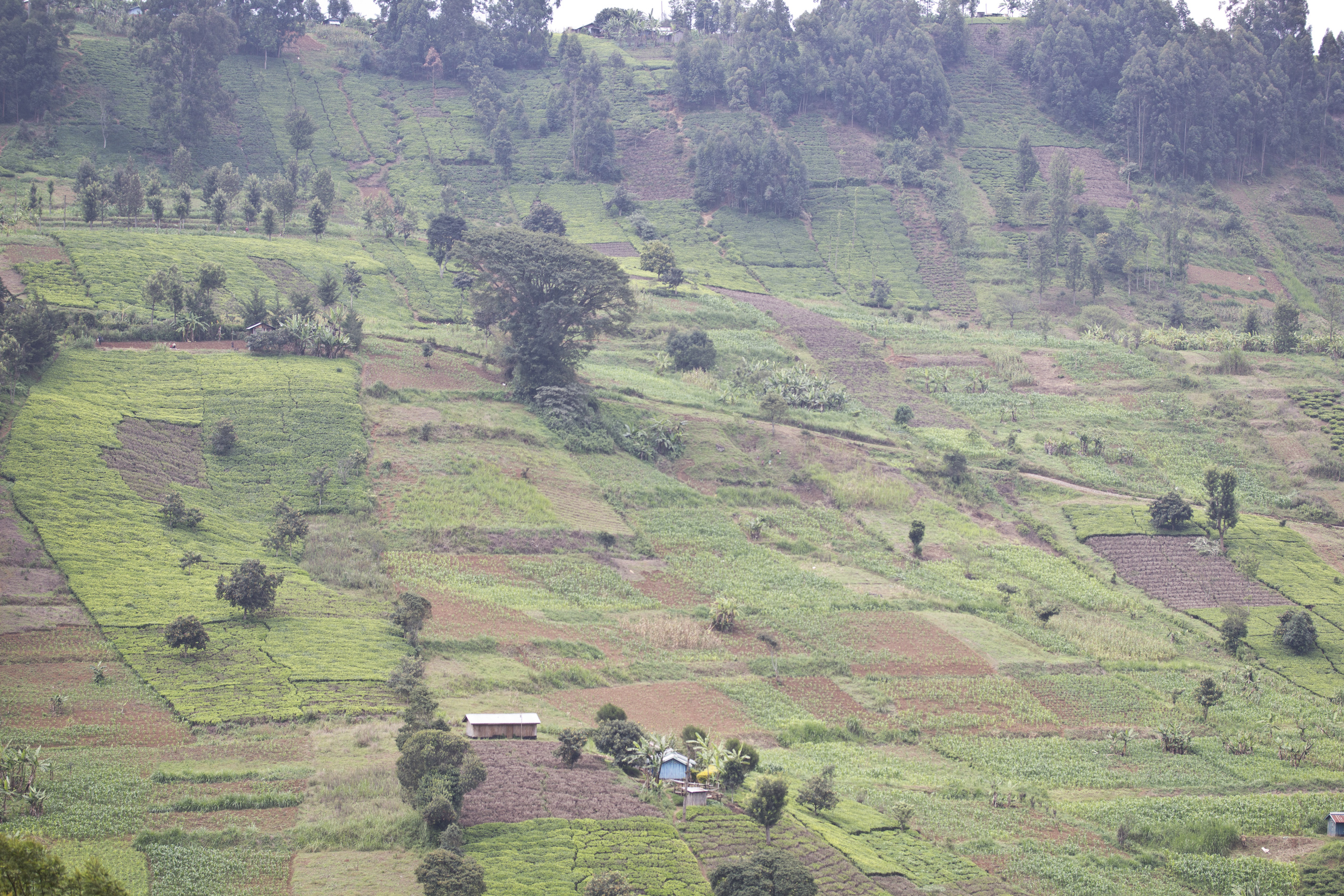
tea fieldsPlan well Ahead

You’re not going to get what you want if you leave it till the last minute. I often book a flight 6 months out and then work the itinerary within that time frame. It doesn’t always pan out, but it does give me time to research on what’s available. Only you can weigh on whether it’s better for your schedule if you can catch a bus or fly. On this trip we caught 6 flights, 7 bus trips and plenty of local trains. We could’ve cut down on the flights but riding a bus for 24 hours is pushing the limit for me.

IMG_1900Do your Homework

There is plenty of information on the internet. Use interest groups on Facebook to ask questions. For this latest trip we got told lots of incorrect information (the bus doesn’t stop, this is the best place to see something etc).

sign

I was so brain dead after travelling 30 hours from Kenya to the US that I got the wrong package for our phone (we only get a local SIM card for one phone). For another $15 I could’ve got a data package instead of just a text and talk package. It meant we had to rely on free wifi to access the internet, which isn’t always when you need it.

Cut down on your Costs

Some of your biggest costs on the ground will be accommodation and food. Why on earth would you spend lots of money on a hotel you are hardly in? I always try and get a place that has free wifi and breakfast provided. Even if there are 3 of us, we always share a room. Preferably we stay close to a train line.

If you can, bunk down at someone’s house. We always bring a small gift from Kenya for those who host us and it goes a long way to be appreciated.

If you’re in a place for a few days, check out whether it’s cheaper to get a weekly transport pass or just daily. A few weeks ago we stayed at someones place but found out it was $15 each way on the train, per person!

Food can be a big investment when travelling. Try to find a side walk diner rather than a restaurant. Shout yourself once a week to a good, solid meal. Buy fruit and bottles of water at the supermarket.

IMG_2653

Travel Lightly

Sometimes airlines charge for domestic flight baggage. We came to the US with 3 bags for a 6 week trip. We managed to store one at a friends house and just repacked everything. After a month, we returned to their house to pick up the other bag. Airlines were charging $25 per checked in bag, so it was better to pay for 2 rather than 3. How many trips have you taken and worn hardly anything you packed? Organise your smaller items like toiletries into zip lock bags in case they spill.

IMG_0147

Ask for Help

People are usually pretty good in helping out if you get lost or don’t know something. While it’s convenient to catch a cab, a train or bus can save you lots of dollars. We were in Buffalo, New York for a few hours and because we went to the info desk at the bus station, it saved us $60 not hiring a car, instead catching a $2 bus to Niagara Falls. Locals have the best information, just ask them.

IMG_0086

Use a Conversion App

Sometimes it gets confusing with trying to convert prices. Use a simple app like Xe to help you when it all gets too much. Some countries like the US don’t include taxes for many items to buy and it differs from state to state. Think about tipping charges as well. Find apps that help you before you go. Understand the difference in exchange rates and what your bank charges for withdrawals at ATM machines. Most banks have a relationship with a certain one in a foreign country which reduces your fees.

all the girls

Travel Maps

To a local, it’s very easy to get around. Not so much if you’re a tourist. Before you leave home, download maps, metro timetables and apps for Uber and Yelp. It will save you both time and money.

IMG_8751

Q&A With The Creans

This week I’ve produced five 2 minute videos answering some questions about life in Africa.

1. Does everyone live in mud huts?

2. Isn’t it always hot there?

3. Everything is cheap there isn’t it?

4. Isn’t it dangerous being there?

5. Are there beggars everywhere?

Hopefully you feel better informed and see that Kenya is just like your place – just a bit different!

boy praying

If I Only Knew

We are fast approaching our second anniversary of serving in Kenya so I thought I’d write down a list of things I wish I’d known before we came. Of course, hindsight is an awesome thing, but if you ever consider moving this way for a short or long period of time, it might be good to know.

 1. Africa Is Not Cheap To Live In

It’s a myth that’s for sure. We did our budget in 2011 but by the time we got here in 2012 prices had skyrocketed. Most things have stabilised in price since the VAT (tax) of 16% was added. Locals have really struggled since then. We spent a lot of 2013 buying furniture for our place as money came in, with most things bought second hand or built at a roadside carpenters.

Of course, income determines if something is expensive or not. Our budget is short by $1,000 a month, which is a lot when you aren’t allowed to earn money within the country. Our rent is half of what we paid in Sydney for something more than twice the size. We wanted a place where we could have people come and stay, relax and then go on their journey. We’ve had people from NZ, Australia, Germany, Switzerland, Canada, Ethiopia, USA and Norway stay with us. We love it and are grateful for the apartment we have to be able to do it. But our landlord put up the rent by $100 per month after being here for a year, so we’re looking at alternatives for next year.

 

Equivalent to $9,700AUD for a 2001 car

Equivalent to $9,700AUD for a 2001 car

 2. White = Rich

If you’re not Kenyan, you’re white, even if you’re not white. That means you must have money to burn. If you go to the markets on the side of the road, you will spend more time bargaining than what you want. This is why people go to the more expensive supermarkets because they just get tired of being hassled all the time. A friend of ours got his suit for his wedding made for $50. If Pete went, it would be 3 times more the price.

If we want furniture made at the roadside market we send a Kenyan there first for a price so we know what we should be paying. No matter how much you tell your colleagues that you don’t have much money, it doesn’t matter, because you will always have more than them. What people don’t see is the amount of money spent on the work you do – petrol, car costs, school equipment, feeding people or running programs.

I need to get me one of these!

I need to get me one of these!

3. You’ll Want To Go Home, Often

Sometimes you wonder if the obstacles are worth it, wasn’t it much less complicated back home? Well, yes it was. Kenya is not impossible to live in it’s just very complicated. As a friend said to us in our early days “Living in Africa will show you what capacity you have on the inside” and I happen to think he’s very right.

It was much easier living in Australia. If we wanted to earn more money, we’d go paint a house. We understood the language. You could walk the streets at night and no problem. There were parks to play in that were free. If you wanted to go to church you had a Saturday night, Sunday morning and a Sunday night to choose from. The ocean was a 4 minute walk from our place.

There’s probably twice in the last couple of years when I’ve thought “Stick this, I don’t need this hassle, I’m heading home”, but for Pete it’s been quite often. He asked me the other day why we were here again. My simple answer is that God knew we were big enough to handle it.


 4. Set Work Boundaries

We’ve got plenty of friends who work in the same area as us, but with different organisations. All of us have the same problem – we struggle with work boundaries. I’ve a friend who gets paid for 2 days a week but often works for 5 ‘because they’re in need’. Our phones will often go off at 10pm. We’ve had one weekend off in the last 2 months. I’ve calculated we’ve had 5 days of actual holidays in the last 2 years. When we’ve travelled out of town or overseas, it’s all to do with work. That is really dumb.

This year I decided to work at the office until 1pm, have lunch and then do the rest of my work from home. In essence I can work anywhere in the world but feel obliged to turn up to prove I’m actually working. Between now and when we fly out to Australia in November I’m even taking an hour out in the middle of the day to get some exercise and sunshine.

Next year I’m even thinking of rehashing my working conditions by spending less time in the office and more in the field with people.

Learn to turn it off

Learn to turn it off

 5. Sign A Contract

Too many people come with good intentions which get squished out and changed to be not what they came for. I’ve friends in another country who came to work with orphaned children then after 8 months were dumped because the organisation didn’t want to make necessary changes for improvement. Another family came to build a school but wasn’t allowed any input into the long term planning of it. Others were having to give a certain percentage of their support money for the ‘privilege of volunteering’. Make sure the requirements are written down and everyone understands the small print, who pays what and what is expected. For some reason we do this in the business world, but not in development work. Go figure?


6. Do Your Homework Before Coming

We had been to Kenya 3 times before moving here. Most times we came for 2 months and travelled to neighbouring countries as well. However, there is a BIG difference between visiting and living somewhere. How basic everyday things are run is a huge task to learn. It took us 6 weeks to even begin to figure out directions and where things were. Unfortunately, people who have lived somewhere for a long time take everything they’ve learnt for granted. I remember getting pulled across the coals because we didn’t visit a person in hospital enough. Apparently here you drop everything and race off to visit someone, you also take fruit or juice. No one told us about that, and we didn’t even know how to get to the hospital.

An important thing to look into is getting a visa, owning land and traffic laws. Everything here takes a l-o-n-g time and it’s never straight forward. Join expat blogs before you come so you get an idea of how things work. Get Swahili apps on your phone. Use Google maps to see how far things are in distance. Learn some history of the place.


 7. Clothes Are Expensive Here

Of course, if you want to, you can buy cheap clothes at the local market. The one closest to us to called the Toi Market. There you can buy second hand clothes, sometimes new ones, which come from overseas. Pete gets a pair of new jeans for $10, guys are lucky, they know their sizes and can get it off the rack. Ladies, not so much.

The clothes at the mall are way overpriced. These are either imported (and thus have large tax) or top of the line. I envy Kenyans, they don’t have to worry about skin tones, they’ve all just got brown skin. They can wear really bright clothes and look awesome!

When we return to Australia we’re buying up big time, especially in the sock and undies department. I think we might even go with empty suitcases.

toi  8. People Won’t Listen To You

The number of people who won’t listen to you if frustrating to the max. I mean, what do we know, we actually live here and know how the system works. Visitors have wasted so much money because they JUST WON’T LISTEN. One friend was told by his travel agent that he would have to pay $50 more for an English speaking taxi driver. What a load of rubbish, English is one of the national languages here. Of course, he decided to ignore all of our advice and ended up paying thousands of dollars more than he needed to. We’ve had others who didn’t want our help (thank you very much), decided to do things their way and paid way too much for a vehicle hire and didn’t get to see the areas they really needed to.

And that’s just the visitors.

When you’re trying to bring in different ways of doing things, people will predominantly resort back to their ways. The proof of the success of your teaching is if they put it into practise when you’re not around. If 50% of it is done, that is pretty impressive. We’ll be gone for 8 weeks and it will be interesting to see what the state of things will be on our return.


 9. You’ll Spend A Lot More Time On A Computer Than You Ever Thought

There were 2 things I didn’t want to do when we came to Kenya – fundraising and sit in front of a computer a lot. Guess what, I’ve ended up doing both. It’s a necessary evil. Today someone said to me that they haven’t seen a newsletter for a while (it’s been a month). Flip my lid, I’m on Facebook every day, Twitter, Instagram, YouTube and weekly blogs but it still doesn’t cover everyone. There’s marketing material to be designed, videos to create (and they take ages), grants to write and complicated emails to answer. It’s not unusual for me to be on a computer 8 – 12 hours a day.

man 10. It Just Might Be One Of The Best Moves You’ve Ever Made

When Africa gets under your skin, there’s nothing you can do about it. Sure, not everyone should be here long term, in fact, most shouldn’t. Whether you come for a short or long time, all that matters is that you’re doing what you should be doing. If you come with a flexible attitude, don’t always compare it to your home country and be in an attitude of learning, then you should be fine. I called the first year ‘Going back to school’. Every day and even parts of a day were a lesson.

What you will be surprised at is the number of things happening across the country and especially in Nairobi. There’s music festivals, fun runs, street performers, fashion shows, expos, conferences and more. You will meet some amazing people, fruit abounds year round and you’ll never get bored. You’ll notice there are lots and lots of nationalities, wildlife you’ll only read of in books and have experiences your friends will envy.

Africa, Kenya are places that will change you for the better. You’ll get a bigger world view. You’ll miss it when you leave.

sunIf you plan on coming for at least 2 years can I highly suggest that you don’t do anything for at least a month or two. Get to know the place, the people, directions and get your home set up. We get so passionate about helping people, we can hinder things by rushing in too fast. When we got here some of our team members were leaving and we were expected to take up the slack. I’ve heard of it happening lots in many projects and the newbies either sink or swim. Most of the time we didn’t have a clue that was going on and I remember every few days we were saying to each other “I don’t have a clue what I’m doing, I hope we’re doing okay”.
About Money Matters

In light of what has occurred in the last few hours I thought I’d write my thoughts on giving online. If there is anything that will pull a person or organisation down is how they handle their finances.

I am sure all of us have received via email or social media a request for money for some need, or we have received a million dollars from some unknown relative. This week I’ve had someone offer our organisation $7,000 if we give $4,000 of it to another African organisation they have nominated. Also, an overzealous family member Facebooked a lot of our friends asking them to give money to help get Pete home to see his dad before he dies, and put the money in their own personal bank account.

So here goes:

1. Always Check the Spelling

It is more than obvious if the spelling, the grammar or their English is incorrect that you should just hit the delete button. If someone is asking for money they should at least have the decency to spell the words right.


2. Emotional Blackmail

I hate it when people post up photos from famine areas, use emotion to twist you into giving or give the ‘this is the last ditch effort’ type of ploy. If people feel to give, then let them do it.


3. Give Intelligently

Ask yourself ‘Can I afford to do this right this very second or will next week be better when I can give more?’ Find out more about the situation. Make sure your money gets to where it is meant to go and not in someone’s personal pocket (we call it lunch money here). Think about the way you can give that has the most impact.


4. Ask Questions

When will this money be spent, by whom, will I see the results, why do they need it right there and then? It’s okay to ask questions and if more people did they would be giving to areas that really bring about change.


5. Bank Accounts

Red flags go off if people ask me to give to their personal bank accounts. Where is the accountability and how will I be receipted? For us, we have a personal bank account in New Zealand that friends and family put money into to help keep us in Africa. That’s only because we haven’t set up a Trust there (yet). However, if it’s a business we have a partner trust people can give into and get a tax deductible receipt. In Australia, the US and the UK we have partner organisations who collect donations on our behalf and issue receipts.

Ensure everything is kept above board.


6. Ask the Person Involved Themselves

We’ve had some people who out of the kindness of their hearts asked for money on our behalf for personal costs. We became aware of it because a cousin sent me a message on Facebook telling us about it and did we know them. Hence, 3 hours later I am still cleaning up the fallout of that. Thankfully my cousin did that otherwise we would’ve been oblivious to it all and it really could’ve done some damage to our credibility. If you get a request from someone you think you know give them a call and ask them did they send it out or what is the best way they can help.

We want people to keep giving, no question about that one. However, we also don’t want to bring into disrepute the good work that volunteers around the world are doing. We have many friends who work with babies, children, the elderly and the special needs in countries some haven’t even heard of. Let’s keep supporting them because they really do need it. The vision is always bigger than the resources and while money doesn’t bring happiness it does help bring positive change to millions of people on our earth.

Daughter of a Missionary

To be honest, when mum asked me to write this blog post it was just after I had a huge blowout at her about how much I dislike (to say the least) the fact that they live on the other side of the world and had given up their lives to help those in need. People often look at missionaries and volunteer workers and say how wonderful it is that they have given up their lives to help those in need and that it’s such a heroic act. It seems that people don’t often think of the practical things like the sacrifice the rest of their family makes for this to happen. When mum and dad told me that they had decided to move to Kenya I thought that it was a “nice idea” for them to do something different. I had lived overseas before and knew that I would survive without them. But not long after they left for Kenya I felt like my right arm was chopped off. I think this was because I knew they weren’t coming back easily. After a few months of them being over in Kenya I was struggling a lot and decided to move back to New Zealand where all my extended family are.

all of us

Here are 5 things I have learned over the past year and a half:

  1. You’re allowed to miss them

I miss the daddy daughter coffee dates, the ability to live at home (DON’T UNDERESTIMATE THE AWESOMENESS OF BEING ABLE TO LIVE AT HOME! Seriously though, I miss it quite a lot and wish I hadn’t taken it for granted), the painful but great back and neck massages mum gives, the long walks on the beach talking about life with my parents, family outings, special moments with my sister (which were few and far between since we were always arguing), and the list goes on. At first I felt guilty that I missed them because they were doing “such an amazing thing” but then came to realise that it’s my right as their daughter to say I miss them.

  1. Most people don’t understand

No one tells you how empty life can be without family. No one tells you how hard it is to organise skype dates between different time zones. No one tells you how scary it is when you hear of bombings and disasters that are just around the corner from where you know your parents are. The matter of the fact is no one tells you because no one really knows until you’re in the same situation. I don’t actually know anyone else who is a missionary’s kid.

Dad's 3 girls. Not sure how he puts up with us!

  1. Your parents are irreplaceable

The other week I was thinking about the future. What is going to happen when I get married one day? Is my dad going to be able to afford to come to my wedding and walk me down the isle? (He has no option; he’s going to be there whether he likes it or not thank you very much!) When I have my first child is my mum going to be able to be there to hold my hand through the ordeal? How often will they be able to see their grandkids? I don’t want my kids to miss out on having their crazy Crean grandparents around. There is no one who can ever replace my parents in those moments.

  1. Make “other family”

Throughout my life when travelling I have learnt to make other people my “other family” when mine aren’t around. Since living in New Zealand I have somehow managed to find Luke, my prince charming. (Awww!) His family, the Rutlands, have become my family, not because its kind of what happens when you get in a relationship, but because I chose for them to be. His dad, Andrew, takes me for driving lessons, makes me laugh, and gives me great advice. His mum, Sharon, (it’s a weird coincidence that our mums have the same name…) takes me for coffee, gives me hugs and talks with me about life. His sisters, Amy and Hannah, (another weird name coincidence which gets very, VERY confusing) have become my other sisters whom I can laugh with, argue with and cause mischief with. And his gran is one of the coolest gran’s around! I couldn’t do life here without them. I can’t say thank you enough to them for being so supportive and loving me like their own.

Mum and I Skype each week and we message each other all the time.

  1. Accept the fact that there is no such thing as normal anymore

As a missionaries kid you have to learn to modify your thinking of the basic things. What do you do at Christmas time, Fathers Day, Mothers Day, your birthday? Who do you spend those days with? Everyone else has his or her families.

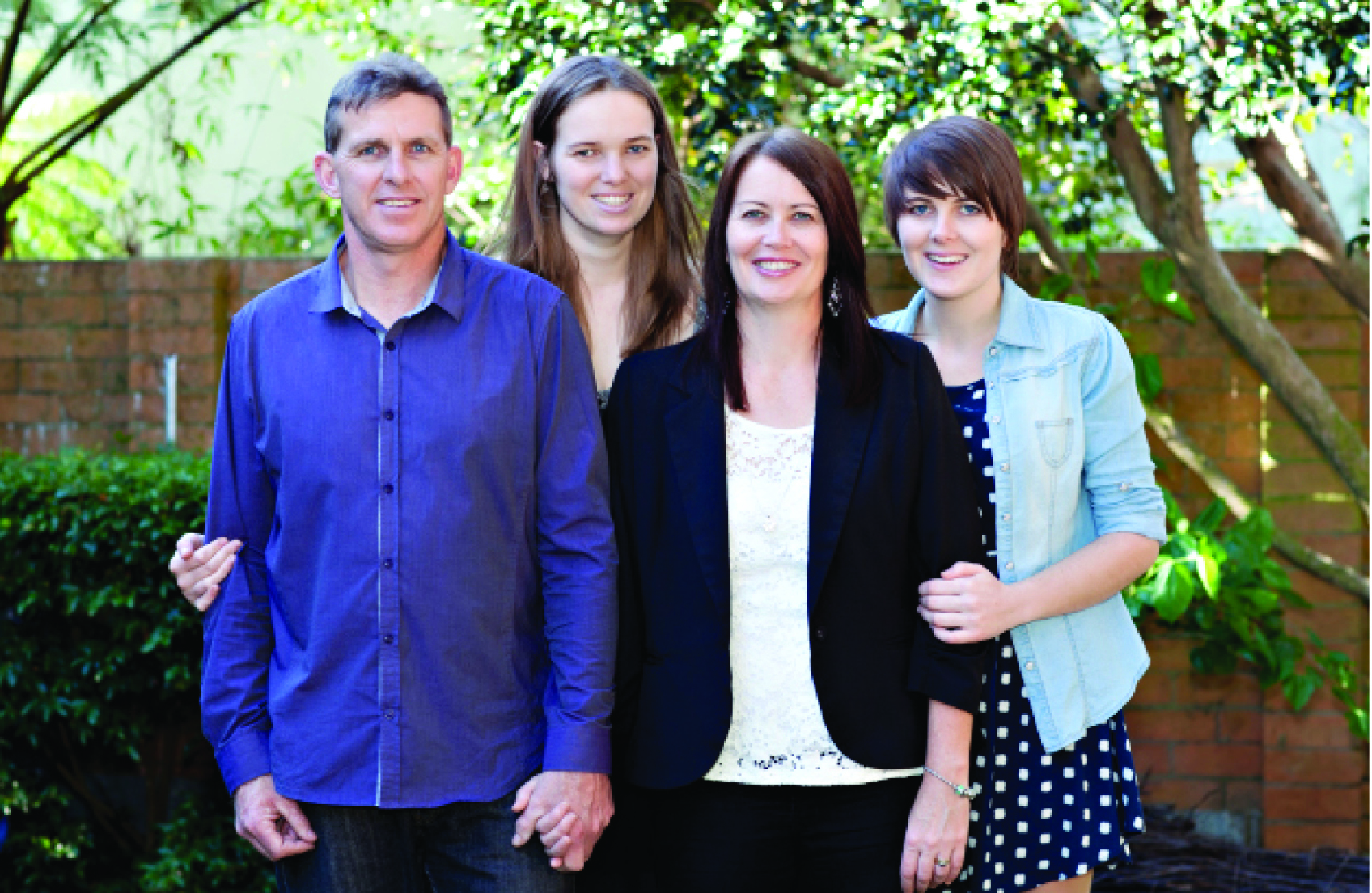
The 4 of us in the US. I left them to come back to Aussie. They went to Kenya.

I’ll tell you a secret: every other day I feel like calling my parents and telling them that I hate the fact that they chose to live in Kenya and that they should come back and live close to me. But I know deep down that this is what my parents are called to do. I know they wouldn’t be happy just living a “normal” life in Australia or New Zealand. And even though most of the time it sucks not having a normal family, I am really proud and glad that they are doing what they love.

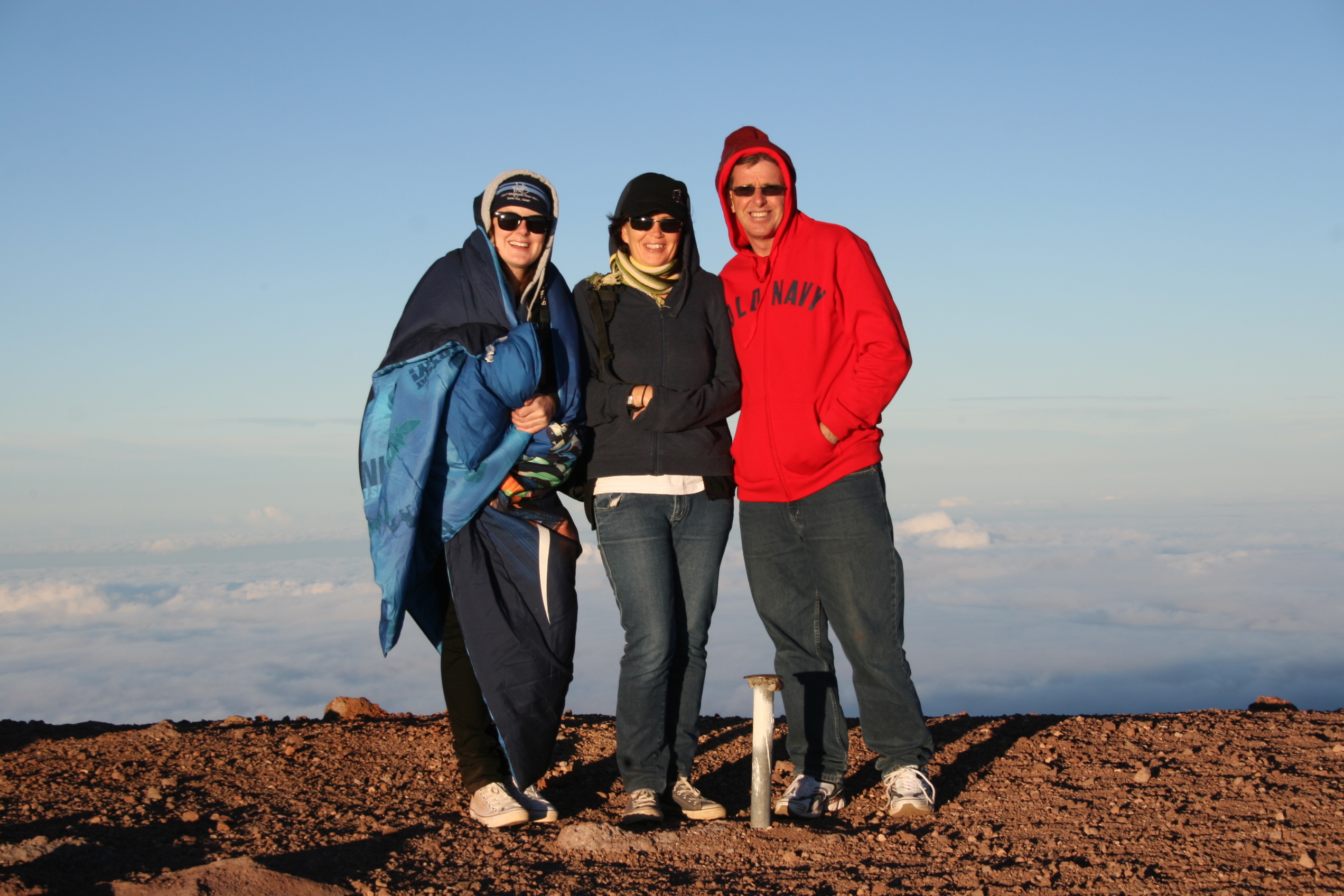
This is us on top of Mauna Kea in Hawaii before I went to school there.


Daughter of a Missionary

To be honest, when mum asked me to write this blog post it was just after I had a huge blowout at her about how much I dislike (to say the least) the fact that they live on the other side of the world and had given up their lives to help those in need. People often look at missionaries and volunteer workers and say how wonderful it is that they have given up their lives to help those in need and that it’s such a heroic act. It seems that people don’t often think of the practical things like the sacrifice the rest of their family makes for this to happen. When mum and dad told me that they had decided to move to Kenya I thought that it was a “nice idea” for them to do something different. I had lived overseas before and knew that I would survive without them. But not long after they left for Kenya I felt like my right arm was chopped off. I think this was because I knew they weren’t coming back easily. After a few months of them being over in Kenya I was struggling a lot and decided to move back to New Zealand where all my extended family are.

all of us

This was taken one week before my parents and sister left for Africa in 2012.

Here are 5 things I have learned over the past year and a half:

  1. You’re allowed to miss them

I miss the daddy daughter coffee dates, the ability to live at home (DON’T UNDERESTIMATE THE AWESOMENESS OF BEING ABLE TO LIVE AT HOME! Seriously though, I miss it quite a lot and wish I hadn’t taken it for granted), the painful but great back and neck massages mum gives, the long walks on the beach talking about life with my parents, family outings, special moments with my sister (which were few and far between since we were always arguing), and the list goes on. At first I felt guilty that I missed them because they were doing “such an amazing thing” but then came to realise that it’s my right as their daughter to say I miss them.

  1. Most people don’t understand

No one tells you how empty life can be without family. No one tells you how hard it is to organise skype dates between different time zones. No one tells you how scary it is when you hear of bombings and disasters that are just around the corner from where you know your parents are. The matter of the fact is no one tells you because no one really knows until you’re in the same situation. I don’t actually know anyone else who is a missionary’s kid.

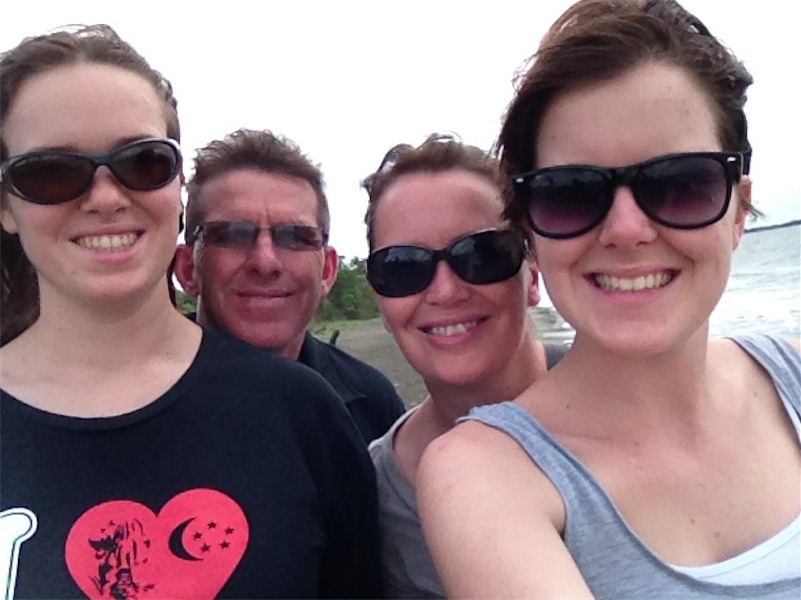
Dad's 3 girls. Not sure how he puts up with us!

Dad’s 3 girls. Not sure how he puts up with us!

  1. Your parents are irreplaceable

The other week I was thinking about the future. What is going to happen when I get married one day? Is my dad going to be able to afford to come to my wedding and walk me down the isle? (He has no option; he’s going to be there whether he likes it or not thank you very much!) When I have my first child is my mum going to be able to be there to hold my hand through the ordeal? How often will they be able to see their grandkids? I don’t want my kids to miss out on having their crazy Crean grandparents around. There is no one who can ever replace my parents in those moments.

  1. Make “other family”

Throughout my life when travelling I have learnt to make other people my “other family” when mine aren’t around. Since living in New Zealand I have somehow managed to find Luke, my prince charming. (Awww!) His family, the Rutlands, have become my family, not because its kind of what happens when you get in a relationship, but because I chose for them to be. His dad, Andrew, takes me for driving lessons, makes me laugh, and gives me great advice. His mum, Sharon, (it’s a weird coincidence that our mums have the same name…) takes me for coffee, gives me hugs and talks with me about life. His sisters, Amy and Hannah, (another weird name coincidence which gets very, VERY confusing) have become my other sisters whom I can laugh with, argue with and cause mischief with. And his gran is one of the coolest gran’s around! I couldn’t do life here without them. I can’t say thank you enough to them for being so supportive and loving me like their own.

Mum and I Skype each week and we message each other all the time.

Mum and I Skype each week and we message each other all the time.

  1. Accept the fact that there is no such thing as normal anymore

As a missionaries kid you have to learn to modify your thinking of the basic things. What do you do at Christmas time, Fathers Day, Mothers Day, your birthday? Who do you spend those days with? Everyone else has his or her families.

The 4 of us in the US. I left them to come back to Aussie. They went to Kenya.

The 4 of us in the US. I left them to come back to Aussie. They went to Kenya.

I’ll tell you a secret: every other day I feel like calling my parents and telling them that I hate the fact that they chose to live in Kenya and that they should come back and live close to me. But I know deep down that this is what my parents are called to do. I know they wouldn’t be happy just living a “normal” life in Australia or New Zealand. And even though most of the time it sucks not having a normal family, I am really proud and glad that they are doing what they love.

This is us on top of Mauna Kea in Hawaii before I went to school there.

This is us on top of Mauna Kea in Hawaii before I went to school there.