Finally Taking A Break

This week we just passed our second year of completion in Kenya. It was a big goal for us and we’re preparing for even bigger and more impacting work in the next few years. We’ve got our visas until August next year but intend to stay as long as our visas get renewed. We’re on a humanitarian visa which is good because it’s much cheaper than a business one. The downside is that we can’t earn the much needed dollars to continue our work here.

Most people go ‘home’, that would be their other ‘home’ every few years. We’ve decided that this routine is not enough and you need to be continually raising the profile of your work and the money to go along with it.

The last time we were all together was 2012.

The last time we were all together was 2012.

Currently we are $1,000 short in our personal budget every month. That’s not including ministry costs. To give you an idea of rising costs, our electricity bill was 3,500 shillings when we arrived, it’s now up to 12,000. That’s the type of rising costs we see all the time in developing countries.

We’ve had an interesting two years. It certainly hasn’t been dull and boring that’s for sure! You’re always learning something new and have to continually grow bigger in your capacity to handle the challenges that come along. You make mistakes, you advance in what you’re doing, you make lots of friends and are constantly building the vision.

Now it’s time to take a break and recharge our batteries.

Looking forward to being in our old stomping grounds.

Looking forward to being in our old stomping grounds.

At the beginning of this year, if you asked me whether we would return to our home countries twice in 2014, I would’ve said no way. Earlier, Liz and I went back on a 7 week speaking tour. It meant at least 3 meetings a day, early mornings, late nights. It was great, but it was work. In those 7 weeks we had 3 days off.

Now, we’re returning to Australia for 2 days, New Zealand for a month and then back to Aussie for 9 days. The main reason is that our youngest daughter Hannah is getting married, so that’s a pretty good reason to go! This visit will be at a slower pace, catching up with our sponsors and just a couple of public speaking appointments. We even get two days at the beach at our friends holiday home.

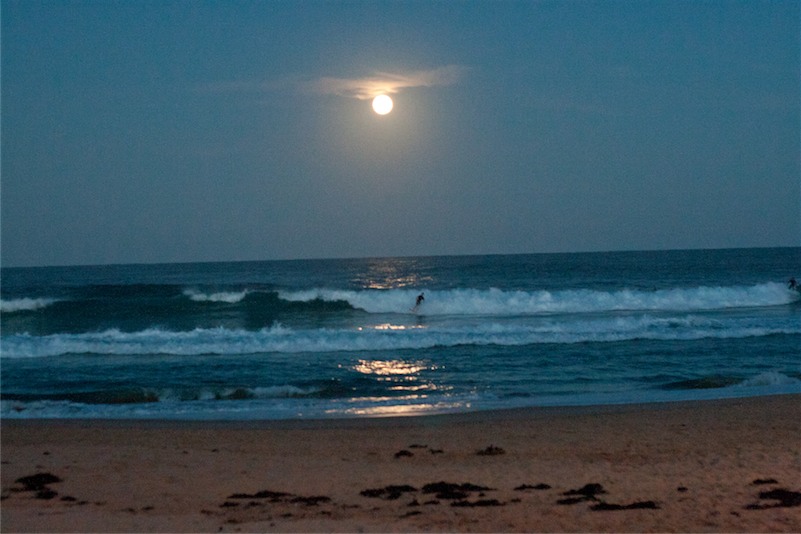
We look forward to the beach and being able to walk around at night.

We look forward to the beach and being able to walk around at night.


But our main focus will be our daughter. It has been quite hard on her organising a wedding pretty much by herself. As her mother, it has been challenging not to be there for her. It will be the same when they start having babies in a couple of years. We won’t be there to share the experience with them, except via Skype. Hannah has already told me that I WILL be there for the birth of her children. I told her I can do any year except 2018, when we are driving around the whole of Africa (so plan it right you guys).

We're going to be in Sydney for NYE which is also Lizzies 25th birthday.

We’re going to be in Sydney for NYE which is also Lizzies 25th birthday.


While we would love to catch up with everyone, it is physically impossible. Normally we wouldn’t come back at this time of year because people are in holiday mode and are making the most of their Christmas vacation, which is totally understandable.


I will try and blog as much as possible when we’re away but from past experiences, I can tell you that accessing the internet in those countries isn’t as easy or cheap as here. What three of us spend in 3 months on phones in Kenya, will be the same as what one of us will spend in 1 month in NZ.

We intend to enjoy the beach and Summer weather as much as possible – our beach is 9 hours away! We also have a shopping list of things we just can’t get here, simple things like iron on patches. Most of all, we’re looking forward to sharing the stories about the wonderful young people we work with here.

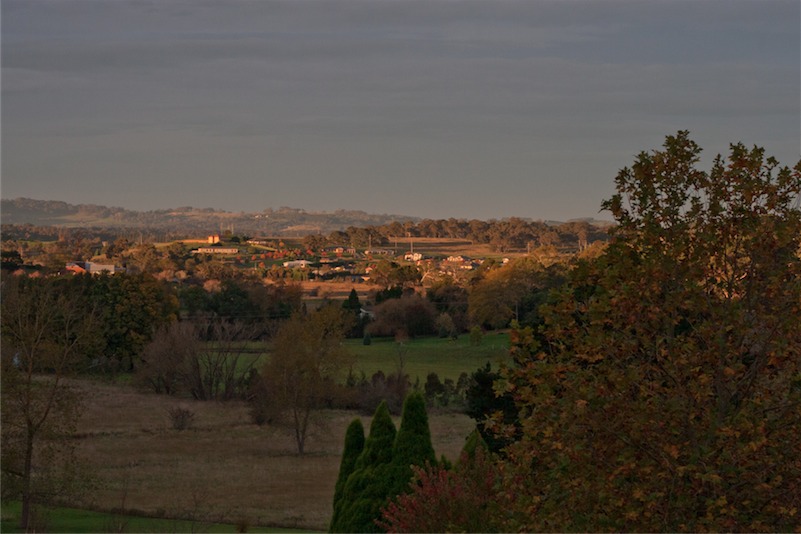
We will be catching up with our Aussie grandparents in the country.

We will be catching up with our Aussie grandparents in the country.


Meanwhile, here’s our itinerary to date. If you’re in that city and we haven’t managed to contact you for a meetup, get a hold of me via Facebook, it’s the easiest way.

Nov 19 – 21 Sydney
Nov 21 – 23 Auckland
Nov 24 – 28 Tauranga
Nov 29 – 30 Auckland
Dec 1 – 3 Hamilton
Dec 4 – 5 Tokoroa
Dec 6 – 7 Auckland
Dec 8 – 9 Tauranga
Dec 10 – 11 Tokoroa
Dec 12 – 19 Auckland
Dec 20 – 21 Whangamata
Dec 22 – 23 Rotorua
Dec 24 – 28 Sydney
Dec 29 – 30 Moss Vale
Dec 31 – Jan 3 Sydney
Jan 4 – 6 Central Coast
Jan 7 – 9 Sydney


Dispelling the Myths

There are lots of things that people ‘know’ about Africa but it’s actually what think they know. Stuff we’ve read online or more likely, what we’ve heard from others, their opinions or third hand knowledge.

Today I’m going to tell it like it really is so you can see a different side to what life here. Just remember, Africa has 54 countries, that’s a quarter of the number of countries in the entire world. Here’s 6 myths people hold about Africa.

Africa is huge.

Africa is huge.

 1. Mud Huts

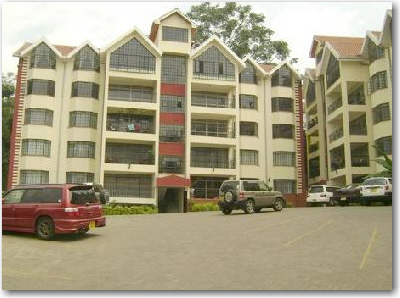
Not everyone lives in a mud hut. In Kenya, 32% of people live in cities, Uganda 15%, Algeria 72%. Most of those people live in apartment blocks. In Nairobi where we live there are guards and sometimes guard dogs at the gated entrance of the property. While there are some houses, these tend to be in certain suburbs. Many homes tend to have house help. On the day we moved into our apartment, the caretaker offered his daughter as our househelp, all for $120 per month. We said no thanks.

hut  apartment

 2. Security

We have people staying in our home all of the time. They might be students coming to do research for their studies or perhaps taking a break from working in remote places around Africa. I love having people over. If I had a bigger house I would probably have a whole bunch of teenagers living with us who really need a place they can call ‘home’.

The number one question I get asked is ‘Is it safe there?’ Safety is all-relative. It’s not safe for me as a white person to walk around the streets at night, but it is during the day. We work with young people who live in the Kibera Slum. They are amazing and give me hope for our country. However, I am unwise to walk through Kibera by myself. Therefore, I go with people who live there.

Unfortunately, you can never take security for granted. We live in a relatively safe area but I still lock the car doors when I get in. We are always aware of things like our bags, phones and wallets. When we go to a slum, I take off my jewellery and leave anything I value, at home. If you wear it, you have to be prepared to lose it.

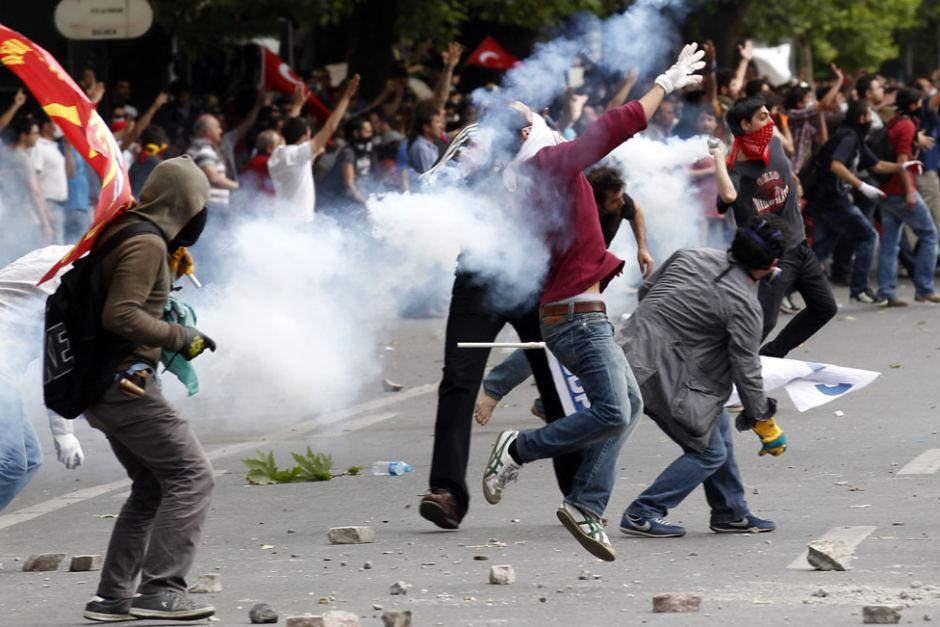
Kenya has been rocked by a number of security issues. In the last two years we’ve been involved in a rock throwing/riot situation while working, bus blow-ups (we don’t catch them if at all possible), attacks at the Coast and of course, the Westgate attack a year ago. It sounds bad but it doesn’t affect you too much unless you are involved. Even when we were running the kids program and we all had to huddle inside because the hall was being pelted with rocks, we didn’t feel afraid. We were just concerned how the little kids were going to get home safely.

The thing about acts of terrorism though is that you don’t know when and where it’s going to happen. You have to be alert and use the brain you’ve been given.

We are thankful that over the past two years we haven’t been carjacked or anything on our persons stolen. We’ve heard of it happening to lots of others but not us. May it so continue.

riot3. Money

There is money to be made in Africa. Get it out of your mind that the streets are lined with people begging with a bowl saying ‘please sir can I have some more’. Yes, there are beggars and homeless people (just like the rest of the world) and yes, a lot of people live in poverty. But – there are also people with money.

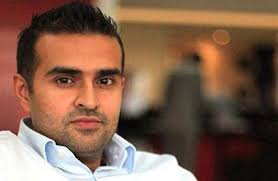
The top African countries with millionaires include South Africa, Egypt, Nigeria, Kenya, Angola, Tanzania and even Algeria. Throughout the continent there are more than 130,100 millionaires. There are 27 billionaires.

I’ve been travelling to East Africa for 7 years. In that time there’s been an obvious sign that there is a developing bigger middle class – the number of locals at the coffee shop at the shopping mall and those shopping there. There’s also been a huge increase of cars on the roads. I am forever seeing Mercedes on the road!

Ashish Thakkar - Africa's youngest billionaire

Ashish Thakkar – Africa’s youngest billionaire

4. Modern Facilities

There is a huge difference between life in the city and that in the village. We have running water, electricity (most of the time), more footpaths and lots of shopping malls. In the village there might be one small shop to buy something from or, you jump on a bus to go to the nearest town. It’s basically opposite to a city. You have to buy water in a jerry can, you probably don’t have electricity.

In Nairobi, we have a number of slums that don’t have running water or sanitation facilities. We also have a large portion of locals who have never even stepped into a slum. On the other end of the spectrum, you have young people from well off families that don’t even speak Swahili (official language) because they go to private international schools.

We are quite spoilt in Nairobi, we can pretty much buy any food that we want. It’s not always available but when it is, it’s great. There are lots and lots of places to eat out and plenty to do. Nairobi is not a place you can get bored in. We’ve friends in Uganda, Tanzania and Ethiopia who, when they visit are ecstatic at what food and items we regularly buy. My husband Pete went to Ethiopia last week and half of his bag was full of sugar, meat and chocolate for an associate, because they couldn’t even get things like sausages.

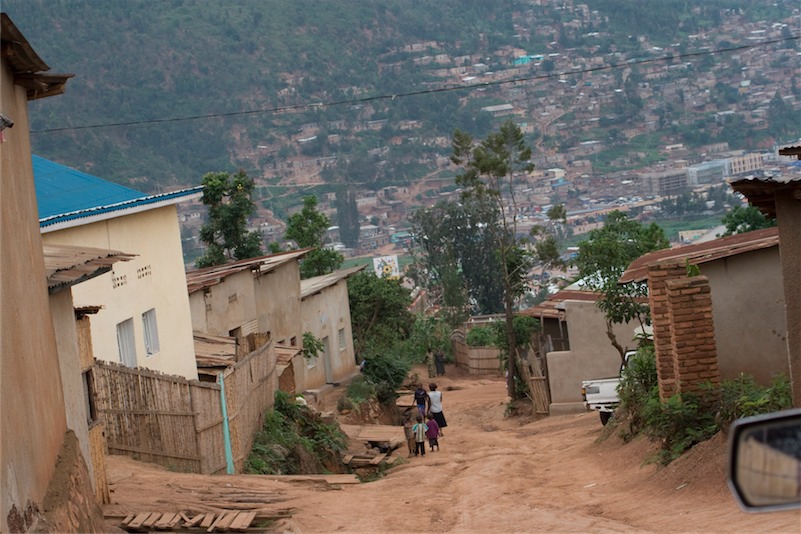
On the outskirts of Kigali, Rwanda

On the outskirts of Kigali, Rwanda

5. Technology

East Africa has ridiculously cheap Internet. In Australia I was spending $100 just on my phone plan and then about that much more on a telephone/TV/internet package. $45 gives us unlimited wireless internet, TV package and a landline phone (which we never use). I use $5 for phone/SMS and another $5 for internet on my phone. And that’s on a busy month.

What I really like is that you can buy a scratchie card and put credit on your phone for as little as 50 cents. MPesa is a very cool monetary system established by Safaricom. Let’s say I need $5, anyone can send me that through the phone and I get it in an instant. I can then go and withdraw it or use it to buy goods or pay a bill. I often send Pete airtime on his phone via mine. I remember when Pete broke his leg when we were in Tanzania, on Mt Kilimanjaro and I called back to our friends in Nairobi to tell them and also, could they send me some credit on my phone – and they did. Got to love this system.

mpesa

In 9 days we fly out to Australia and New Zealand for our daughters’ wedding and we all know that we will have a heart attack on how expensive our phones will cost us. One phone package in New Zealand will cost me 4 months of what we would spend here.

6. It’s Hot

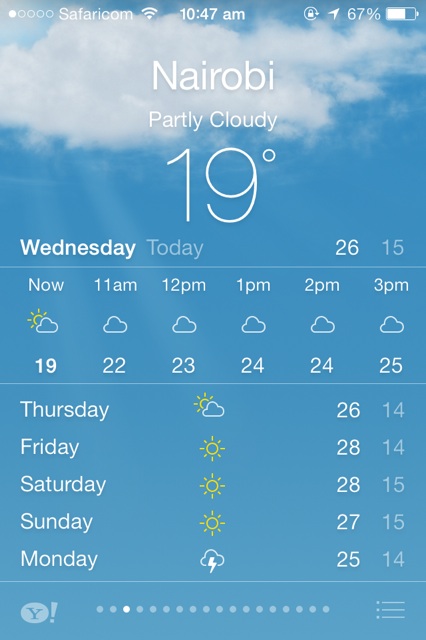
As I write this blog I’m sitting in jeans, wearing a jumper and have my ugg boots on. Okay, it’s not that cold but wearing uggies is comfortable around the house. Google tells me it’s 19 degrees and will hit 24 later. Very rarely does Nairobi get to 30 degrees.

Sahara Desert

Sahara Desert

You don’t have to travel far and there’s a huge temperature difference. In Garissa (4 hours away) it’s often 35 degrees. The Lake Turkana area often gets to 50 degrees. So yes, it does get hot here but not like what people think. During the middle of the year the temperature drops to around 13 in the morning, rainy seasons are in June/July and November/December. Things have been much drier this year and the rains in June just didn’t come. I’m seeing signs of the coming rains so it actually makes me happy. Outside of the city it’s dry and brown, here’s hoping it greens up fast.

tempDon’t believe everything you hear on the news about Africa. It’s a place of adventure, challenges and amazing people. You should come on over!

boy

A Day With Gary

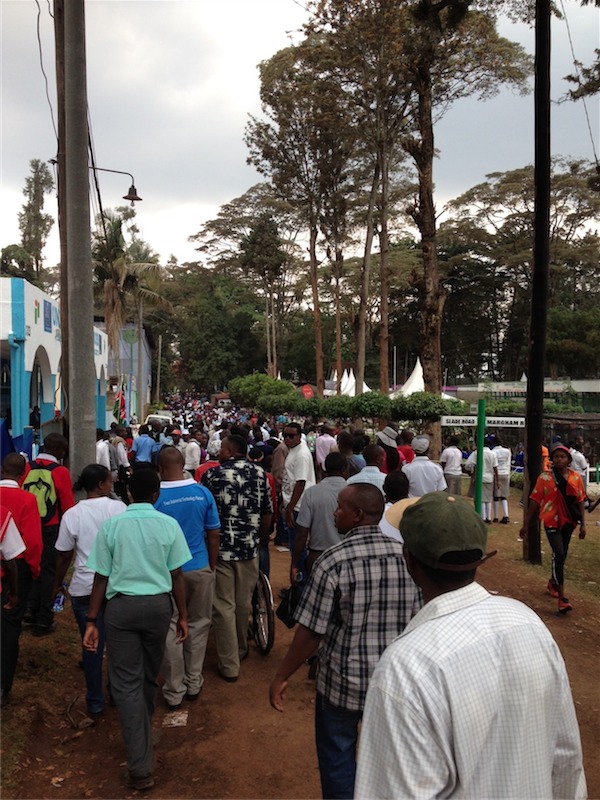
Every September in Nairobi the International Trade Fair (otherwise known as ‘the show’) is held at the showgrounds. During the rest of the year it looks like an abandoned village but for one week, the place comes alive.

Some of the crowd

Some of the crowd

Nothing spoils you more than living in Australia and going to the East Show, it is fantastic and nothing compares with it. But in reality, the Trade Fair is quite amazing for Kenya standards.

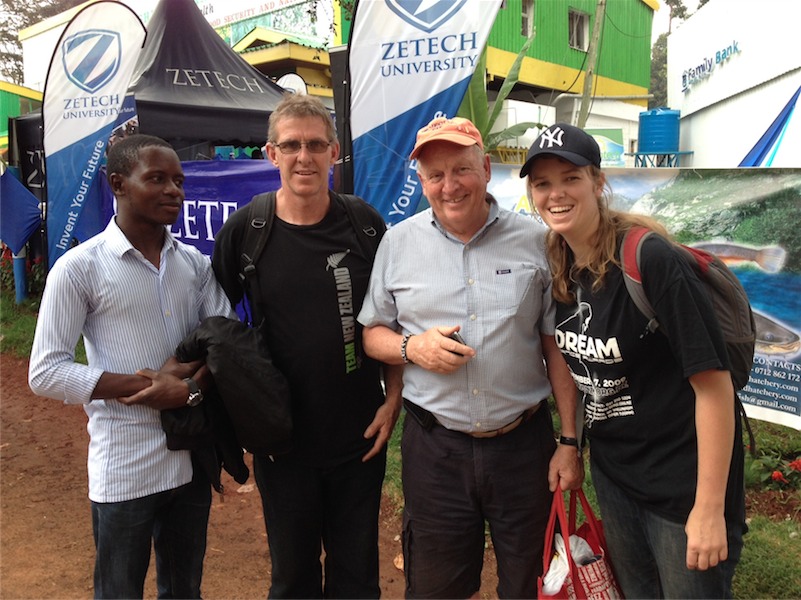
Olwen, Pete, me and Gary

Olwen, Pete, me and Gary

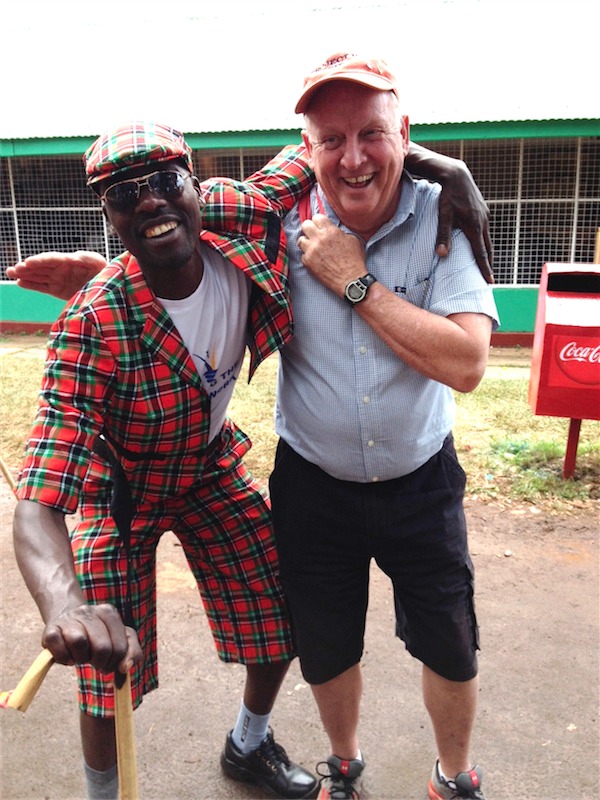
Our routine for the past two times we’ve gone, is to meet up with our Canadian friend Gary. Gary is awesomely funny. He and his beautiful wife Cynthia moved here for a couple of years. She works for IBM, Gary plays golf (and other fun retiree stuff). Cynthia is a wonderful breath of fresh air, hanging around with her revitalises you.

Gary and his new friend

Gary and his new friend

They have a car and driver as part of their package to be here so we’ve got the show down to a good habit. We drive to the local mall and leave our car there. Gary picks us up and his driver takes us to the showground then drops us back off afterwards. Next year we’ll have to park at the show as they would’ve returned to Canada.

This year was different in that we went on a Friday. Wednesdays are out because the President of Kenya comes and you can’t get around the place.

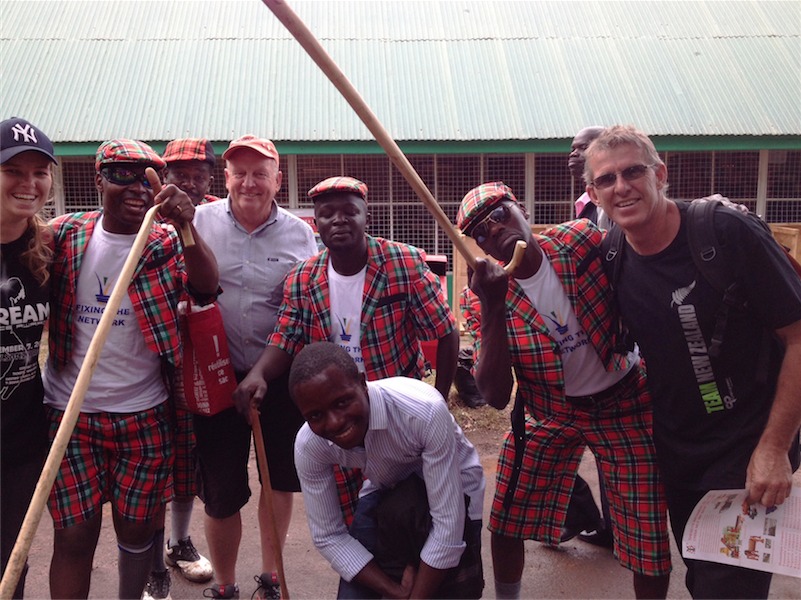
Most of the team

Most of the team

We haven’t had very much rain this year, but it decided to bucket down during the night. Hence, we bought an umbrella, which was used for all of 30 seconds before it dried up in the morning.

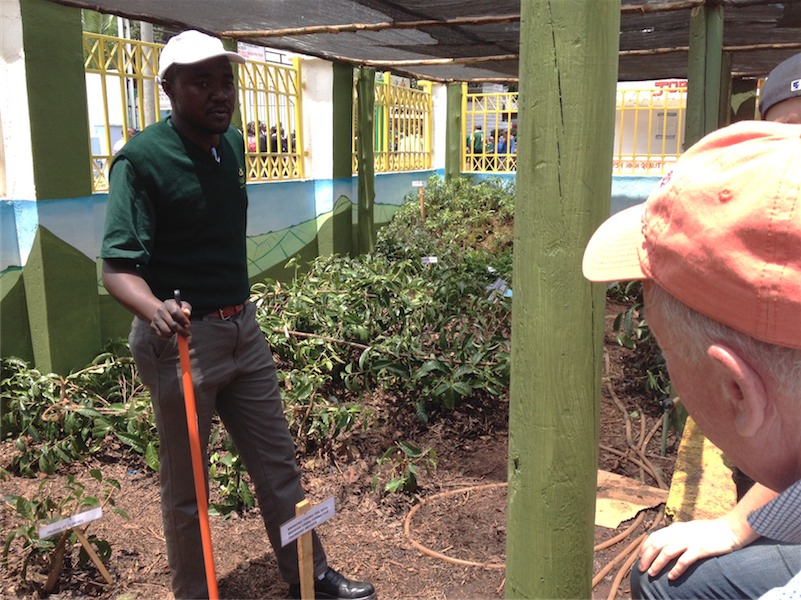
Looking at one of the vege patches

Looking at one of the vege patches

The show is always jam packed with school kids, farmers, hoards of animals on display, horse jumping, expo sites and eateries. There’s judging of the best animals and businesses spruiking their wares. It’s never a dull moment and if you want somewhere quiet, you won’t find it here.

It’s quite good value, only $3 to get in and if you really want to splurge, around 20 cents for a ride. Last year we found this food hall where you can get ¼ chicken, chips and a coke for $4.

Pete especially likes the show because he gets to see everything he needs for farming in one place. Nairobi is tricky to get around because of the congested traffic so if you get two things done in one day, you’re winning.

All year Gary has been onto Liz about going on a camel ride. She had psyched herself up for it and she was glad it had been raining because who wants to ride on a wet camel?

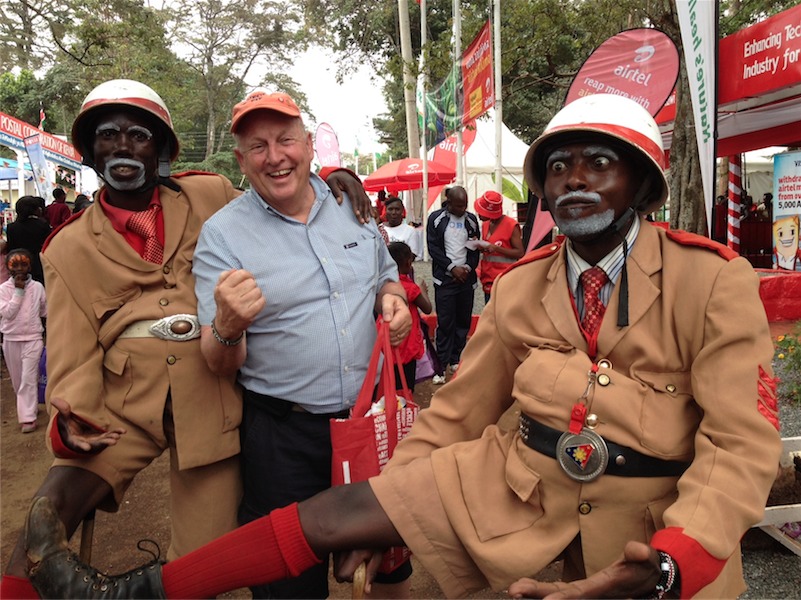
What we saw a lot of this year were people dressed up in crazy character outfits. Gary was in his element.

Gary makes friends everywhere he goes

Gary makes friends everywhere he goes

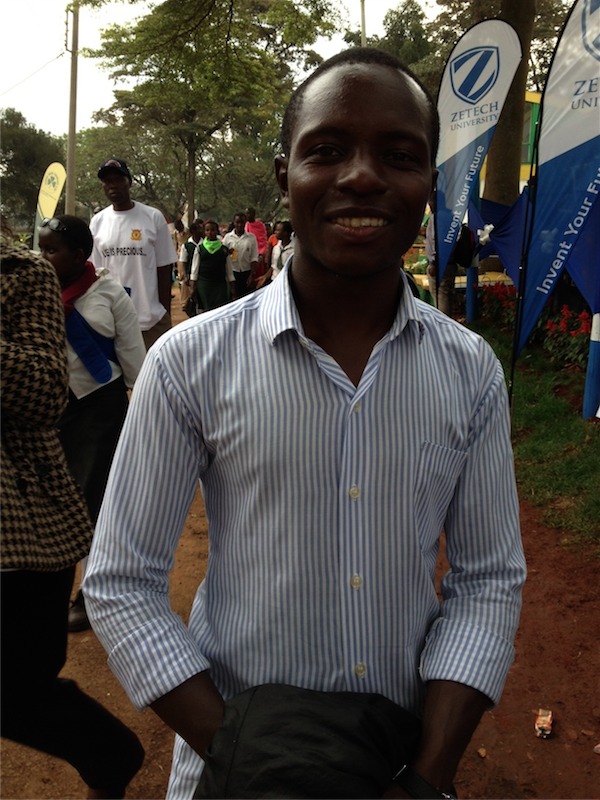
We also had Olwen, one of Pete’s work colleagues join us for a few hours. He’s a great young man who is working his first agricultural job since graduating from uni. There was no way on God’s green earth he was getting onto a camel and was also glad it had been raining.

Olwen

Olwen

One of the weirdest things I saw on our way out was a Witness Protection Agency tent. Not your average expo site and I didn’t go in because I thought they couldn’t say much to protect whoever was in hiding. Hopefully we’ll never need their services!

Witness protection at your service

Witness protection at your service

Overall it was a great day and although we won’t get to do it with Gary again, it has built some memorable moments.

Yep, it was a long day!

Yep, it was a long day!

We Made A Mistake (a few of them actually)

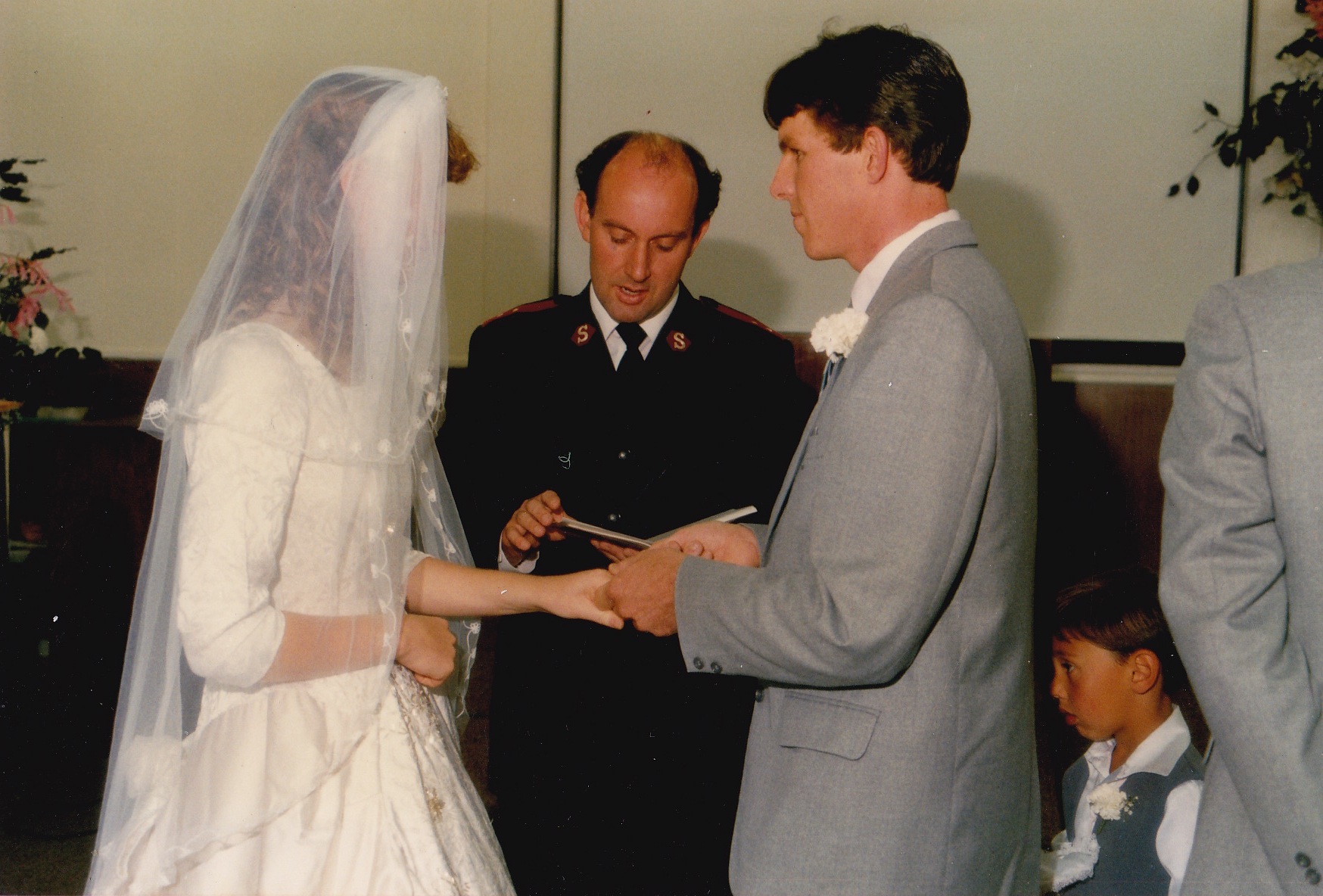
In February this year I went to New Zealand NZ) and Australia on a 7 week speaking tour in schools, Rotary Clubs and churches. While I was there I had the honour of spending time talking to the pastors who oversaw our wedding ceremony nearly 27 years ago.

Mick & Colleen Marshall were my pastors (Pete went to another church) and over the years they have served both internationally and locally. They’ve now got a brood of grandchildren and instead of retirement are looking at refirement.

Here's Mick leading us through our vows.

Here’s Mick leading us through our vows.

It was so special catching up with them and there were a couple of things they said to me which they were dead serious about:

  1. When you return just be aware that people will put up with you ‘Africa stories’ for a few minutes but after that, they really don’t care.
  1. Whatever you do, don’t get so overworked that you burn yourself out.
Colleen and Mick this year.

Colleen and Mick this year.

I listened to them on Number One. It’s true, the world we live in Kenya is so foreign to even try and understand or explain, it’s just too much for people to hear and understand. When you talk about a traffic jam in Nairobi it is vastly different to that in Sydney. I’ve read where people in NZ complain because they have to get security checked before going into WINZ. Here, we have to avoid shopping centres because of bomb threats. Yep, it’s a bit different here.

Number Two, that’s a really hard one here. It’s not unusual to be chatting with someone overseas at 10pm, doing radio interviews at 2am or working 12 hour days, three weeks in a row. All this leads to burning out.

Here’s a definition of burnout:

Burnout is a psychological term that refers to long-term exhaustion and diminished interest in work. Burnout has been assumed to result from chronic occupational stress (e.g., work overload).

We’re not burnt out, but we did come close to it a little while back. Physically and mentally run down we took stock of where we were at and where we wanted to be.

So here’s where we’ve made some big mistakes:

1. Not taking holidays

In the two years we’ve been here we’ve only taken off a week. How dumb is that!! We bought Liz a camping bed for her birthday in December last year and the only time it’s been used is as a spare bed when we have visitors.

A lot of that was because we didn’t have the money. Our plan for 2015 is to take a week off every 3 months just to renew our batteries. Even if we have to camp in the middle of nowhere, leave our laptops behind and sit with the zebras, we will take a break.

We’ve lived here for 2 years and travelling here since 2007 and in all that time we’ve never been to Mombasa on the coast nor Masai Mara. Next year baby, next year.

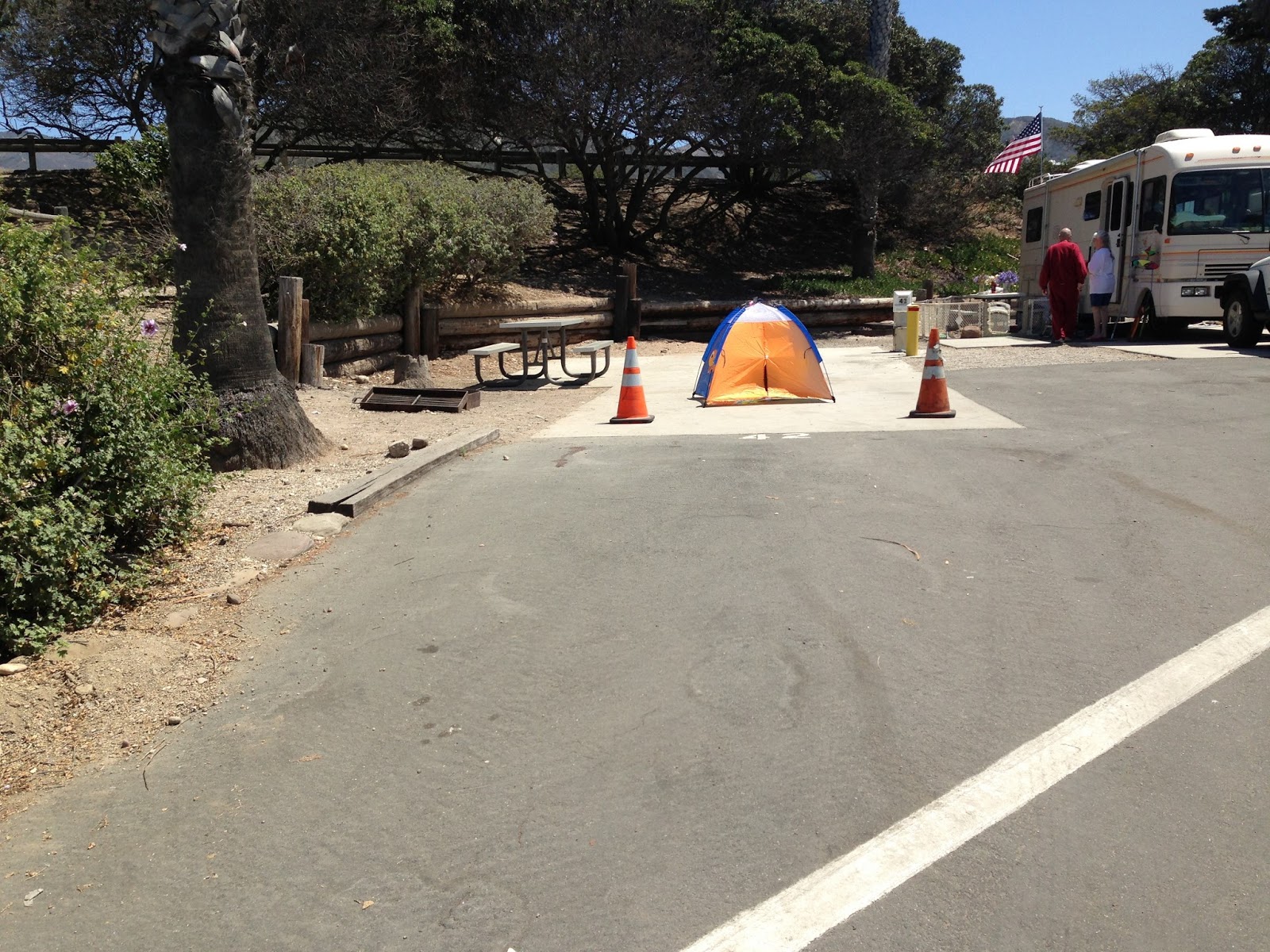
This might be us, the tent not the motorhome.

This might be us, the tent not the motorhome.

2. Working too many weekends

There’s nothing wrong with working through a weekend if you get a day off some time during the week. However, if you end up working 3 weeks in a row, you’re setting yourself up for an emotional breakdown and big family arguments because of tiredness. We found that we were working three weekends a month. Now, we’ve got it down to two.

At the beginning of the year we thought we could take Wednesday afternoons off. It worked for a while but too many things got in the way.

life3. Lack of sleep

It’s pretty noisy here. Anywhere from 5.30am there are people outside washing their bosses car. Also, no matter what we seem to do, there is at least one mosquito wanting to attack. Someone at the apartment above us seems to like moving furniture late at night. The best day to sleep past 5am is a Sunday – and it is most welcomed!!

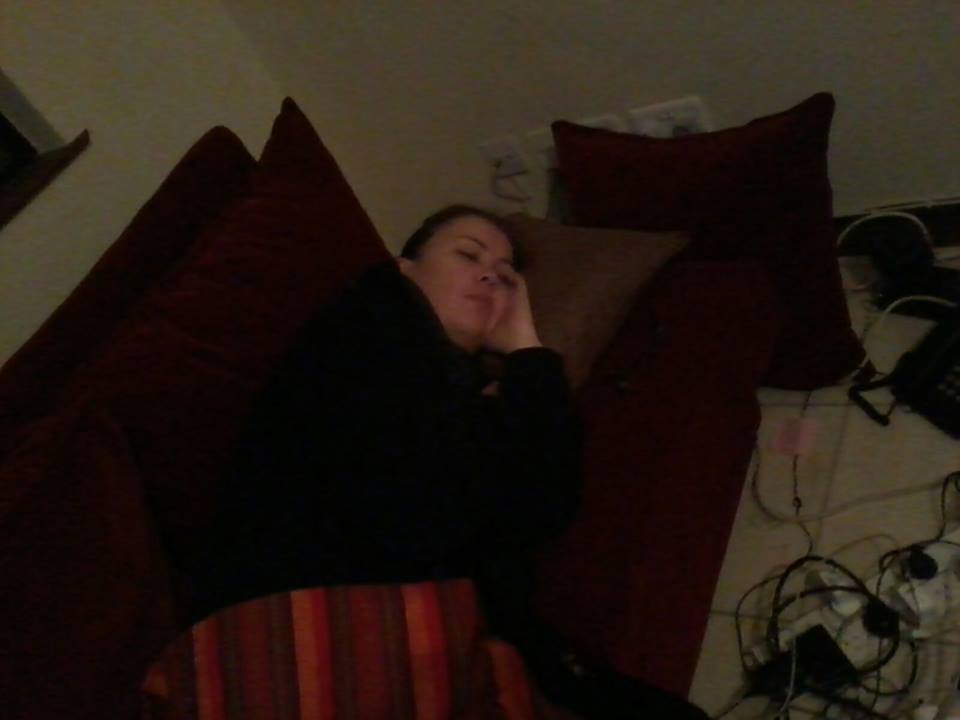
Because there’s so much work to be done there’s not so much room for the odd nanny nap. I have to admit though, we’ve both fallen asleep on the sofa, there’s the Facebook photos to prove it.

Pete snapped this one from a while ago.

Pete snapped this one from a while ago.

While we’ve made some mistakes, at least they’re all fixable. As we head into the start of our third year we expect to be working harder and at times, longer hours, we hope that if we change a few of our behaviours we will have even a better year. We’ve set some goals for where we want to head and have even planned a ’round Africa’ trip in 2018.

What about you, what ‘adjustments’ do you need to make to improve both your mental and physical health?


Where have you been?

The other day I was chatting online with a friend in Australia who mentioned I hadn’t put out a newsletter for a while (a month) and he wondered what we’d been up to.

I had to catch myself from saying anything because I’m continually posting stuff up on Facebook, Twitter, Instagram, YouTube and sending text messages to those overseas as much as possible.

mediaI wonder that with all of the technology we have, if our world is becoming too busy and we’re over saturated with information 24/7.

Hey, I’m not knocking what we have, but more of how we use it. My youngest daughter and I touch base every day either via Facebook or we SMS each other for free using our iPhones. No doubt, as her wedding gets closer, it will happen more and more.

I just wonder who is in control of whom.

I admire people who go on a social media fast, I don’t think I could, well for 40 days anyway!

We get the morning world news from a pastor in a town in Aussie that I’ve never been too. It gives me a quick 5 minute overview of what’s happening. It helps me keep connected on a bigger level than just what is happening locally.

Although I hate the new Facebook Messenger, we get no choice but to use it. The power goes out often and sometimes for a very long time. However, because it’s so cheap to have the internet on your phone, it enables me to use it even if the power is off (unless my phone battery dies of course!). $5 of credit gives me access to the internet for a whole month.

signWe’ve been based in Kenya for close to 2 years, and I have to say that out of all my years of travelling here, technology has helped to transform this country in a very short time. Twenty years ago to make an overseas call you would have to let the person know by post on what date and time you would call, go book it in and hope it would work.

Now we simply Facetime or Skype and get grumpy when the internet is slow.

Somehow, I don’t think we can live without all of what we have anymore – unless it’s forced upon us. We had a Canadian couple visit us, who are farmers in a remote part of Ethiopia. They reminded us how lucky we were to have everything at our fingertips.

So where have I actually been lately – writing blogs, videoing kids, editing photos, uploading to Instagram, you know – trying to keep up communicating with the masses.


If I Only Knew

We are fast approaching our second anniversary of serving in Kenya so I thought I’d write down a list of things I wish I’d known before we came. Of course, hindsight is an awesome thing, but if you ever consider moving this way for a short or long period of time, it might be good to know.

 1. Africa Is Not Cheap To Live In

It’s a myth that’s for sure. We did our budget in 2011 but by the time we got here in 2012 prices had skyrocketed. Most things have stabilised in price since the VAT (tax) of 16% was added. Locals have really struggled since then. We spent a lot of 2013 buying furniture for our place as money came in, with most things bought second hand or built at a roadside carpenters.

Of course, income determines if something is expensive or not. Our budget is short by $1,000 a month, which is a lot when you aren’t allowed to earn money within the country. Our rent is half of what we paid in Sydney for something more than twice the size. We wanted a place where we could have people come and stay, relax and then go on their journey. We’ve had people from NZ, Australia, Germany, Switzerland, Canada, Ethiopia, USA and Norway stay with us. We love it and are grateful for the apartment we have to be able to do it. But our landlord put up the rent by $100 per month after being here for a year, so we’re looking at alternatives for next year.
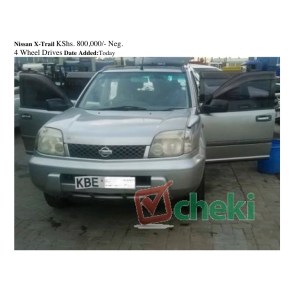
 

Equivalent to $9,700AUD for a 2001 car

Equivalent to $9,700AUD for a 2001 car

 2. White = Rich

If you’re not Kenyan, you’re white, even if you’re not white. That means you must have money to burn. If you go to the markets on the side of the road, you will spend more time bargaining than what you want. This is why people go to the more expensive supermarkets because they just get tired of being hassled all the time. A friend of ours got his suit for his wedding made for $50. If Pete went, it would be 3 times more the price.

If we want furniture made at the roadside market we send a Kenyan there first for a price so we know what we should be paying. No matter how much you tell your colleagues that you don’t have much money, it doesn’t matter, because you will always have more than them. What people don’t see is the amount of money spent on the work you do – petrol, car costs, school equipment, feeding people or running programs.

I need to get me one of these!

I need to get me one of these!

3. You’ll Want To Go Home, Often

Sometimes you wonder if the obstacles are worth it, wasn’t it much less complicated back home? Well, yes it was. Kenya is not impossible to live in it’s just very complicated. As a friend said to us in our early days “Living in Africa will show you what capacity you have on the inside” and I happen to think he’s very right.

It was much easier living in Australia. If we wanted to earn more money, we’d go paint a house. We understood the language. You could walk the streets at night and no problem. There were parks to play in that were free. If you wanted to go to church you had a Saturday night, Sunday morning and a Sunday night to choose from. The ocean was a 4 minute walk from our place.

There’s probably twice in the last couple of years when I’ve thought “Stick this, I don’t need this hassle, I’m heading home”, but for Pete it’s been quite often. He asked me the other day why we were here again. My simple answer is that God knew we were big enough to handle it.


 4. Set Work Boundaries

We’ve got plenty of friends who work in the same area as us, but with different organisations. All of us have the same problem – we struggle with work boundaries. I’ve a friend who gets paid for 2 days a week but often works for 5 ‘because they’re in need’. Our phones will often go off at 10pm. We’ve had one weekend off in the last 2 months. I’ve calculated we’ve had 5 days of actual holidays in the last 2 years. When we’ve travelled out of town or overseas, it’s all to do with work. That is really dumb.

This year I decided to work at the office until 1pm, have lunch and then do the rest of my work from home. In essence I can work anywhere in the world but feel obliged to turn up to prove I’m actually working. Between now and when we fly out to Australia in November I’m even taking an hour out in the middle of the day to get some exercise and sunshine.

Next year I’m even thinking of rehashing my working conditions by spending less time in the office and more in the field with people.

Learn to turn it off

Learn to turn it off

 5. Sign A Contract

Too many people come with good intentions which get squished out and changed to be not what they came for. I’ve friends in another country who came to work with orphaned children then after 8 months were dumped because the organisation didn’t want to make necessary changes for improvement. Another family came to build a school but wasn’t allowed any input into the long term planning of it. Others were having to give a certain percentage of their support money for the ‘privilege of volunteering’. Make sure the requirements are written down and everyone understands the small print, who pays what and what is expected. For some reason we do this in the business world, but not in development work. Go figure?


6. Do Your Homework Before Coming

We had been to Kenya 3 times before moving here. Most times we came for 2 months and travelled to neighbouring countries as well. However, there is a BIG difference between visiting and living somewhere. How basic everyday things are run is a huge task to learn. It took us 6 weeks to even begin to figure out directions and where things were. Unfortunately, people who have lived somewhere for a long time take everything they’ve learnt for granted. I remember getting pulled across the coals because we didn’t visit a person in hospital enough. Apparently here you drop everything and race off to visit someone, you also take fruit or juice. No one told us about that, and we didn’t even know how to get to the hospital.

An important thing to look into is getting a visa, owning land and traffic laws. Everything here takes a l-o-n-g time and it’s never straight forward. Join expat blogs before you come so you get an idea of how things work. Get Swahili apps on your phone. Use Google maps to see how far things are in distance. Learn some history of the place.


 7. Clothes Are Expensive Here

Of course, if you want to, you can buy cheap clothes at the local market. The one closest to us to called the Toi Market. There you can buy second hand clothes, sometimes new ones, which come from overseas. Pete gets a pair of new jeans for $10, guys are lucky, they know their sizes and can get it off the rack. Ladies, not so much.

The clothes at the mall are way overpriced. These are either imported (and thus have large tax) or top of the line. I envy Kenyans, they don’t have to worry about skin tones, they’ve all just got brown skin. They can wear really bright clothes and look awesome!

When we return to Australia we’re buying up big time, especially in the sock and undies department. I think we might even go with empty suitcases.

toi  8. People Won’t Listen To You

The number of people who won’t listen to you if frustrating to the max. I mean, what do we know, we actually live here and know how the system works. Visitors have wasted so much money because they JUST WON’T LISTEN. One friend was told by his travel agent that he would have to pay $50 more for an English speaking taxi driver. What a load of rubbish, English is one of the national languages here. Of course, he decided to ignore all of our advice and ended up paying thousands of dollars more than he needed to. We’ve had others who didn’t want our help (thank you very much), decided to do things their way and paid way too much for a vehicle hire and didn’t get to see the areas they really needed to.

And that’s just the visitors.

When you’re trying to bring in different ways of doing things, people will predominantly resort back to their ways. The proof of the success of your teaching is if they put it into practise when you’re not around. If 50% of it is done, that is pretty impressive. We’ll be gone for 8 weeks and it will be interesting to see what the state of things will be on our return.


 9. You’ll Spend A Lot More Time On A Computer Than You Ever Thought

There were 2 things I didn’t want to do when we came to Kenya – fundraising and sit in front of a computer a lot. Guess what, I’ve ended up doing both. It’s a necessary evil. Today someone said to me that they haven’t seen a newsletter for a while (it’s been a month). Flip my lid, I’m on Facebook every day, Twitter, Instagram, YouTube and weekly blogs but it still doesn’t cover everyone. There’s marketing material to be designed, videos to create (and they take ages), grants to write and complicated emails to answer. It’s not unusual for me to be on a computer 8 – 12 hours a day.

man 10. It Just Might Be One Of The Best Moves You’ve Ever Made

When Africa gets under your skin, there’s nothing you can do about it. Sure, not everyone should be here long term, in fact, most shouldn’t. Whether you come for a short or long time, all that matters is that you’re doing what you should be doing. If you come with a flexible attitude, don’t always compare it to your home country and be in an attitude of learning, then you should be fine. I called the first year ‘Going back to school’. Every day and even parts of a day were a lesson.

What you will be surprised at is the number of things happening across the country and especially in Nairobi. There’s music festivals, fun runs, street performers, fashion shows, expos, conferences and more. You will meet some amazing people, fruit abounds year round and you’ll never get bored. You’ll notice there are lots and lots of nationalities, wildlife you’ll only read of in books and have experiences your friends will envy.

Africa, Kenya are places that will change you for the better. You’ll get a bigger world view. You’ll miss it when you leave.

sunIf you plan on coming for at least 2 years can I highly suggest that you don’t do anything for at least a month or two. Get to know the place, the people, directions and get your home set up. We get so passionate about helping people, we can hinder things by rushing in too fast. When we got here some of our team members were leaving and we were expected to take up the slack. I’ve heard of it happening lots in many projects and the newbies either sink or swim. Most of the time we didn’t have a clue that was going on and I remember every few days we were saying to each other “I don’t have a clue what I’m doing, I hope we’re doing okay”.
The Road To Eldoret

On Monday we needed to go to Eldoret to take a dog to a new home, one of our students to his placement and also to look at one of our projects we did a couple of years ago.
While it seems straight forward, nothing here in Kenya is simple. Before we could go on our trip we had a meeting, which meant a pickup at the airport at 6.30am. Of course, the flight was delayed by 90 minutes. The only way to tell was because I could find it online. At the airport the only flights up on the screen were those from Kenya Airways and our guy was coming in on Jet Airways.

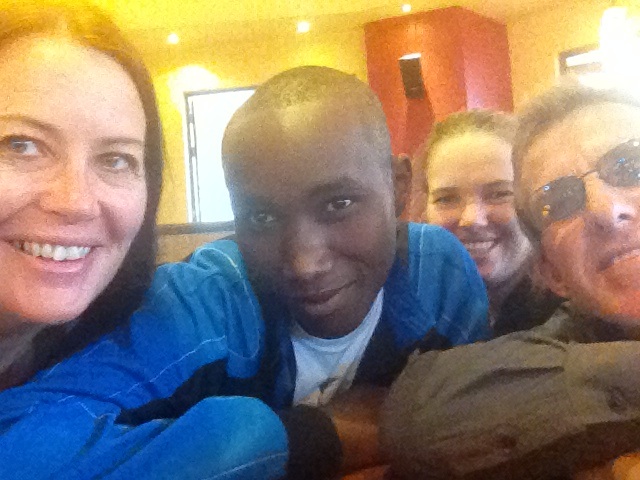
Us with Chege at Java

Us with Chege at Java

The plan was to go and have breakfast with a businessman to discuss whether a project we’re working on will be possible. But when we got there, plans had changed and we had a meeting and THEN the breakfast, at around 10am. We ended up going to a lovely hotel called Ole Sereni. Apparently this is where the US set up their embassy when theirs was bombed in 1998. It also backs onto the Nairobi National Park, although we didn’t see any animals!

We then had very little time to get our Aussie mate back to the airport for his ongoing flight. At JKIA security checks can take up to 30 minutes. You wait in your car, then you have to get out (except the driver), go line up (ladies with a female security guard), show your ID and then they pat you down to make sure you’re not carrying a bomb. Of course, they never check under the seats where you could easily hide a bomb.

Kiwi

Kiwi

The next part of our trip was to travel out to Kiserian where the training farm is that Pete assists with. It was the total opposite direction from where we wanted to end up but we had to go and pick up ‘Kiwi’ a dog who was travelling the 6 hours with us to Eldoret. We spent a whopping 15 minutes there before we started on our real trip.

It was just over an hour to Nairobi and by then I was snoozing and the dog was throwing up. I can do dislocations, broken bones and blood, but I don’t do vomit. When my kids chucked up Pete was on cleanup duty. Thankfully we always have baby wipes in the car.

Ninety minutes later we arrived in Naivasha to pick up the student. We then spent 45 minutes looking for him. There are no big meetup points in Naivasha. He told us to ‘meet him at the bridge’. Well, there are two bridges outside of Naivasha and he wasn’t at either. Eventually I sent him a text message to say if he wasn’t there in 10 minutes we were going without him. Surprise, surprise he turned up.

The toilet blocks we fundraised for

The toilet blocks we fundraised for

By then we were starving so only an hour later we stopped at Java House in Nakuru. Java is a place we go to in Nairobi for a small meal, it’s relatively cheap and the food tastes good. The student we were taking had never been there before in his life. For him, to spend $6 on a meal was not even thinkable. It was really nice to be able to take him out somewhere he’d never been before in a town only an hour from him, but he’d never had the money to travel there.

Our Golden Rule is that we don’t drive long distance at night – we broke it. The roads are too dangerous, the truck drivers crazy and it is just not a good idea. Thankfully Pete was driving but it was pretty stressful.

We left home at 6am and got to Eldoret at 9.15pm. Of course, we then went to a hotel for a cup of tea and our student got to order sausages and chips for the second time in the day. I think he thought he was in food heaven. It was midnight by the time we got to bed because we had to introduce Kiwi to the other dogs. He wasn’t going to have a bar of it and kept trying to jump back into the car. It was pretty sad really but after 30 minutes he was okay and locked into the garage.


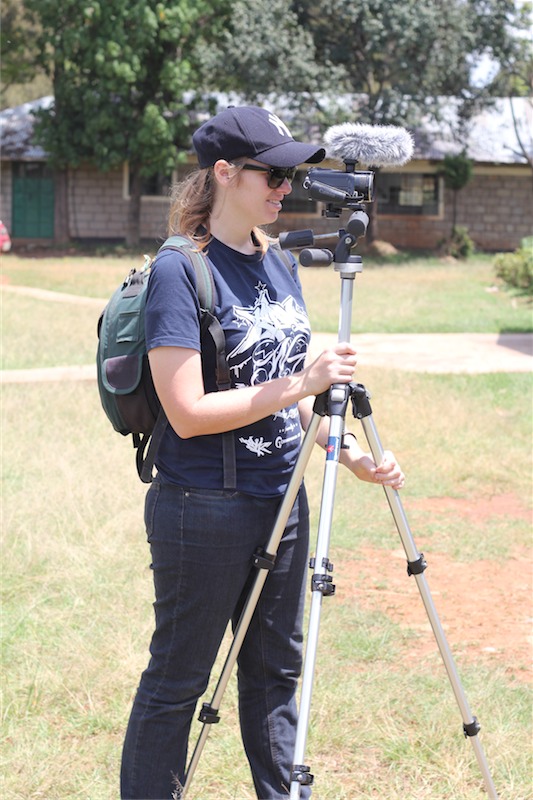
Lizzie in filming mode

Lizzie in filming mode

The next morning Kiwi was best mates with the other two dogs. We headed into town to do some shopping for our student. I quite like country towns, they’re more intimate than Nairobi and a lot cheaper. Prices in Nairobi are sky rocketing but prices in Eldoret were awesome. We bought a few things for our student to help him set up his room. He won’t get paid for another month so needed some bits and pieces and food.

We really wanted to head out of Eldoret by 12. It wasn’t going to happen. Firstly we had to go to the farm to make sure everything was okay for our student. Next, we headed to the place we had done a toilet block project in. Sadly the kids were on holidays but we got lots of filming done for future videos. We were pretty pleased that 2 years later they were still in good condition. Just as well one was unlocked as we needed to use it.

Pete waiting for us to film

Pete waiting for us to film

The drive home was long, really long. We stopped off in Nakuru again, at Java again and headed back to Nairobi, again. By the time we got home we were all sick and tired of sitting down and over dodging in between trucks.

On the flip side we managed to pick up super cheap veges and fruit on the side of the road. I made sure we got lots of rhubarb to go into the freezer.

We were glad we got to go even though it was a really long trip. We got to see what our students need to start in a job. We could tell that our projects are still working. We got to give a dog a home.


I Want To Help The Poor

Last week we had a friend from Australia come and visit for a few days before she moved on to look at other projects in Kenya.

She said something on the first day that I’ve heard many a time over the years “We’d better get busy, I’m here to help the poor.”

While I knew what she meant, it got me thinking about how we think about what we think helping others actually is.

In the West we have the mentality to put a band aid on something and walk away. Or, we write a cheque because it’s the easiest way for us to ‘deal with it’.

Not that there’s anything wrong with handing out money but is it really the answer?

Most weeks I get the privilege of going to the Kibera Slum. The reason I say privilege, is because as a white person by myself, it would be unwise and it wouldn’t be safe for me, but with one of our friends, I am fine. It’s not that they don’t like white people, but they’re over white people coming in buses, taking photos and leaving. They’re over white people telling them what to do.

They just want to get on with their lives and make the best of what’s been dealt to them.

I look at the slum of nearly a million people and how much money has been poured into that place over the years and wonder what impact it has made. And yet I see glimmers of hope.


How can we make a real impact on people:

1. Learn about the people you want to help

Do you remember their name or just their need? How can we tell people we care if we don’t know who we’re talking about? Our motto should always be ‘People matter most’. Leave the programs up to those living on the ground long term.

Ask people “What is your dream for your children?” They will be more than willing to tell you. For most it will be that they want their children to go to school and have a better life than what they did.

girlchild2. Learn their story

Everyone has a story but not everyone has a voice. Our job is to give them a platform to be heard.

When I lived in Sydney, Australia I was studying for my MBA and needed to go into the city to buy a $120 textbook for a subject. I was walking through an area called Martin Place at lunchtime and threw $5 into a bowl by a homeless lady who was sitting on the footpath. I went on my merry way and then this thought came to me ‘what a fat lot of difference that made’. I knew what I had to do. I went and bought my book, dropped into a friends million dollar jewellery store for a chat and went back to Martin Place. In my mind I was kind of hoping the lady was still there and then I didn’t. But when I saw her, I was relieved that she was.

I sat down with her and asked her story. There was a food cart across the street so I asked her if she wanted a Coke and chips, to which her answer was “No, just a bottle of water and a sandwich is fine.” I ended up buying as much as possible and sat back on the ground with her for a few more minutes. As a Jesus follower I asked if I could pray with her, which she allowed. Then I told her I had to go and catch a ferry to Manly. I walked away hoping that I gave her hope.

The gist of it is that I gave her a chance to tell about herself and I just had to listen – that was all.

home3. Link up with people working on the ground

When you come to a place like Africa all you will see are the things that need fixing – the roads, the electricity, the living conditions, the poverty. Plenty of people have walked in with pockets full of cash and gone home penniless. They give out money here and there. People’s stories will pull on your heart strings and you couldn’t imagine YOUR children living in some of these conditions. You’ll be shocked and want to give, give, give.

Can I suggest something. Give to organisations (never individuals) who have a good track record and can prove where the money goes. There is no harm in asking for copies of the receipts. Accountability is a good thing.

This week we gave a person we trust a small amount of money for some clothes for a young man. Even then, I asked if they could take a photo on their phone and to send it to me. It’s not because we don’t trust them, it’s because I want to use it to raise more money for more kids. Because we knew each other, we’d built this relationship, it wasn’t offensive.

Remember – the proof of the pudding is in the eating.

chocolate_pudding_s

4. Don’t make promises

When you see a great need it’s easy to get swept away in emotion, especially if there are young children involved. Too many people have come to Africa and said that when they return home they will do something to help. The truth is, when you get back home you hit the ground running and get caught up in every day life.

If you raise funds, that’s great. If you raise awareness that raises funds, even better.

poverty-in-africa5. Be rather than do

We tend to think that if we get in there and ‘fix it’ we’ve done our job. Sure, we can do it but what have we left the person with? Have we left them with a sense of value, belonging and that they are our equals? Or, do people just see dollar signs when they see us?

Play a game of soccer with the kids, have tea with the mamas, sit with people in their home, show them photos of your kids, be a friend.

basketball-children-africa

We always welcome visitors with open arms, but please, come to learn, then you will get everything out of your trip that is available. If you come to do, do, do, you’ll end up judging, frustrated and wonder what difference you’ve made.

Leave your chequebook at home. Then when you get back, you can give to one project that really touched your heart. Crumbs given out here and there don’t really impact much, but a larger one off donation can be utilised really well.

Why you SHOULD visit Kenya

I just want to come out and say it. The job of the media is not to tell the truth, their job is to sell newspapers. They capture a moment in time and then move on to the next big headline.

lensI’m not against telling what’s going on in the world, I just think there is an oversaturation of events that are available on our phones, laptops, over the radio, on TV and in newspapers. Social network sites are so rife with news that in places like Iraq Facebook is banned because ISIS were using it to spread their horror.

The only time Kenya seems to get into the global news is when there is a terrorist attack or governments put out travel alerts for this part of the world. As soon as something goes wrong, we end up getting messages from the West asking if we’re okay, even though the event happened 9 hours drive away.

So here, I’m going to give you some good reasons to actually come here.

1.Variety

There’s something for everyone. Surf, sand, cities, farms, restaurants from every nation, markets, malls and cultural shows. There’s swimming pools, ice rinks, IMAX and horse racing. Of course, Kenya is known for it’s wildlife with over 65 national parks, reserves, sanctuaries and marine parks to visit. Each has it’s own focus on particular animals. There’s even one animal park you can bike through without being eaten!

beach2. Opportunities

This is the volunteer capital in the world. Whatever skill you’ve got can be used to grow the skills of locals. You might not see playing soccer with kids as a big deal, but to them it is. There is great joy when a child you’ve been teaching actually able to read because you’ve spent a couple of weeks with them. Giving back to communities is the best thing you can do for a week of your life, but so is receiving. While most volunteers come with the intention of bringing about change, they come away feeling like the luckiest people in the world, and see that they are the ones who are changed.

coach3. Cost

If you’re flying from Australia or New Zealand air tickets can be pretty pricey, unless you take a slightly longer route. However, once you’re here it is relatively cheap to get around and as long as you stay in a nice guesthouse, your accommodation costs are low. Food is much cheaper than back at home and there is always a good variety of fruit. To eat out is a good option and there’s no lack of variety from budget to extreme. For example, you can have an all you can eat buffet, including dessert for $26. Or, you can have beef stew and rice for $2.60. Tourist pay a lot more than locals for entry into animal game parks. One national park costs tourists $90 while we as residents pay $10.

fruit4. Something different

Why go somewhere that is just like home? Not many people can say they went white water rafting or bungee jumping in Kenya, or flying in a balloon while thousands of wildebeests are below. How many people can say they went to a Masai village and met the cutest kids in the world? I bet your friends have never kissed a giraffe!

raft5. En-route

I always try to encourage people that if they are coming this far, to travel to other countries in this part of the world. Dubai is only 5 hours away, South Africa 6, London 8, Amsterdam 8, Egypt just under 5. Flying in between African countries is not that expensive either. To fly to Uganda return is $350 (USD). If time allows it why not explore as much as possible.

caseThe world is an amazing place, and Kenya is an exciting place to explore. It’s far more than you will ever see on the Discovery Channel. Why not come and see if for yourself!


Big Changes

We’ve been in Kenya for 20 months so I thought it was time that I shared about a few things we have had to change since being here.

1. No Hot Water

Our apartment is three floors up. If we had our water cylinder connected up it would cost us $200 a month on our power bill. Instead we had instant water heaters on our shower heads. So, before you jump in the shower at our place you have to flick a switch by the door. The good thing is that you don’t have to wait for the water to warm up before jumping in.

The downside is that we don’t have any hot water that comes out of the taps. We put on a large pot of water to boil while we’re having dinner and because we have gas it doesn’t take too long to heat up.

This is our showerhead.

This is our showerhead.

When there’s no power in the mornings I only have 2 options – a cold shower, or heat up water in our trusty pot  and have a wash. I’ve done both and guess which one I like better?


2. Electricity

One thing you can guarantee about the power being on, is that it won’t always be on. For 3 weeks out of a month it seems to be pretty good and then for one week it’s off and on. If the electricity goes off I don’t even bother resetting the alarm clock until I go to bed at night. We have a solar lamp sitting on our windowsill so it’s always charged up. The longest we’ve been without electricity is 24 hours. We got so bored that night we went to the mall to do grocery shopping. When we bought a washing machine we especially got one that restarted at the same place when the power came back on.


3. Towels

I was really challenged by one of our colleagues about how we used new towels every second day. She said ‘Why, you come out of the shower clean, I wash mine every 2 weeks?’ It got me thinking as to why we do what we do. While we have lots of towels, my friend has ever only had one. Of course, when I heard this I was shocked and even though she never asked for it, I blessed her with some more. She had never had a new towel in her life before. So, just to shock you, we use the same towels for a week before they go into the wash.


4. The Car

Carjacking’s happen here often. So, every time I get in the car the first thing I’ve got into the habit of, is locking the car doors. Even when we go through smaller towns where traffic moves slowly and there are plenty of people around the car, the doors are locked. I often have my phone hiding under my thigh so if I’m ever carjacked they can take my money and my car but I at least have a way of contacting someone. The number one rule though is never run out of petrol.

Car jackers usually work in groups, at peak traffic times when there are jams and here they use guns over bats.

Car jackers usually work in groups, at peak traffic times when there are jams and here they use guns over bats.

5. Don’t Shop Just At The Supermarket

We have a good number of supermarkets here – Nakumatt, Uchumi, Chandarana and lots of shopping malls. There’s also smaller shopping centres dotted around the place. To get any gluten free food I need to go to a shop called HealthyU. Stuff there is awfully expensive but what choice do I have for such things as flour and cereals that I can actually eat and not get sick.

The best place to buy fruit and veges is at roadside markets or out of Nairobi. Generally people think that everything in Africa is cheap – I wish! We travel an hour each Thursday to a place called Kiserian where we spend the day on a training farm. Bananas are half the price there. Overall fruit and veges are cheaper here than back in Aussie but besides that groceries are way more expensive.

duka

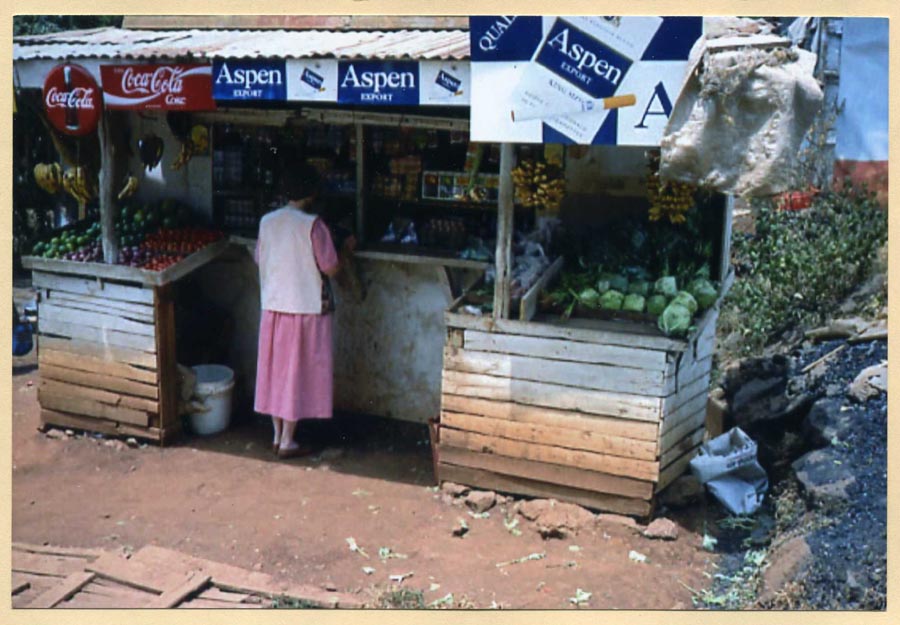
Dukas are handy little shops all over the place.

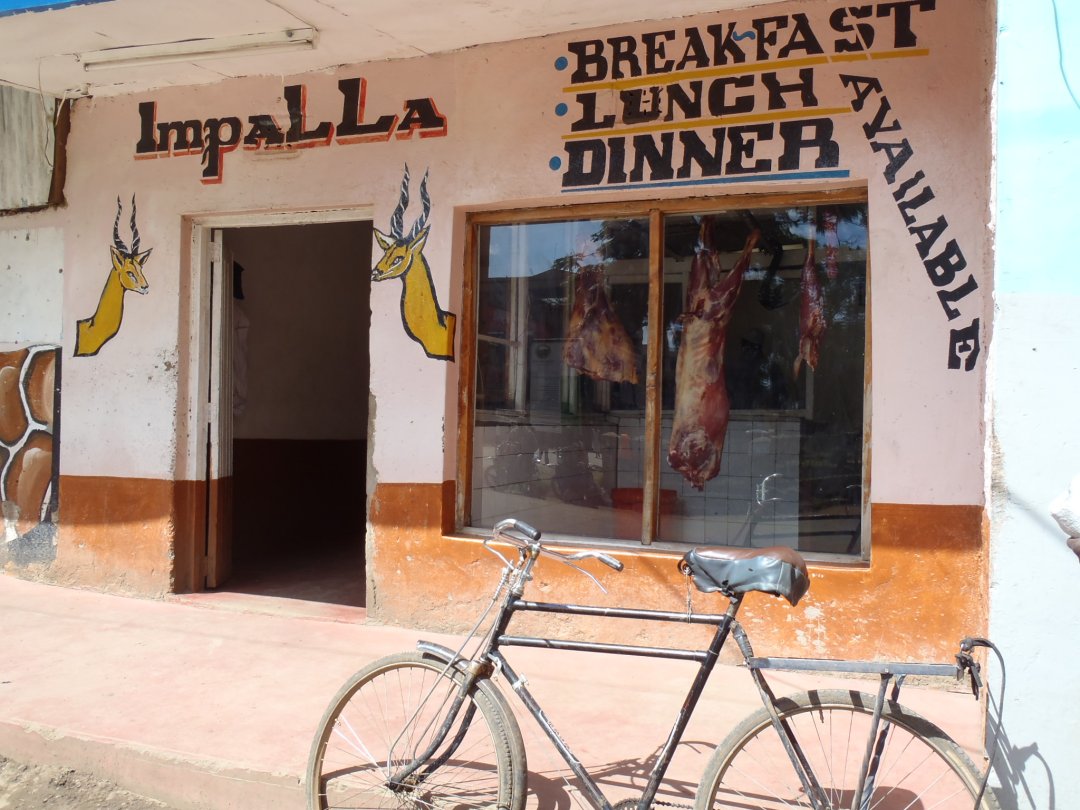
If we need credit for our phone or we’ve run out of something we don’t need to travel up to the supermarket, instead we have around 3 little dukas (shops/stalls) around our place. Be in avocadoes, dishwashing liquid or a bottle of Coke, they have it all. I only meat I get at the supermarket is chicken and mince, anything else is a plain ripoff. Instead we go to independent butchers. Mind you, we found this one around the corner from our house and it stinks to high heaven – never a good sign.

meat

I’ve never bought meat from a place like this.

When stuck in a traffic jam you can buy bags of fruit from the vendors who walk amongst the cars. They also have newspapers, kites, earplugs, maps and toys available.

We haven’t bought any of our furniture at the shopping mall or any furniture stores – it is just way too expensive. Instead we got things made by fundis (tradesmen) who make furniture at the side of the road. If we ever had to leave the country we would definitely get stuff taken back that was made here.


6. Flowers

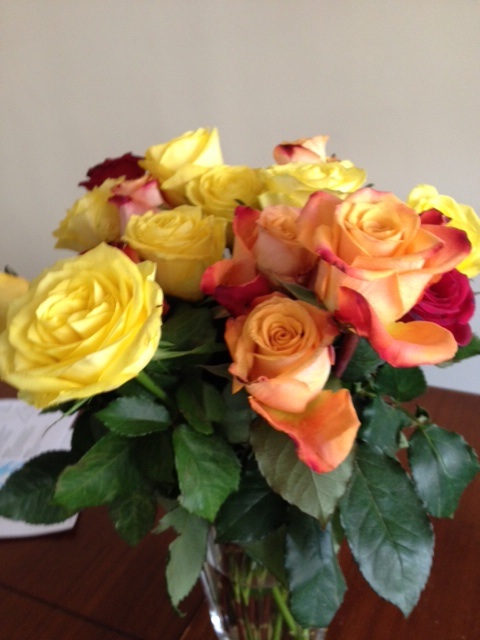
Oh my goodness, they are so cheap here – all of the time if you shop at the right place. For $2.50 you can pick up a big bunch of roses. This price is only from the small stalls on the side of the road. If you buy flowers from the florist or in the malls they will be the same price as back in Aussie.

flowers7. Security

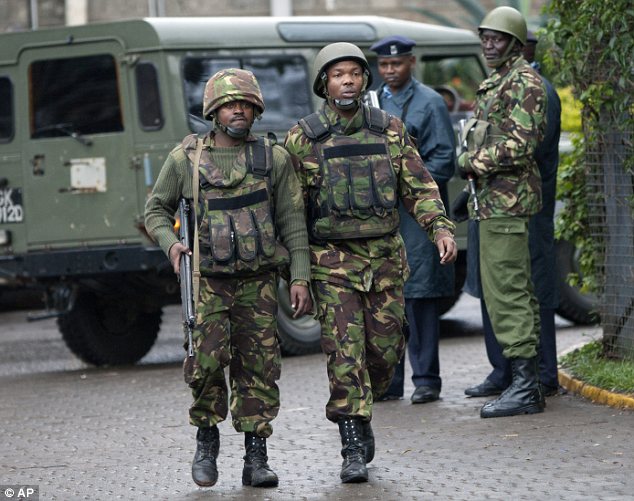
I noticed when I was back in Australia and New Zealand earlier this year I didn’t have to worry about security and we got really slack. Here you will find guards at every gate, bank, ATM, shopping centre and car yard. It’s not unusual to find guys from the army or police officers with rifles walking around. When you go into the mall or even a church your car is searched. It’s a hassle but better to be safe than sorry. Mind you, Pete asked a guard one day what he would do if he saw a bomb in a car and he said they would all run! Once you enter into the mall your bags and body are checked. Poor Pete, he has a metal pin in his leg and it often goes off. When there’s a threat in the city we are pressured to avoid any public place. We get security updates from the NZ and Australian High Commissions. While we don’t ignore them, we pretty much carry on life as normal. There are a lot more dangerous places to live in the world and we have this philosophy that when it’s your time, it’s your time. I just don’t want it to happen slowly and bit by bit. There is more danger travelling on our roads than terrorism.

guards

It never feels scarey having the army or guards around, unless one of them jumps in your car and points the gun at you!

Of course you also have to change how you speak, and not just in language. You have to learn how individual friends come from different cultural backgrounds and how to respond to them appropriately. What works in your home country doesn’t always work here. You can’t wear short shorts, travel long distances at night and yes, the food tastes different. Driving is insane. The people different.

If it wasn’t different here what was the point in coming?