Dating, Marriage, Sex

This week we had an interesting conversation in the office and that was to do with how girls and guys date, what’s expected and what the general norm is.

It all started out when I shared about how in our family there’s a certain way we do things:

1. No boyfriends before 18

This went down like a lead balloon. Kids are too much in a hurry to grow up. They need to enjoy some of the most challenging years of their lives without the complication of ‘going out’. We always told our girls that you don’t have to be attached at the hip of a guy to be someone.


2. The guy asks permission to ‘court’ our daughter

We don’t believe in the try and buy scenario of dating. A relationship with the potential new family member is really important and if they respect you enough to ask permission, then they hopefully will respect your best investment – your child.


3. If one of our girls are in another town or country (as what we have now) they have to be sussed out and approved by a family member.

In line with our Pacific Island upbringing, Aunty is a pretty powerful person in the family. In New Zealand we have a cousin who has ‘Aunty’ status who keeps an eye on things. In Australia we had a friend who was an ex SAS member and he (okay he was a guy but you get the drift) would ask the hard questions on our behalf, it was great. I am sure they were scared of Jeff!


4. As a couple who profess to the Christian faith, they are encouraged to meet with their pastors and be accountable to them.

It takes a brave couple to tell their pastors that they are going to the next level in their friendship because it gives the pastors authority to speak into their lives and they may not like what they hear.


5. The couple set boundaries to keep themselves out of situations they may regret.

If it really doesn’t go anywhere, they can remain friends and still look each other in the eye.


6. Both parties take their ‘friend’ to their families homes.

This means involved in family activities such as dinners, going out to movies, church and special events. When you marry someone, you marry into their family as well.

Of course it all has to be in context. We have always encouraged our girls to make friends both boys and girls and if they are to go out, do it in a group.

We’ve openly talked about sex since they were 9 &10 years old (they’re 22 & 23 now) – in an appropriate manner of course. Both our parents never talked about ‘the birds and the bees’ so we decided to, bringing in a Biblical viewpoint. They were homeschooled till they were around 11 & 12 and then put into a public system when we moved to Australia.

We’ve always made a point of being involved in our girls lives. Even now we take them out of dates and a good catch up time. While we never had a lot materially we made this investment. When Hannah had finished secondary school we insisted that the whole family go on a two month tour of East Africa. At first she wasn’t happy about it (insisting she wanted to work, I pointed out that she had the rest of her life to work), but it changed her world forever. Both of our girls are global travellers and have experienced many cultures, which has broadened their personal worlds.

heartHere in Kenya I’ve discovered things are quite different.

  1. The only time the family sees the new ‘friend’ is just before the engagement happens.
  2. If the parents don’t like the potential addition to the family and the girl really wants him, she has to choose between her family or his if things get really bad.
  3. When the two families meet they sit formally opposite each other. This is when the dowry is discussed. It goes through stages of friends who can vouch for you (at the serious stage), then the uncles go.
  4. Parents don’t talk to their kids about sex. That happens in school (apparently).
  5. If a girl gets pregnant out of wedlock, she will most likely be beaten badly and kicked out of home. Some parents are more supportive but the guy involved has to front up to them.
  6. If you’re not married by your late 20’s you’re over the hill.

Of course, within the Kenyan culture there are lots of ways of doing things but above is what has been a long held tradition. I have a Kenyan friend who said when she got pregnant her mother accepted her and supported her.

I have another one who is not allowed to get married to the father of her child, but they can live together, because they don’t have the money for a huge wedding (the father knows some high ranking people who HAVE to be invited). When they go to her family in the country her partner is not allowed to sleep in the same house as everyone else.
ringsEven if my girls were raised in Africa, I still would keep to how we as a family do things.

As our kids grow into adulthood they have to make their own choices and live with the consequences. As a parent all you can do is your best and support your kids in the same manner.

So:

–        Do you talk to your kids about dating, sex, relationships or leave it up to others (school, friends, social media)?

–        When was the last time you took one of your kids out on a date by themselves, just for the sake of it?

–        What values do you hold as a family?

–        What memories are you building that your kids will take into adulthood?
This Might Offend You

Why on earth would anyone in their right mind title their post about offending someone? It’s because what you see below might not go with your theology or world view. I hope it gets you to a point of asking yourself ‘why do I believe what I believe and why do I do what I do?’

1. I try to never to call myself a missionary

The only exception is when I’m getting ripped off by a local and I say “Look I don’t work for the UN, I’m just an Australian missionary” then they understand that I really don’t have much.  As far as I am concerned I’m an ‘international development worker’. I believe everyone of the Christian faith is a missionary. One of the best things I learned under our pastor from Sydney is that we are to be ministers in the marketplace. We are all ‘sent out for a purpose’. Sure it might not be behind a pulpit, it may to be a business person, parent, police officer or office worker. It’s about being the salt and light to the world. It doesn’t matter if I’m hanging with some high member of government or a mama in a slum. We are all in need of a relationship with Jesus. I cringe when people say ‘Oh, you’re a missionary’. It reminds me of the long skirted, bi-spectacled, bun wearing elderly nun that people have in their minds. Me, I wear tight jeans, a lot of black and even sometimes listen to rap music (cue Toby Mac).

2. Lying is still lying

People call it a ‘white lie’, ‘making it easier to go down’ or ‘that’s the culture of the place’. If it’s not the truth, it’s a lie. If you say you’re going to do it, then do it. I learned this the hard way a very long time ago. Their was a friend who when I said I must come for a visit replied ‘you always say that but it never happens’. She was right and I felt gutted. I don’t care what country you’re in, if you say ‘yes’ then let it mean yes. Sure, theres cultural things like turning up on time, which can be relevant  SEE HERE but let’s get honest about honesty.

3. I refuse to think small or backwards

I’ve lived a lot of my life with feelings of insignificance and not in a small way either. I remember when I was much younger in the early days of marriage. Pete and I would go to pastors conferences and I was so overwhelmed by insecurity that I would say to him “Don’t you dare let go of my hand”, simply because I didn’t know anyone. Sure, getting up in front of hundreds of people was no problem, but in a one on one situation I was so uncomfortable. Mind you, walking into a pub was so foreign to me and I felt so uncomfortable that I couldn’t wait to get out of there. While I still abhor pubs (with the stench of beer which I hate) I am now very comfortable meeting total strangers. I would hate to go backwards and to what I was.

I also despise thinking small. I’m always trying to find more innovative ways of doing things. It makes people who’ve ‘always done it this way’ very uncomfortable.

To do the same thing over and over and expect a different result is a sign of insanity (Albert Einstein).

In the words of the Matrix ‘there is no box’.

Instead of limiting ourselves by our personal skills, resources and money, why don’t we think like God and ‘do it anyway’. Quite frankly, there will always be people who are better than you, have more degrees than you and way more money. So what? Does that mean we sit in a corner sucking our thumbs and going ‘woe is me’. Forget what you don’t have and look at what you do have.

I have enough regrets in my life, I’m trying to add as few as possible to that list.

4.  I’m not the handbag type

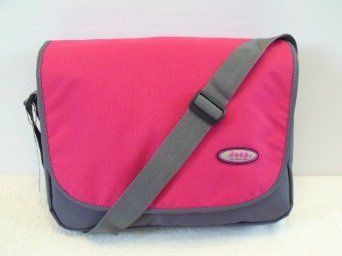
Someone in the office asked me the other day if I actually owned a handbag. You might think that was a random question, but a valid one. That’s because I normally have an orange bag made by Jeep, one that slings over your shoulder. It is really handy because it has some good hidden pockets (much needed in Kenya), is washable and I can wear it over my shoulder and in the front of me. I originally bought it for our 2011 trip to Africa. It has been my constant companion wherever I go.

A close friend of mine, Ros told me once that I had the ‘classic look’. I’m not into flowery dresses but plain colours, wear Converse more than heels and shock the office staff when I wear dangly earrings. Sure, I can dress up with the best of them when I have to but mostly wear jeans and a hoody, simply because it’s comfortable. Right now I’m sitting in an office with my feet up on a drawer with my headphones on. There’s no rhyme or reason, just that it’s good for working in.

What it comes down to is be who you are created to be. Stop trying to be a people pleaser. You can only please some of the people some of the time.

bag

My bag is a burnt orange and not pink – I dislike pink.

5. I believe in an even playing field

Out of everything written this is probably the one that will offend people the most. I don’t care what colour, gender, age, nationality, tribe or at what income level someone is. We all label people. In Australia you would say ‘You can’t trust a P plater’, that was someone on a provisional driving license. Here, it is said “That’s because they’re a (fill in the tribe)”. Sure, certain ethnicities exhibit predominant behaviours, but why do we label a whole people group with the same paintbrush? There’s a generation gap because we formed it. There are divisions, racial hatred and animosity between rich and poor. I’ve had the privilege of sitting with a homeless person in Sydney right in Martin Place and ask them their story. Sure it was great to buy them some sandwiches and drink, but it was more important to sit and just talk with them. I’ve also had a cup of tea at the Governor General’s house in Kirribilli. It makes no difference to me if I’m working with locals in Hawaii or Kenya. I don’t distrust someone because of their skin colour or the language they speak. Over the past 8 months I’ve met some incredible people and others I wouldn’t trust as far as I could throw them. And there are lots of different nationalities here.

At the end of the day we all bleed red.

Thank you, thank you very much (Elvis)

In October last year Pete, Liz and I left our home, our family and friends and our youngest daughter to move to Nairobi, Kenya.

Note that I said moved and not just to visit.

There is a huge difference from going somewhere for a couple of months each year to actually packing up and relocating. Sure, people will put up with your habits, idiosyncrasies and weird ways of doing things. Give it 6 months and they may want to quit before you do!

There are days when it is really satisfying, especially when you can help one of the local leaders do their job better, or when a teenager who never talks to you comes up and says ‘Thanks, keep on doing what you’re doing, it’s great’. Other days suck to the max.

You get over every second guy on the street yelling out ‘Muzungu’ (yes I do actually know that I’m white but thanks for pointing it out anyway). Or the traffic is so bad it makes you want to beg the next driver to do you a favour and run you over. Or you just want to be with old friends but know that YOU’VE made the choice to leave them.

Moving country, especially to a developing one, is not for the faint hearted. I think I’ve discovered more about myself than anything else in the 7 months we’ve been in Kenya. I don’t always like what I see, but I hope it’s a passing phase.

Sometimes we just want to escape Nairobi and get away from it all. We do that by going to look at potential water projects out of town. That may mean driving to another country but it’s worth it. Personally, I’m looking forward to going to Tanzania later in the year. It’s only about a 5 hour drive (okay, add another hour at the border) but that’s nothing. We’ve a number of friends there doing stuff like schools and training programs and I think I’m going to enjoy just being with them for a few days.

While you can’t always escape a situation, you can always do something really out there. For me, it means having a latte. Sure, you can mock, but I’ve never been into coffee so to go and actually pay for one and drink it is a huge thing. Pete and I have found it a way of doing cheap therapy. Mind you, there’s this really nice gluten free brownie that is phenomenal.

Amongst it all, I am truly grateful for what we have right now. We have electricity, which is a bonus, especially since it’s been off for most of the last 3 days. Today, we got curtains for two of the bedrooms. It’s got to beat having a blanket up there. Last week, a very generous business offered us the funds for a car – that is absolutely huge. I love it when I get Facebook messages, text messages or emails from people to let me know they haven’t forgotten we exist.

Thankfulness is a real key to being in a place like Africa. You get to rejoice in the little things – like having access to a flushing toilet or a car that someone lends you. But it’s also being thankful when things don’t go your way. The Bible says to give thanks IN everything, not necessarily for it. I’m not overjoyed when I know that some of the kids in the child sponsorship program are struggling with alcoholic parents, aren’t making it in school or may be married off in their mid teens. But I am thankful that they can actually go to school and get a chance to make their future different.

So, I can sit and whinge that there’s no electricity to cook Pete a nice roast meal, or I can get over myself and get the gas going and put it in a frying pan.

thanks

Yes, this is sometimes us.

Kenya 101

As we hit the 7 month mark of living in Kenya I thought I’d share with you some of the things you will never find on a website nor in a Lonely Planet book.

  • They are called ‘blinders’ here not ‘netting curtains’.
  • There’s no cell phone, nor mobile phone, we just call it a phone.
  • You’re either from Western Kenya, Central or The Coast – seems like nothing in between and definitely no South.
  • Kenyans don’t like Ugandans. It’s a relationship similar between Aussies and Kiwis.
  • Asians tend to belittle Africans, it’s like they are the superior race.
  • All Muzungu’s (white people) are considered rich. They think you have enough to give them extra work, extra money and extra for when they don’t have it.
  • You get a fine for being on your phone when crossing the road. A council worker will grab you by the arm into their car, then you pay them off.
  • Everything is negotiable, especially when they say ‘what are you prepared to pay’.
  • If someone says ‘it’s possible’ it probably won’t be.
  • If someone is directing you in traffic or on the footpath they might say ‘straight’ but may mean left or right depending on the direction their hand is in.
  • People will say yes to your face, but what they really mean is no.
  • Someone will say ‘yes, yes’ which actually means they don’t understand what you just said.
  • Tipping is not mandatory, but it is highly appreciated.
  • Your ‘friendly’ traffic officers have no worries about paying their kids school fees with your ‘donation’ to them paid at their discernment (or lack of it).
  • You can wear whatever you like in the city, but it’s a big coverup for the ladies in the country.
  • Up country doesn’t refer to the direction you’re going, it means you are traveling more than 2 hours out of town.
  • You seem to be every Kenyan’s ‘friend’ especially when they want to sell you something at the market.
  • Always make use of toilets available, especially when you probably will be stuck in traffic for 2 hours after a meal.
  • A meal without ugali is not a real meal (Google ‘uglai’)
  • Having dinner (called supper here) before 9pm means you will need a snack before going to bed
  • If you want to leave work, you just don’t turn up to your present job, it’s usually done just after payday. No resignation letter, no text message – just don’t show. While it ticks your boss off, you’ve been paid so that’s all that matters.
  • No matter how bad the singer is up the front at church, you clap anyway in appreciation.
  • Kenyans top at hospitality. Even if you’re super poor, you put on the most amazing meal for your visitors.

If you learn this by heart before you come you will be years ahead of us!

Meet My Therapist

We had a wonderfully (not) sleepless night thanks to some very loud music being played in our Nairobi neighbourhood. So it gave me lots of thinking time for this blog.

I just read an article that says that nearly 20% of Americans have seen a therapist and 20% are on some kind of medication for anxiety or depression.

Don’t worry, I’m not either depressed or have overwhelming anxiety. Sure, there’s plenty here to keep you awake at night (besides loud music), worry about finances, wondering about the future, kids that are struggling. It doesn’t matter if you’re here in Kenya or in a developed country we all have those sleepless nights.

Over here there are lot of ways to de-stress. Join a very expensive club (one has a $3,000 joining fee). Go for a run or walk (trying not to get hit by a car in the process). Get some retail therapy (that’s if you have the money for it). You can go to a safari park (but how many animals can you look at over the year). Some choose to fly to the beach at Mombasa for the weekend (hmm, we usually work on weekends).

cinema

Our movie theatre is called Cnemax Cinemas

Me, my therapy is to go to the movies every now and then.

You see, my therapist is cheap as chips. He costs only $6 per session, in comparison to $18 we were paying in Sydney. I think it’s value for money.

My therapist has lots of options for the challenges I face. Sure, a movie might come out a month later but we get them eventually. Right now, I’m waiting for the next Star Trek movie to come out, apparently it’s in June, it was available 6 weeks earlier in Aussie. Sometimes, you just have to wait until your therapist is available.

My therapist shows me that it’s not all about poverty here. When you’re working with some of the most disadvantaged youth, are sitting for endless hours in front of the computer looking at projects or wondering where your next dollar is coming from, my therapist gives me choices. When I come out of a movie I feel refreshed, nothing changes, but it does. I feel better, relieved and recharged. For a brief moment I can forget everything else and just enjoy being entertained.

My therapist makes me laugh. I choose my therapist wisely, I don’t want to hear crappola from him, sometimes I just want to laugh. One of our kids (Hannah) is like me, a bit of a movie buff. I think her therapist is definitely movies – and chocolate. We don’t always have the same tastes, but it is really good to have a conversation with movie quotes in it. We have a multitude of favourites, but it’s the humorous ones we love the best. I definitely laughed out loud during Iron Man 3, it was fantastic. It’s not often I want to watch a movie twice, but that one was definitely on my list of future DVD purchases.

I am not ashamed of being in therapy. I’ve recognised I have weaknesses in my life and need a bit of assistance every now and then.

I’m not dependent on my therapist for getting me through – that’s what God is for. I can’t fix all of the problems in the universe (let alone in my own world) but He sure can.

That doesn’t mean I have to totally deprive myself of a few indulgences while here though.

I like my therapist. I’m going to keep my therapist. I will keep seeing him from time to time for a bit of social adjustment.

Hi, my name is Sharon Crean and I’m in therapy. Why not join me.


I Am A Fool

Well, that’s what some of our friends and family think of us anyway. Imagine, why would or should we leave the lovely Northern Beaches of Sydney? We had a great lifestyle, had the ability to earn good money, went to one of the biggest churches in the city and lived a 4 minute walk from the beach.

In anyones mind moving to Nairobi which has all the opposite of the above is the most craziest idea ever.

Here, we’re not allowed to make money, the nearest beach is 9 hours away and getting into  a new church is hard work. The roads are so rough I end up with headaches from a sore neck.

Recently we wrote to our friends seeking their financial support, for a simple $10 per month. Most don’t get back to us but I’m really surprised who decided to get behind us.

I know that lots of people think we’re totally insane being here and they are probably right. Who in their right mind would in the prime of their money making years turn their backs on everything comfortable.

But comfortable isn’t us. A kiwi friend who has studied counseling says that job satisfaction is the main priority of those in their 40’s and 50’s. We can attest to that. There is absolutely nothing wrong with making money though. In fact, it’s one of the main things we miss – the capability to earn. Both of us, but especially Pete is a very hard worker and there is great security in bringing in your own income, it feels good too.

Contrary to what people think, I’m more concerned with what God thinks.

There’s this very cool scripture that says ‘He who wins souls is wise’ (Prov 11.30). We’re not out here bashing people with the Bible, we’re working with young people and showing them the love of God. But it’s not just young people who need this revelation, it’s everyone. We’re looking at joining a Rotary Club. Mainly it’s to meet new people, but it also gives us an opportunity to be God’s representatives to the rather wealthy people who attend.

Are we fools? Maybe, maybe not, but as long as the money comes in we’re staying. If we really wanted to make money here we could do it but that would have to be our focus and not young people. Yep, we’ll make it to the beach one day and will love every minute of it.

But true wisdom is leaving a legacy for the next generation. And that’s the plan Stan for the wildcreanberries!

Home and Away

I’ve tried all I can to call Kenya home but it’s not quite working. I thought if I put it into my head that this was ‘home’ it would happen automatically, but it hasn’t. I still call Australia home. While we will always consider ourselves Kiwis, we see ourselves as more honorary Aussies. Of course, when it comes to the rugby we always love the haka. Our 11 years in Australia were some of the best we’ve ever had.

It’s not a bad thing though, pretty much all expats have a place they call home, but that’s because they’re only here for 2 or 3 years on assignment. For us, as long as the money lasts, we’re here.

It’s been nearly 9 months since we’ve been in our own place. For a month our Aussie mum put us up at her place, then we spent a month in the US before coming here to Nairobi. We’ve been house sitting since then. Getting into our own house is pretty important. I was so over having our stuff in boxes that I just had to get some small things out. Some have been packed since a year ago!

A place can be a house but definitely not a home. I’m hoping when we find a place next week that we can really make it our own. It was way too expensive to bring many belongings with us from Aussie so it was just a few mementos and kitchen gear. Everything else we had to start from scratch.

Between the time we came in 2011 and then again in 2012 living costs had pretty much doubled. Still, we press on.

There’s been some challenges to even finding a place. Twice now we’ve been promised an apartment and it’s fallen through. Apparently on the 28th we’ve been guaranteed a 3 bedroom apartment just up the road from the office. I’m not into crossing fingers but I really hope we get it. The owners of the house we’re in are coming back from New Zealand in exactly 2 weeks and we also have some Kiwi friends coming for a week. So, we’re cutting it pretty thin.

apartment

The actual apartment we hope to get.

At this stage we’ll be sleeping on airbeds, but that’s okay, we’ve done it before.

Thanks to some generous friends we will have a couch to sit on! As I’m writing this blog our builder is sitting in our lounge drawing what he’s done. It was meant to be finished tomorrow, but in good Kenyan time it’ll be next week. We are so grateful for all of our supporters we really could not be here without them. When renting an apartment here you even have to supply your own gas oven, known as a ‘cooker’ here. I guess that’s because people steal them when they leave.

One of the reasons we are here is to host the many international visitors who come to Kenya to look at the work we are doing. Every month for the rest of the year we get the great pleasure of having people in our home, whether it be just for one night or seven. In fact, one couple arrive just a few days after we hopefully move into our home! I love having people at our place, whether they are a local or a visitor. To us it’s really really important to have a nice place that people can call their second home.

Thankfully it’s not over the top expensive to get furniture made. The same lounge suite we wanted in Sydney is about ¼ of the price to be made here and we only have to wait a week for it. To get a bed made takes around 4 days.

Hence, we’ve started a campaign called ‘House our Home’ to give people an opportunity to partner with us to make our new house (actually an apartment), our home. Check out the link HERE which has a whole list of things people can donate towards. The cool thing is that it doesn’t matter if you’re in Australia, the US or the UK, it’s tax deductible, sorry about the rest of you though!

I’m hoping that when we get into our own place that we’ll feel like this could become our home. We’re not ready to go back to Australia yet, but I think I’ll always call it home (of some sort anyway).

The Biggest Sacrifice Of All

There are many ancient religions where children were sacrificed on behalf of their parents. These include the Incas, Moabites, Phoenicians and Islamists.

Usually it was to appease a god, please them or in the hope of better crops.

Even today child sacrifice continues around the globe. ‘There are many indicators that politicians and politically connected wealthy businessmen are involved in sacrificing children which has become a commercial enterprise.’ (Wikipedia)

What made me think of this gruesome event was when our daughter stomped off to her bedroom last night yelling ‘that’s it, I’m packing my bags and getting the next flight home!”

While it may not mean a lot to the average person to us it was a huge thing. Because we had decided to move to Kenya our youngest moved out of home and then moved country to New Zealand where she hadn’t lived for 11 years. Our oldest (Liz) came with us.

Literally she had no choice. Liz is a special needs young adult and cannot live by herself. She is a high functioning Aspergers. Most people don’t even know because she is so friendly, has the best smile, cooks wonderfully and is adventurous. Liz has no worries about jumping on a plane to travel from Kenya to Australia, as long as she has her paperwork printed out and in order. If you ask her how her day was, her answer will always be ‘good’.

So for her to say what she did really hit hard.

People think it’s ‘so wonderful’ what we are doing (working in Africa) but there is a flip side to it that most don’t even think of.

Our kids sacrifice for us to be here.

There are days when you wonder if that sacrifice is really worth it. They have to give up friends, family, jobs and the convenience of the only life they’ve known. There is a huge difference between visiting somewhere and living there.

For Liz she has totally lost her friendship and support network and doesn’t have the ability to rebuild that. There are no great social services for those with a disability here. Getting to a church event during the week is a 90 minute drive each way – and that’s on a good day. Art classes are exorbitantly expensive. Volunteer positions for her are just about zero. Then, there’s the fact that she has to fly back to Australia every 3 months to keep her disability pension.

As parents we really do feel we have sacrificed our kids for this mission.

It happens around the globe time and time again. It’s an extra thing when you have a child with a disability because their future doesn’t look quite as bright as it did before.

We now have to make a decision to whether she stays here or has to return to New Zealand and see her only every few years. Right now the thought of that is too much to bear.

girls

So when you hear of people working in developing countries take a moment to think about how it impacts their family both for the good and bad. There are those working for a large NGO that cater for their housing, transport and kids schooling, then there are small development workers like us who scrape by on their friends donations. Either way, at some stage they either have to return to their home country for their children’s education or they have to say goodbye to them, unsure of when/if they will see them again.

Skype and social networks never replace a real relationship, but it sure beats the old days before they were invented.

Our kids have been blessed to be involved in humanitarian work in several countries, seen many places in the world that others only read about and have had an impact in changing communities. I believe it has changed them and made them better and bigger minded people. I don’t regret investing in them to travel, it has been worth every dollar spent.

“Children are the world’s most valuable resource and its best hope for the future” John F Kennedy


Life as a Teacher

I really enjoy teaching. Whether it’s one on one or in a classroom.

I actually wanted to become a teacher but became a youth worker instead. Where we lived the nearest university was at least an hour away. I was married and there was no way I was leaving my husband just to do what I wanted. Then the kids came along and it never happened.

I home schooled our girls and there were a few extra bodies along the way. Now looking back I would do things differently but at the time you do the best that you can. When we moved to Australia in 2002, I gave up the schooling and the youth work as we needed the money and Sydney was way more expensive than Christchurch to live in.

As I’m writing this I’m overseeing 15 students who have completed a 6 week business skills class that I’ve taught. These are young men who only a short while ago where living on the streets of Nairobi. They didn’t finish primary school, but they could be great businessmen if they believe in themselves.

It’s kind of weird how everything from the past 25 years happens just for that moment. I mean, we moved to Aussie, I ended up working in a high school and then went on to working for a university. I got my MBA (Masters of Business Administration) and we started our work in Africa. I’m tutoring kids here and teaching classes. In the next 5 years we’re looking at building a boarding school.

IMG_5724

I didn’t even finish high school.

I dropped out at just before my final year. In those days you just walked into a job, not like now.

But I’ve also become the student again.

Each Monday I have Kiswahili lessons with Judy, she’s a whizz at languages, I’m not. I’ve taught English as a second language and decided I’d much rather be a teacher than a student. I’m envious of these Kenyan kids, they have to learn at least 2 languages throughout their school life.

I’m 44 and yet feel like a 4 year old trying to learn Kiswahili.

I’ve heard people say that you can never stop learning. Heck, move to a country like Kenya and then you have the right to say that. I was wanting to get my Masters in Development some time in the future, but every day here in Kenya is a classroom.

Society here is our teacher and she’s not always nice or patient.

Sometimes I don’t want to hear what she is saying and some times I just don’t care. Sometimes I just want to go to a movie and forget that I’m in Africa.

The fact is though that we are here and we do have to learn. As someone told us ‘Coming to Africa shows you what’s really inside of you, how big a capacity you have’. I thought I was a big person inside but discovered that I’m not. I’m too judgemental, opinionated, narrow-minded and set in my own ways – thank you very much!!

While life is a schoolroom, we have to be willing to learn.

I’m always telling my students that attitude determines altitude, now I have to take my own medicine. While the medicine might not taste great, it is good for us.


7 Myths About Kenya

1. It’s Hot

Sure, there are some places that are pretty warm, but overall, Australia is hotter. For the 6 months we’ve been living here there was probably only one week of really hot. Today I am wearing jeans, jumper and ugg boots. Why the boots I hear you ask – floors are tiled here and they get pretty cold on an overcast day.

Living on the Equator is handy, the length of days doesn’t change. You know it will be light by about 6.30am and dark by 7pm. While my arms are tanned, the legs have a lot to be desired.


2. It’s Cheap

You must be kidding me. Sure, fruit is cheaper than in the West but everything else is equal to or more expensive than back home. I think it makes a difference for us because we aren’t allowed to earn money so we’re super careful with what we get in. Import tax is anywhere in between 75% and 110%. A couple of weeks ago we were in Uganda and things were half the price of here, to the point that I bought an iron.


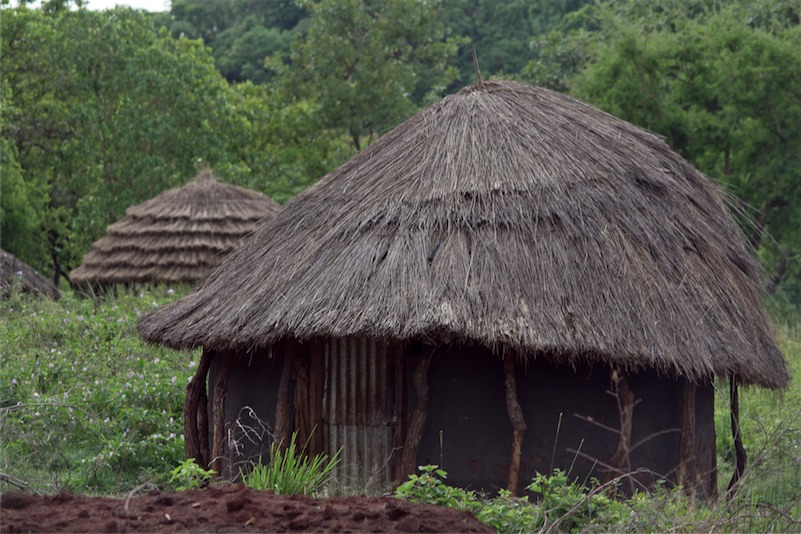
3. We Live In A Mud Hut

While we work with the poor, we don’t have to live like that. Sure there are hundreds of thousands of people who do live in mud huts but not us. Right now we’re on the search for a 3 bedroom apartment, which we can get for 90,000Kshs (about $1,050 dollars). That’s great compared to what were paying in Australia but it’s a challenge for us. At least when we have friends and family come to stay there’s somewhere nice. We also plan to get some leadership training sessions going with the young people and hiring buildings is pretty expensive so we can host them at our place.

IMG_5685

4. There Are Only Black People Here

You’re either a Kenyan or Mzungu. Anyone white is a Mzungu, it doesn’t matter if you’re from New Zealand, the US, Europe or Australia. Sure, the whites are in a minority but you’re never sure where they are from and why they are hear. There are even white Kenyans, these are children of people who came in the colonial days. They don’t belong here but England is not their home either. They’re in between 2 worlds. I’ve bumped into so many Dutch people I never need to go to Holland. You can pick out the Aussie and Kiwi accents from a long distance. Last month we went to the ANZAC dawn service and there would’ve been around 200 people there. So, there’s a few from the Pacific over this way.

IMG_5911

5. It’s All About War, Poverty & Famine

Yep, there’s lots of poverty around here, but there’s also some serious money to be made. If you can go through all the legal loops and corruption, Kenya is a good place for investing in. Especially so if it’s roads, IT or building.

There’s also lots of money to be made in war and famine. While people in the West get shocked about the crisis up north, they don’t realise that the refugee camps have been there for 20 years. In our travels around East Africa, there are some very nice vehicles, and hotels kept busy because of civil unrest and disasters. Unfortunately, as soon as it’s all peaceful these NGO’s pull out and the businesses close up because of a lack of customers.

You only have to spend 10 minutes at one of the local malls to see that the middle class here is getting bigger.


6. It’s A Really Hard Place To Live In

Depends what you mean by hard. Sure, only knowing a small amount of Swahili is a pain, so you’ll get charged more outside of the malls, but it’s not tragic here. You have to be willing to adapt. You make sure you lock your care, when you’re in it. You put your mobile phone in your front pocket. The food isn’t great but you won’t starve. The traffic sucks and you get over paying bribes to the police every time you get pulled up – otherwise you go to jail.

It’s not so much hard as complicated.

IMG_5965

7. People Only Come Here For Safaris

True, most people come here for a safari. They come for a look at an allusive lion, zebra, elephant or giraffe. No, we don’t have tigers, they are in India. It’s surprising though how many people come for other things though. I ran into a lady from Sydney who came over just to catch up with friends. Some people come to build classrooms, visit their sponsored child or volunteer. Sometimes students who are at university need to intern somewhere and that’s one of the areas we work with. We give them opportunity to teach, see the different projects and assist the staff. Right now we need lots of volunteers as the work continues to grow.

Don’t think that what is on the 6pm news is all there is about Kenya or Africa itself. There’s a whole world of amazing things happening here. Sure it’s not Hawaii, but it’s not hell either.

Want to help bring positive change to the lives of young people in East Africa through our work? Why not donate today – click HERE