I Want To Help The Poor

Last week we had a friend from Australia come and visit for a few days before she moved on to look at other projects in Kenya.

She said something on the first day that I’ve heard many a time over the years “We’d better get busy, I’m here to help the poor.”

While I knew what she meant, it got me thinking about how we think about what we think helping others actually is.

In the West we have the mentality to put a band aid on something and walk away. Or, we write a cheque because it’s the easiest way for us to ‘deal with it’.

Not that there’s anything wrong with handing out money but is it really the answer?

Most weeks I get the privilege of going to the Kibera Slum. The reason I say privilege, is because as a white person by myself, it would be unwise and it wouldn’t be safe for me, but with one of our friends, I am fine. It’s not that they don’t like white people, but they’re over white people coming in buses, taking photos and leaving. They’re over white people telling them what to do.

They just want to get on with their lives and make the best of what’s been dealt to them.

I look at the slum of nearly a million people and how much money has been poured into that place over the years and wonder what impact it has made. And yet I see glimmers of hope.


How can we make a real impact on people:

1. Learn about the people you want to help

Do you remember their name or just their need? How can we tell people we care if we don’t know who we’re talking about? Our motto should always be ‘People matter most’. Leave the programs up to those living on the ground long term.

Ask people “What is your dream for your children?” They will be more than willing to tell you. For most it will be that they want their children to go to school and have a better life than what they did.

girlchild2. Learn their story

Everyone has a story but not everyone has a voice. Our job is to give them a platform to be heard.

When I lived in Sydney, Australia I was studying for my MBA and needed to go into the city to buy a $120 textbook for a subject. I was walking through an area called Martin Place at lunchtime and threw $5 into a bowl by a homeless lady who was sitting on the footpath. I went on my merry way and then this thought came to me ‘what a fat lot of difference that made’. I knew what I had to do. I went and bought my book, dropped into a friends million dollar jewellery store for a chat and went back to Martin Place. In my mind I was kind of hoping the lady was still there and then I didn’t. But when I saw her, I was relieved that she was.

I sat down with her and asked her story. There was a food cart across the street so I asked her if she wanted a Coke and chips, to which her answer was “No, just a bottle of water and a sandwich is fine.” I ended up buying as much as possible and sat back on the ground with her for a few more minutes. As a Jesus follower I asked if I could pray with her, which she allowed. Then I told her I had to go and catch a ferry to Manly. I walked away hoping that I gave her hope.

The gist of it is that I gave her a chance to tell about herself and I just had to listen – that was all.

home3. Link up with people working on the ground

When you come to a place like Africa all you will see are the things that need fixing – the roads, the electricity, the living conditions, the poverty. Plenty of people have walked in with pockets full of cash and gone home penniless. They give out money here and there. People’s stories will pull on your heart strings and you couldn’t imagine YOUR children living in some of these conditions. You’ll be shocked and want to give, give, give.

Can I suggest something. Give to organisations (never individuals) who have a good track record and can prove where the money goes. There is no harm in asking for copies of the receipts. Accountability is a good thing.

This week we gave a person we trust a small amount of money for some clothes for a young man. Even then, I asked if they could take a photo on their phone and to send it to me. It’s not because we don’t trust them, it’s because I want to use it to raise more money for more kids. Because we knew each other, we’d built this relationship, it wasn’t offensive.

Remember – the proof of the pudding is in the eating.

chocolate_pudding_s

4. Don’t make promises

When you see a great need it’s easy to get swept away in emotion, especially if there are young children involved. Too many people have come to Africa and said that when they return home they will do something to help. The truth is, when you get back home you hit the ground running and get caught up in every day life.

If you raise funds, that’s great. If you raise awareness that raises funds, even better.

poverty-in-africa5. Be rather than do

We tend to think that if we get in there and ‘fix it’ we’ve done our job. Sure, we can do it but what have we left the person with? Have we left them with a sense of value, belonging and that they are our equals? Or, do people just see dollar signs when they see us?

Play a game of soccer with the kids, have tea with the mamas, sit with people in their home, show them photos of your kids, be a friend.

basketball-children-africa

We always welcome visitors with open arms, but please, come to learn, then you will get everything out of your trip that is available. If you come to do, do, do, you’ll end up judging, frustrated and wonder what difference you’ve made.

Leave your chequebook at home. Then when you get back, you can give to one project that really touched your heart. Crumbs given out here and there don’t really impact much, but a larger one off donation can be utilised really well.


Why you SHOULD visit Kenya

I just want to come out and say it. The job of the media is not to tell the truth, their job is to sell newspapers. They capture a moment in time and then move on to the next big headline.

lensI’m not against telling what’s going on in the world, I just think there is an oversaturation of events that are available on our phones, laptops, over the radio, on TV and in newspapers. Social network sites are so rife with news that in places like Iraq Facebook is banned because ISIS were using it to spread their horror.

The only time Kenya seems to get into the global news is when there is a terrorist attack or governments put out travel alerts for this part of the world. As soon as something goes wrong, we end up getting messages from the West asking if we’re okay, even though the event happened 9 hours drive away.

So here, I’m going to give you some good reasons to actually come here.

1.Variety

There’s something for everyone. Surf, sand, cities, farms, restaurants from every nation, markets, malls and cultural shows. There’s swimming pools, ice rinks, IMAX and horse racing. Of course, Kenya is known for it’s wildlife with over 65 national parks, reserves, sanctuaries and marine parks to visit. Each has it’s own focus on particular animals. There’s even one animal park you can bike through without being eaten!

beach2. Opportunities

This is the volunteer capital in the world. Whatever skill you’ve got can be used to grow the skills of locals. You might not see playing soccer with kids as a big deal, but to them it is. There is great joy when a child you’ve been teaching actually able to read because you’ve spent a couple of weeks with them. Giving back to communities is the best thing you can do for a week of your life, but so is receiving. While most volunteers come with the intention of bringing about change, they come away feeling like the luckiest people in the world, and see that they are the ones who are changed.

coach3. Cost

If you’re flying from Australia or New Zealand air tickets can be pretty pricey, unless you take a slightly longer route. However, once you’re here it is relatively cheap to get around and as long as you stay in a nice guesthouse, your accommodation costs are low. Food is much cheaper than back at home and there is always a good variety of fruit. To eat out is a good option and there’s no lack of variety from budget to extreme. For example, you can have an all you can eat buffet, including dessert for $26. Or, you can have beef stew and rice for $2.60. Tourist pay a lot more than locals for entry into animal game parks. One national park costs tourists $90 while we as residents pay $10.

fruit4. Something different

Why go somewhere that is just like home? Not many people can say they went white water rafting or bungee jumping in Kenya, or flying in a balloon while thousands of wildebeests are below. How many people can say they went to a Masai village and met the cutest kids in the world? I bet your friends have never kissed a giraffe!

raft5. En-route

I always try to encourage people that if they are coming this far, to travel to other countries in this part of the world. Dubai is only 5 hours away, South Africa 6, London 8, Amsterdam 8, Egypt just under 5. Flying in between African countries is not that expensive either. To fly to Uganda return is $350 (USD). If time allows it why not explore as much as possible.

caseThe world is an amazing place, and Kenya is an exciting place to explore. It’s far more than you will ever see on the Discovery Channel. Why not come and see if for yourself!


4 Things I Don’t Think God Really Cares About

I know God cares, but I think there are some things He doesn’t really care about at all. When I say ‘care about’, I mean He doesn’t mind.


1. What Type Of Music You Play In Church.

Pentecostal churches like it loud, more traditional churches like it, well, traditional. Sometimes they are quick to criticise the way they do worship. I don’t think God really minds at all. He’s more interested in people’s heart attitude and whether they connect with Him or not. Nothing must bore God more than some songs thrown together where people come in and go through the motions of ‘church’. He also doesn’t mind if you sit, stand, wave your hands in the air like you just don’t care or even prostrate yourself. You can have your hands raised and be thinking about the football.


2. If You Live In Africa Or America.

Jesus wasn’t blue eyed, blonde nor spoke in English. Actually, I know God is colour-blind. He reacts to people the same wherever they are. He doesn’t go ‘Oh, those poor people in Africa, I think I’ll love them more than the Brits because they’ve got more’. That wouldn’t be fair now would it? God loves everyone, full stop, no doubt. His love is not based on our need, but Him. Therefore, He cares about multimillionaires, those who live on the street and everyone in between.

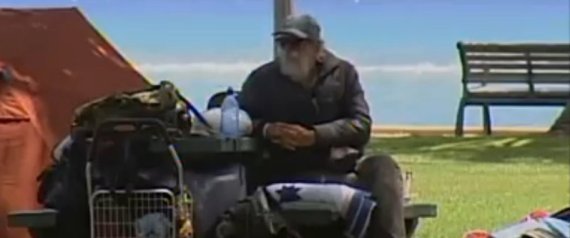
Homeless in Hawaii

Homeless in Hawaii


3. About Your Age.

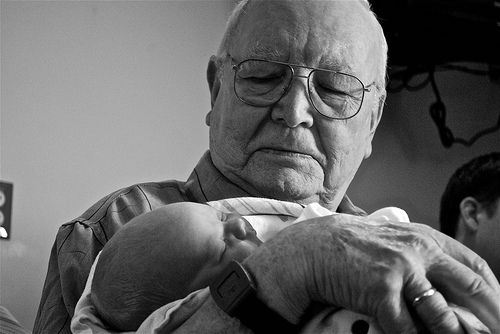
I’m not sure why people of mature age think that they are ‘more spiritual’ or in a better position to be used by God. God can use whoever He wants, however He wants. If we wait until we’re spiritual enough, old enough, rich enough or knowledgeable enough – we might be dead and in the grave. It’s about being obedient in the small things, regardless of your age. It’s not about how many years you’ve got but about who you serve. I’ve heard amazing things come out of the mouths of little kids and those well advanced in years. We need to get over ourselves and drop the whole generation gap thing.

old

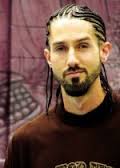
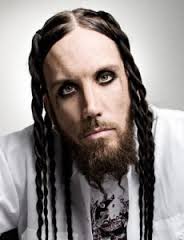
4. Whether You Have Dreadlocks Or Look Like A Goth Or Skinhead.

Yep, God doesn’t care about your hairstyle. People do, but I doubt that’s high on His priority list. We live in a country where those who have dreads are looked at as druggies and ‘from the Coast’ – rebels. Personally, I’m not sure how on earth people with dreadlocks can keep them clean but each to their own. Even Nairobi has a Goth shop – imagine wearing leather pants in 30 degree heat! As humans we are quick to judge by the outward appearance. Once you get to know the person you find out what they are really like and often we are surprised by what we find.

tommy

Tommy Kyllonen – pastor in Florida

brian

Brian Welch – Jesus follower and founding member of Korn

Read THIS quick article about one woman in Adelaide, Australia and what she encountered on a train.


What else do you think God doesn’t really care about?

A Coeliac in Kenya

In October 2007 I travelled for 9 days to Kenya, then returned back to Sydney. Three weeks later I travelled via the UK to Ghana for a whopping 3 days. Then in January 2008 I started getting night sweats and not feeling 100%. In February I got pain from what I thought was appendicitis, which abruptly stopped at 2pm. Nothing much for the remainder of the year except this sharp pain in my right side.

The doctor couldn’t put it down to anything in particular.

About a year later I was eating a chocolate Tim Tam biscuit and my belly swelled up to what made me look 6 months pregnant. Pete thought it was hilarious. After having tubes put in both ends of my body the doctors told me I was a coeliac. I didn’t even know what it was. It was a harsh blow to find out that I wasn’t allowed to eat anything with wheat in it. There went 50% of my diet.

timA few months later the ‘could it be appendicitis’ pain struck at 6 in the morning. Pete took me to hospital, they took the appendix out and then told me the pain wasn’t because of that. The appendix was fine. However, since then the pain in my right side which dogged me for years disappeared. It was the caecum that was causing all the problem, which was connected to me being allergic to gluten.

So here I am in Kenya, a coeliac, with about zero people knowing about it.

I’ve had an interesting 19 months trying to figure out what I can eat and what to avoid. The food labelling here is useless. It might say vinegar but not which type (I can’t have malt/brown vinegar). You ask someone at a restaurant about whether it has flour or gluten in it and you get a blank look.

One of the hardest things is when you go to someones house. The last thing I want to do is offend someone who has gone out of their way to prepare a meal for you to tell them that you can’t eat it. Once I ate a couple of sandwiches and it made me sick for 2 weeks. Bread is a big thing here, usually what someone has for breakfast. A few weeks ago we went to a co-workers house for ‘tea’, but it’s never just a cup of tea here, it’s a full meal. People go out of their way to make your stay nice. These guys had even borrowed from their neighbours a table and couch for us to sit on.

I’ve smartened up a lot and now take a ziplock bag of goodies with me. I also tell Pete to eat ‘for me’ so that it looks good. On Thursdays we travel an hour to a training farm for former streetboys. We have a staffroom and I usually make scrambled eggs for lunch.

Like I said, the hardest thing is the lack of labelling. Even herbs and spices have gluten in them. You only find out when you have to spend a lot of time on the toilet or have intense pain in your stomach to figure out not to get that brand.

We do have some health food shops in Nairobi called HealthyU. Because everything is imported, it’s really expensive. While today they might have gluten free bread mix, tomorrow there might be none. So, I buy multiples of what I need to get. Liz travels back to Australia every few months so she brings me back things I can’t get here.

The big one is chocolate. There is absolutely no chocolate here in the supermarket that doesn’t have gluten in it, not a bar. It’s a tragedy.

Not all chocolate has the same recipe

Not all chocolate has the same recipe

I get to miss out on chapatis (divine taste), bread, sweets, chocolate and mandazis. However, there is lots of fruit, veges, rice and meat I do get to eat. Yes, it’s hard when people in the office are cooking toast and that lovely baked bread smell goes through the room. However, I get to bring in home baked goodies that our guys have never seen.

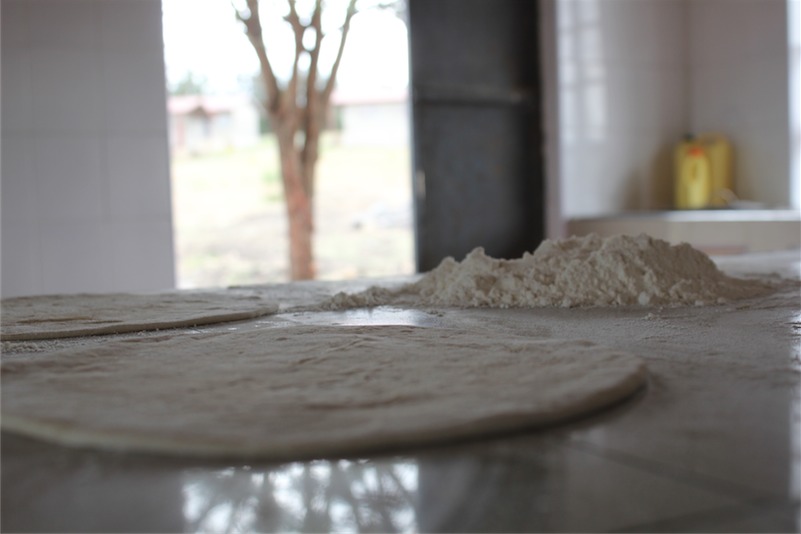
Chapati before it is cooked.

Chapati before it is cooked.

I do a lot of home baking. When someone from Aussie comes to visit I always ask them to bring me gluten free flour. I use that for everything instead of normal flour. I just have to add Xanthum Gum and sometimes an extra egg to give it the fluffiness. I can buy gluten free cornflour here so use that for thickening things. And I always, always have a packet of Edmonds Custard Powder in the cupboard.

custardWhile it’s tough, it’s not life threatening. Much nicer to be healthy and feeling great.

Honour Thy Father

Yesterday it was Father’s Day in lots of countries, including Kenya. Our youngest daughter lives in New Zealand and it doesn’t happen there until September.

So in honour of all dads (and single mums) I’m writing this blog, but especially in honour of Pete’s dad – Alvin Crean.

Dad is in hospital and we are all unsure of how much longer he’ll be with us. At 83 his heart is just holding on. It’s been a tough week for all of the family, we all knew it was going to happen but it doesn’t make it any easier.

It’s hit Pete really hard being so far away from everyone. The last time he saw his dad it was exactly 2 years ago. It was to say goodbye before we moved to Kenya. Pete knew it would be the last time he saw his dad, so it was extra special. Yesterday we did get to make him a video and then speak to him which was really good.

There’s some quite famous Creans across the world. One of them was Thomas Crean, an explorer that went to Antarctica with Ernest Shackleton. In fact this year there was a huge festival in his name held in Wellington, New Zealand. It looks like they originated from Ireland and made their way across the world.

The family crest

The family crest

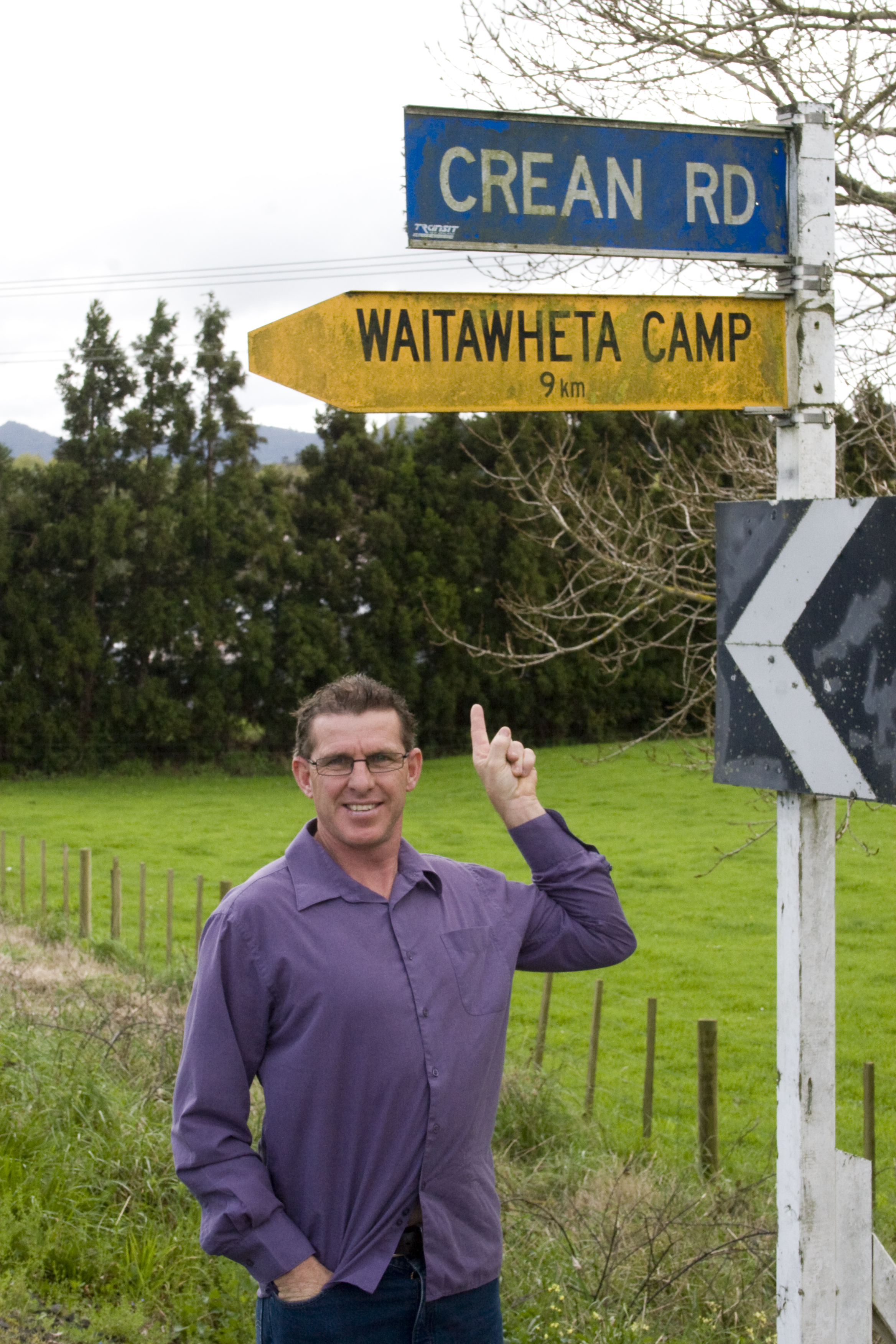
There’s even a ‘Creans Road’ named after Pete’s grandad in Waihi.

roadIn 1960 Pete’s dad married his mum (Alma). She already had 4 children from her previous husband who had passed away. That’s a huge thing to take on 4 kids that aren’t your own. Then, Pete and his sister were taken in when their birth parents abandoned them. Pete and Dawn were just a toddler and a baby.

It takes a lot of courage to take on 6 children with none of them being biologically yours. It wasn’t always a peaceful household and Pete has lots of colourful stories about his upbringing.

Pete liked living where they did because their house was on the fenceline of the school. In fact, it was only a few years ago that his parents moved out of there to a more rural setting.

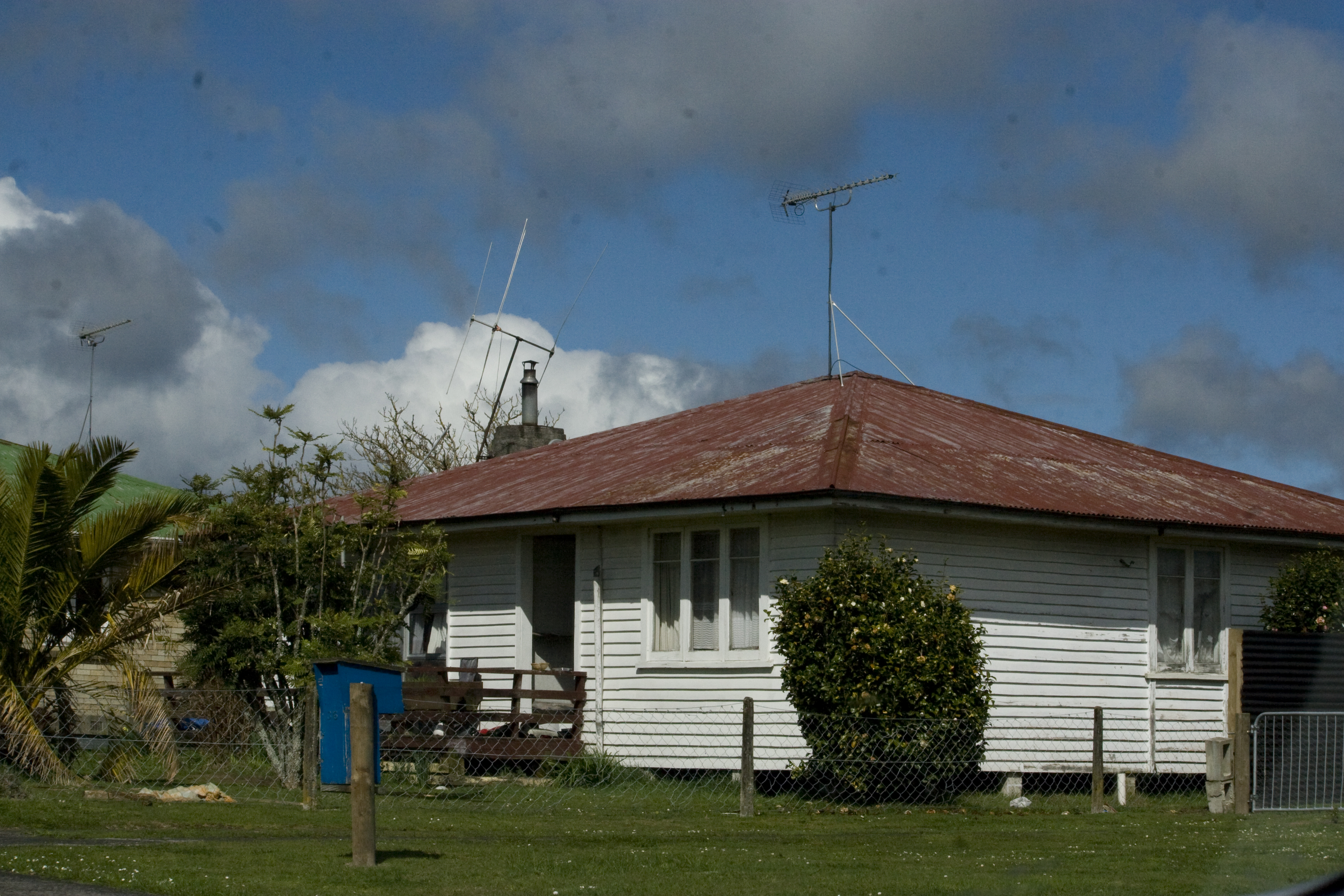
The Crean house in Tokoroa

The Crean house in Tokoroa

Our girls loved visiting their grandparents little lifestyle block. There were pigs, dogs, chickens and lots of parrots. Pete’s dad loves birds. Even now at 83 he keeps birds in the back yard. One of our regrets is that he didn’t get to come to Africa and see the amazing wildlife here. He would’ve really liked that.

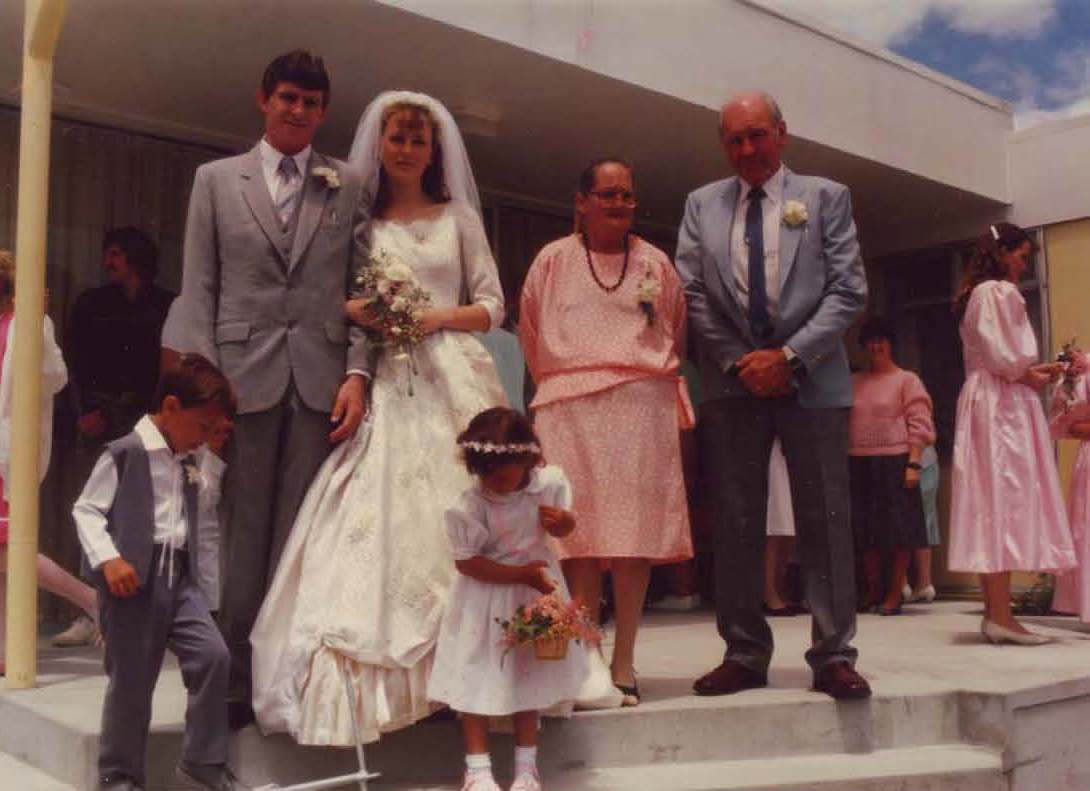
One thing I really respect about Pete is that he honours his dad. He doesn’t agree with everything he did or said but the fact that he took in so many and provided for them and calls them ‘all of his kids’ says a lot. On our wedding day, 26 years ago, Pete made sure during the speeches that his parents were given the due respect and thanks. Although it’s a blended family I’ve never heard anyone say ‘step brother’, ‘step sister’ or his dad say ‘they’re not MY kids’.

December 1987

December 1987

Some handy things Pete’s dad has taught him (purposely or not):

  • Work hard/play hard
  • Provide for your family even if you have to get 2 or 3 jobs
  • Always be hospitable (be ready with that cup of tea)
  • Every kid is special, they are not an accident
  • Treat animals well
  • It’s okay to argue with your spouse but work it out cause you still have to live with them
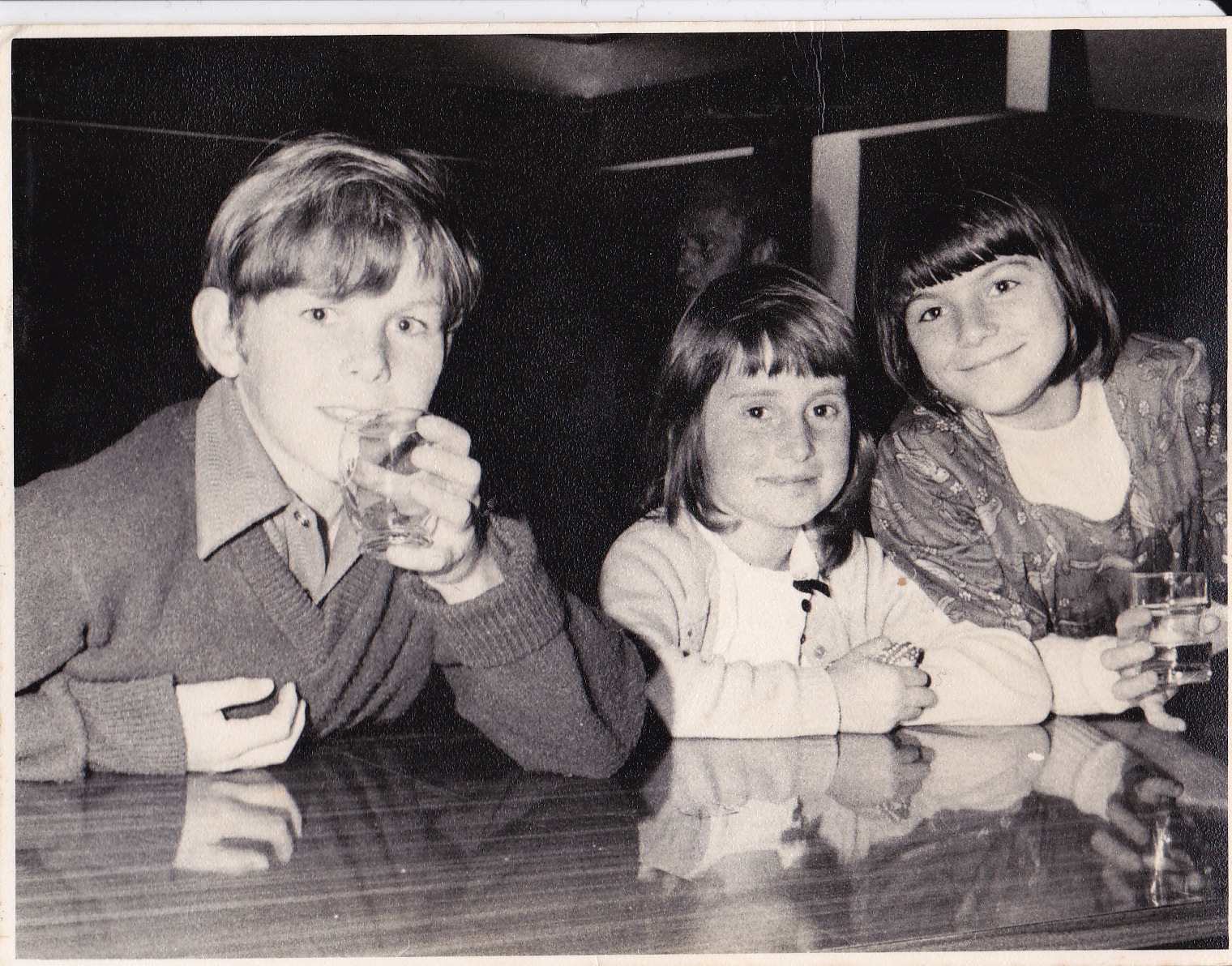
Pete and his sisters at the bar

Pete and his sisters at the bar

Whether you’ve had a good relationship with your dad or a real crappy one, take whatever lessons you can and use them in your own family. We choose the environment we have within our family, we don’t have to repeat how we were brought up if we want it to be different.

family

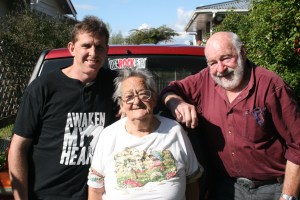
Pete with Mum and Dad

The word ‘Crean’ means ‘heart’. I would say that my husband has learned through his life experiences to have a heart for people. He is compassionate and kind, especially to those who are downtrodden and rejected by society. He chooses to honour his parents through his lifestyle.Dad’s heart might not have much longer to keep beating but he can be assured that the hearts, thoughts and prayers of his family will be with him now and always.


Daughter of a Missionary

To be honest, when mum asked me to write this blog post it was just after I had a huge blowout at her about how much I dislike (to say the least) the fact that they live on the other side of the world and had given up their lives to help those in need. People often look at missionaries and volunteer workers and say how wonderful it is that they have given up their lives to help those in need and that it’s such a heroic act. It seems that people don’t often think of the practical things like the sacrifice the rest of their family makes for this to happen. When mum and dad told me that they had decided to move to Kenya I thought that it was a “nice idea” for them to do something different. I had lived overseas before and knew that I would survive without them. But not long after they left for Kenya I felt like my right arm was chopped off. I think this was because I knew they weren’t coming back easily. After a few months of them being over in Kenya I was struggling a lot and decided to move back to New Zealand where all my extended family are.

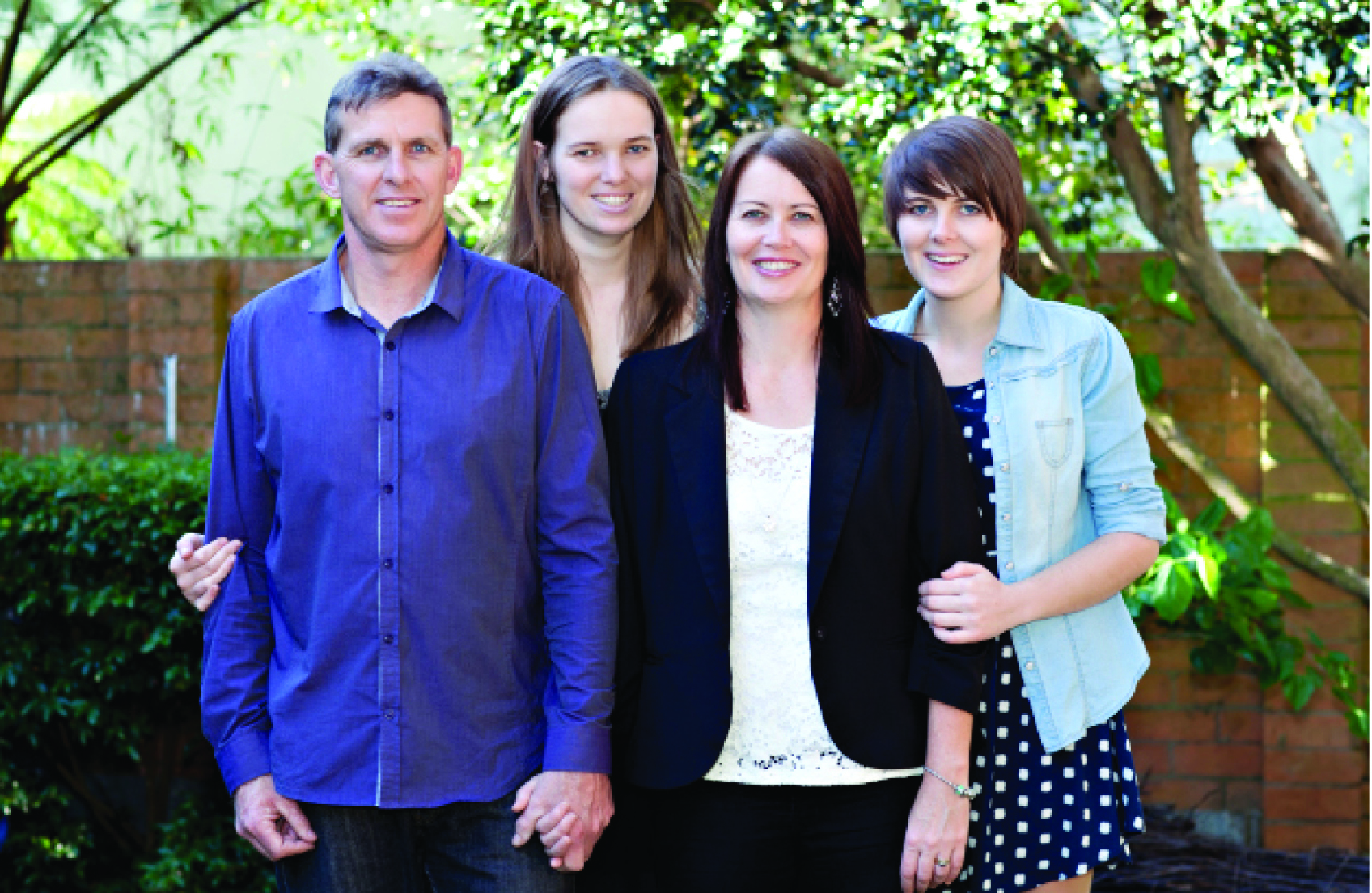
all of us

This was taken one week before my parents and sister left for Africa in 2012.

Here are 5 things I have learned over the past year and a half:

  1. You’re allowed to miss them

I miss the daddy daughter coffee dates, the ability to live at home (DON’T UNDERESTIMATE THE AWESOMENESS OF BEING ABLE TO LIVE AT HOME! Seriously though, I miss it quite a lot and wish I hadn’t taken it for granted), the painful but great back and neck massages mum gives, the long walks on the beach talking about life with my parents, family outings, special moments with my sister (which were few and far between since we were always arguing), and the list goes on. At first I felt guilty that I missed them because they were doing “such an amazing thing” but then came to realise that it’s my right as their daughter to say I miss them.

  1. Most people don’t understand

No one tells you how empty life can be without family. No one tells you how hard it is to organise skype dates between different time zones. No one tells you how scary it is when you hear of bombings and disasters that are just around the corner from where you know your parents are. The matter of the fact is no one tells you because no one really knows until you’re in the same situation. I don’t actually know anyone else who is a missionary’s kid.

Dad's 3 girls. Not sure how he puts up with us!

Dad’s 3 girls. Not sure how he puts up with us!

  1. Your parents are irreplaceable

The other week I was thinking about the future. What is going to happen when I get married one day? Is my dad going to be able to afford to come to my wedding and walk me down the isle? (He has no option; he’s going to be there whether he likes it or not thank you very much!) When I have my first child is my mum going to be able to be there to hold my hand through the ordeal? How often will they be able to see their grandkids? I don’t want my kids to miss out on having their crazy Crean grandparents around. There is no one who can ever replace my parents in those moments.

  1. Make “other family”

Throughout my life when travelling I have learnt to make other people my “other family” when mine aren’t around. Since living in New Zealand I have somehow managed to find Luke, my prince charming. (Awww!) His family, the Rutlands, have become my family, not because its kind of what happens when you get in a relationship, but because I chose for them to be. His dad, Andrew, takes me for driving lessons, makes me laugh, and gives me great advice. His mum, Sharon, (it’s a weird coincidence that our mums have the same name…) takes me for coffee, gives me hugs and talks with me about life. His sisters, Amy and Hannah, (another weird name coincidence which gets very, VERY confusing) have become my other sisters whom I can laugh with, argue with and cause mischief with. And his gran is one of the coolest gran’s around! I couldn’t do life here without them. I can’t say thank you enough to them for being so supportive and loving me like their own.

Mum and I Skype each week and we message each other all the time.

Mum and I Skype each week and we message each other all the time.

  1. Accept the fact that there is no such thing as normal anymore

As a missionaries kid you have to learn to modify your thinking of the basic things. What do you do at Christmas time, Fathers Day, Mothers Day, your birthday? Who do you spend those days with? Everyone else has his or her families.

The 4 of us in the US. I left them to come back to Aussie. They went to Kenya.

The 4 of us in the US. I left them to come back to Aussie. They went to Kenya.

I’ll tell you a secret: every other day I feel like calling my parents and telling them that I hate the fact that they chose to live in Kenya and that they should come back and live close to me. But I know deep down that this is what my parents are called to do. I know they wouldn’t be happy just living a “normal” life in Australia or New Zealand. And even though most of the time it sucks not having a normal family, I am really proud and glad that they are doing what they love.

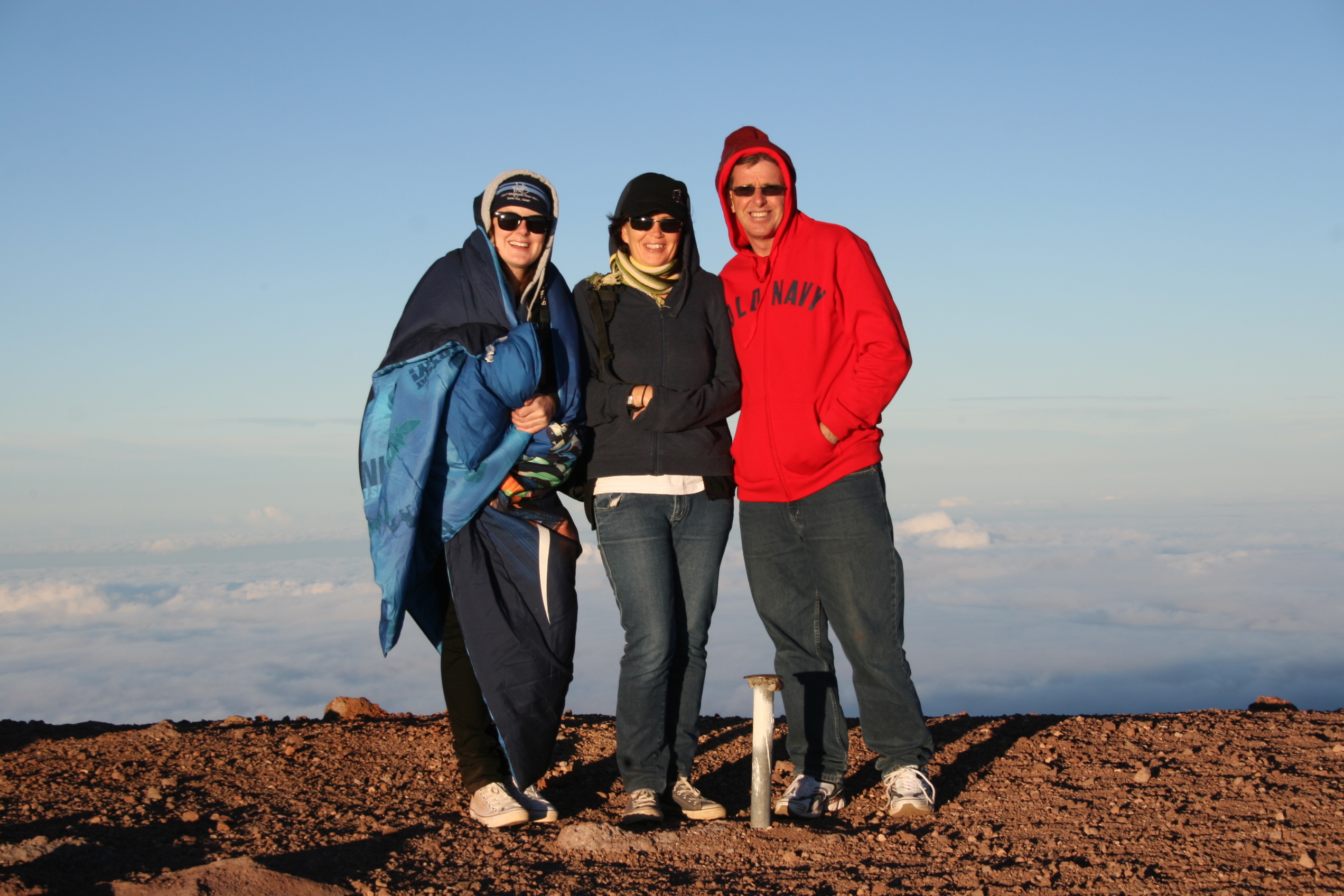
This is us on top of Mauna Kea in Hawaii before I went to school there.

This is us on top of Mauna Kea in Hawaii before I went to school there.


The Expat Dilemma

I’ve read about it, but experiencing it is quite different. I haven’t lived in New Zealand for 12 years and Australia for 16 months. We’re on assignment in Kenya (East Africa) and this visit was to make connections and raise much needed funds to keep us in Nairobi.

Firstly of course is the reverse culture shock – where you return to your home of previous residence. The only chance on our 4 flight trip to exit an airport was in Singapore where we went to my cousins for the day. I’d never been to Singapore so everything was very cool until I spotted a sign that said ‘Be considerate of other drivers and indicate’. I just started laughing in the back seat, I’m not quite sure if it was the 2 sleepless days catching up with me or the thought that this would NEVER happen in Kenya. When we arrived in Sydney there was the increase in early morning train rides that were a shocker and where you felt like an idiot for not knowing. One of the things that really bugged me was the lack of free wireless on offer at the malls. Every mall in Nairobi has some form of free wifi. Because labour is so cheap, toilets at the airport and malls leave for dead the quality of toilets in Aussie. I was so disgusted with Sydney airport toilets but I did appreciate those hand driers that are supersonic and dry your hands with just one pass in the drier.

liz surfing

Liz boarding. The bonus of NOT being 9hrs from the nearest beach.

The biggest sense is that of not belonging. I miss the familiarity of Nairobi and how Kenya works. Sydney is definitely not home anymore. Partly because Pete isn’t there and partly because we have moved on. Liz and I even went to a leaders meeting at our local church and my thought was ‘It’s great here but man would we be bored if we returned’. While it was great seeing friends and family, I also have friends and family in Kenya.

We were only in Sydney for just under 2 days to fly to NZ for a family reunion and then kick off a 6 week speaking tour. The last time I was at a family reunion I was 8 and our family lived about 4 hours away so we didn’t see the others very often anyway. So here’s this bunch of total strangers spending a weekend together at a remote beach that only those 60+ really have memories of. The rest of us sort of knew each other but it was just a matter of who are you, whose your parent and what have you been up to for the last 36 years? The saddest thing about choosing to live overseas is the lack of connection with family. There’s no holidays together, no shared memories. It doesn’t sound much, but it is quite a huge thing.

ang n shaz

Downside of 8 weeks on the road – wild hair.

In Kenya, customer service is a top priority but obviously not here. A taxi driver said about our one suitcase “I’m not lifting that into the car by myself”, hmm, don’t become a cab driver then!

I keep reminding myself that it is just different and we are not here forever. It’s not all bad. Family go out of their way to make you feel welcome. People are interested in your story and so far the weather has been good.

It’s early days yet but I think this trip will be worth it. I hold my breath and hope that we raise the necessary funds because we really do want to stay in Nairobi and work with the most amazing young people on the planet.


Let’s Stop Bagging the Rich

It seems that so many people are up in arms about Oxfam’s news release that 85 people own 110 trillion dollars. While I agree with some of their findings there were a few unclear issues for example not naming anyone on their list.

When I talk with former street kids who are in a training program, they will often say that I’m rich because we drive a nice car and are white. I quickly remind them of some facts:

  1. They have a roof over their head, education, clothing and training with the guarantee of a job at the end of it – all for free. So that makes them rich compared to someone living in a slum.
  2. Everything we have has been donated by our faithful partners overseas. We own nothing nor have the ability to earn money. We are totally reliant on our faith in God.

dollar

So what do we consider rich to be? Is it that someone has more than me, better clothes, a nicer car or endless cash to burn?

One thing I can tell you that poverty does not glorify God.

And why do we have the need to pull down those who have more, or much more than us? It doesn’t change our situation or our attitude. Yet in our eyes we feel justified by doing it.

If you take a further step and look at some of the worlds richest billionaires not all of them or even a fair percentage have inherited wealth. Somewhere along the way they started a company of some sort. For anyone who has started a business, you know it is a lot of sacrifice, blood, sweat and tears. There are times when your business nearly goes bust and then times of great fruitfulness. Mostly though it’s just a lot of hard work. There are plenty of sleepless nights and way too much paperwork.

forbesI admire people who have been able to make their business profitable.

If it weren’t for some business people we wouldn’t have been able to do what we’ve done. There are friends who have sacrificially given both from their profits and in hope that things will turn around for them.

What we need to do is stop judging. Who says you can’t own more than one house? Why not do such things as an investment for your children and their children.

We need to realise that we all have times of great need and great abundance. When we were youth workers in Christchurch, New Zealand there were weeks when we had hardly any money. As a mother it was horrible looking into the fridge and hoping that when I opened the door that food would magically appear.  We’ve had other times when we have had enough so that we could but things such things as a television or furniture for people who were in need.

I tell you now I would much prefer to be on the side of having enough to give to others than always in need.

Right now we are on assignment in Kenya, working with young people. One of our biggest struggles is that as part of our visa permit we can’t go out and earn money. Having to rely on others is a huge burden.

Our times of need are much more often than our times of abundance. Even this month we are not sure if we can pay our rent but we’re believing that by Friday the money will be there. Some people rave on about how they ‘live by faith’ as if it’s an easy journey. Trust me, it isn’t.

cashIn addition to not judging (because everyone has a story) we also can give thanks for what we DO have.  An attitude of gratefulness  helps us to enjoy what we have and stop looking at what we don’t.

Instead of criticising billionaires or those we consider richer than us,  let’s start learning from them and see what we can put into practise for ourselves.

A Kenyan Wedding

Weddings here are quite different to what we’ve experienced in the West. If I were to start a business here it would be in the wedding industry – there’s masses of money to be made. Our friends Steve and Edith invited us to a business partners sons wedding in Nakuru. It meant leaving home at 6.30am and returning the next morning at 1.30am.

We took Steve’s Pajero which broke down half way through the trip so we had to wait for another car to come from Nairobi. I was quite happy with that as the service was 4 hours long! We got their in time for the last 45 minutes. It was all in Swahili except for when the MC gave instructions for the reception.

Check out the video HERE

Because we were two of only three white people we were all the rave for shaking hands. As if I could remember any of their names!! We even had photos with the bridal party. Instantly we were family.

Silly me thought I would go to the toilet when we got to the reception area as it was a sports club. We got there to find out that it was at a sport grounds in marquees. I wasn’t sure if I could make it through the day but then the MC announced that there was a washroom AKA toilet in another area. The day was saved!

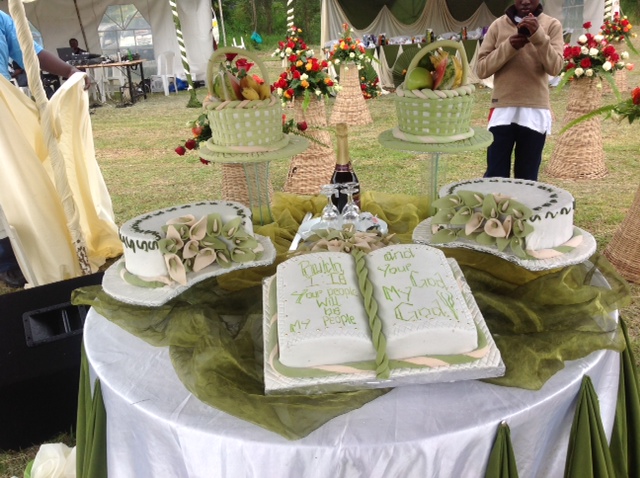
cake

The cakes

At Kenyan weddings there is lots of dancing, usually before the bridal party arrives. I used the excuse of a sore foot (it was true) but a bit hard to explain a neuroma when no one can see it and wearing high heels is a killer. It was a convenient excuse from being totally embarrassed, especially when you’re the only white women amongst hundreds.

We ended up sitting in the VIP area right next to the grooms parents. The food was typically Kenyan so very nice. By the time we had food the bridal party still hadn’t arrived. Apparently they might not do so until the end.

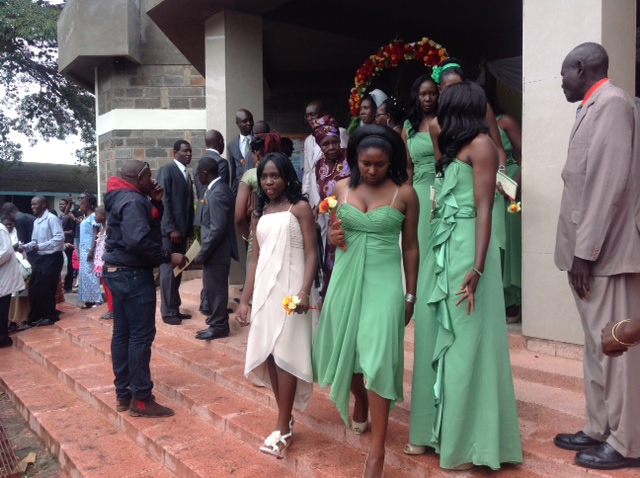
bridesmaids

The bridesmaids

The setup was that the brides family sit under one marquee opposite the grooms family with lots of grass in between. In the middle were several cakes under a smaller marquee.

After the bridal party arrived of course there were the speeches but the important part was the family gifts. It was a major competition between the families about who could bring more and bigger presents. It was mentioned about the gifts that had already been given like an oven. Of course when it came to the grooms side it was done with much ceremony and pomp and the announcement was made that the father had bought them a piece of land.

marquee

One of the many marquees

We thought it was all over until the cake cutting ceremony. The bride kneels to feed her husband a piece of cake and then vice versa.  Another cake is cut and then served to the parents (and us), they didn’t get it that I can’t eat cake because I’m gluten free. Hope they didn’t think I was a snob!

After everything we planned to head home, but no, we had to go to the parents place for an after wedding thing, apparently it’s the norm. Hence we didn’t get home until 1.30am!

Living Without Technology

The last month has been one of the most frustrating all year – for technology anyway. Technology is great, when it works. When it doesn’t I feel powerless and want to throw my laptop out the window – which of course I don’t do even though I feel like it.

techI’ve spent endless hours and Skype calls between Nairobi, Auckland and Sydney trying to sort out our new website and emails. I built this new website but couldn’t get it launched because of name servers, login details and email systems that wouldn’t work. Then of course, there’s the electricity which decides to go off for hours. In fact we had almost 2 days without power. Just to top it off the battery in my laptop decided to crap out so it decided all by itself when and where it would go.

Can you imagine being without power, the internet, your phone or computer – for a whole day? How do you work, talk to people overseas, find out addresses, look for businesses, design material, contact people or prepare school lessons?

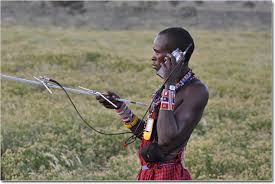
masai

Masai warrior

I see people on Facebook who say they are going to do a fast for a week or month from it. While that’s nice, I see other people complaining that the power went out for two whole hours and their life was miserable. The thing is, we are so reliant on technology that I don’t think any of us can really do without it. I see Masai men herding their cattle in the middle of nowhere who access apps to see what the price of meat and veges are going for at the market.

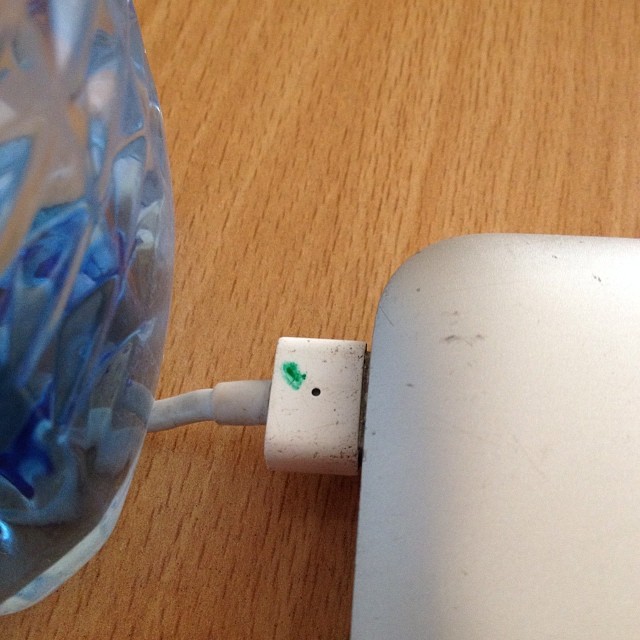
lap

The only way to make my charger work.

One of the things we miss is the convenience of life, including access to technology. Living without it is a pain in the butt however it’s the reality of life for millions of people. So we learn to celebrate when we do have it, and survive when we don’t.

Here’s how we manage our challenging situation in Kenya:

  • Keep electronics charged 24/7
  • Put on surge protectors
  • Make sure you have enough credit on your phone for both airtime and the internet
  • Carry a plug in internet flash drive (with credit loaded)
  • Put at least 1,000KES (about $10) on your Mpesa system
  • Remember the cafes that have free wireless internet
  • Have a solar lamp powered up and ready to go
  • Have spare lights around the house
  • Buy a washing machine that automatically goes on when the power returns

What is your plan of action for living without technology?