Size doesn’t Matter

We seem to be caught up in a world of numbers (how big your church, outreach, youth group), money (how much you are on) strength (how many pushups you can do) and belongings (how many properties you own). Sometimes I get a bit over it. When did numbers and money become the ultimate goal of life?

Sure, I love having money to do the things we want to do, who doesn’t? I love travelling (been to 18 countries, and not just airports), I love speaking to the thousands and I love doing crazy things like white water rafting on The Nile.
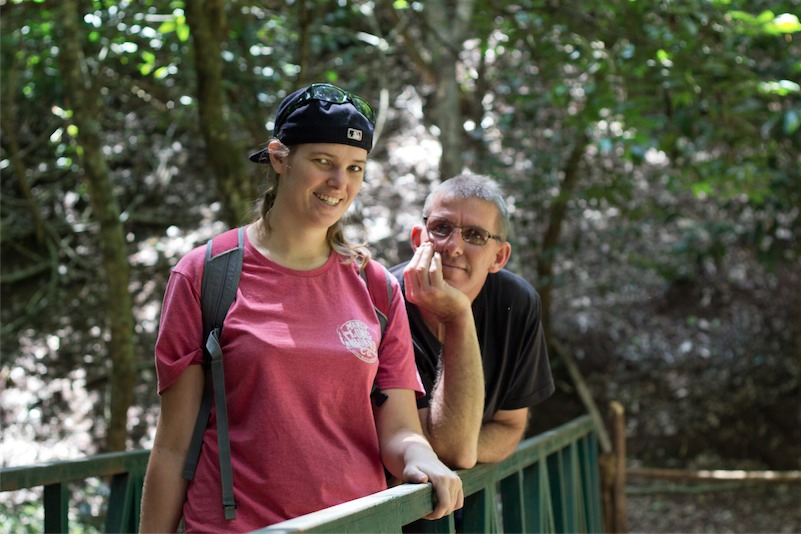
my 2 loves

Bushwalking in Kenya

But one thing I’ve learned over the years is that there will always be someone smarter, richer, more fit and better at some things than myself – and that’s okay. I’ve completed an MBA but want to do another Masters Degree some time soon but does that make me more than someone who has just done their undergrad? Does it make me lesser of a person because I choose not to do a PhD?

I think it’s time we put quantity aside and look at quality of something.

We are on assignment in Kenya (that’s East Africa if you didn’t know) for who knows how long. There’s no shortage of NGO’s, community help groups, churches or ‘mega outreaches’. If you go into the slums you can see endless schools in tin shacks, lunchtime church meetings and welfare organisations operating. I dread to think how much aid and development money has gone into organisations and I ask myself ‘What impact is it making?’

Now while this might sound a tad negative, actually it’s a good thing. We constantly look at what we’re involved in and are more than happy to see lives changed forever.
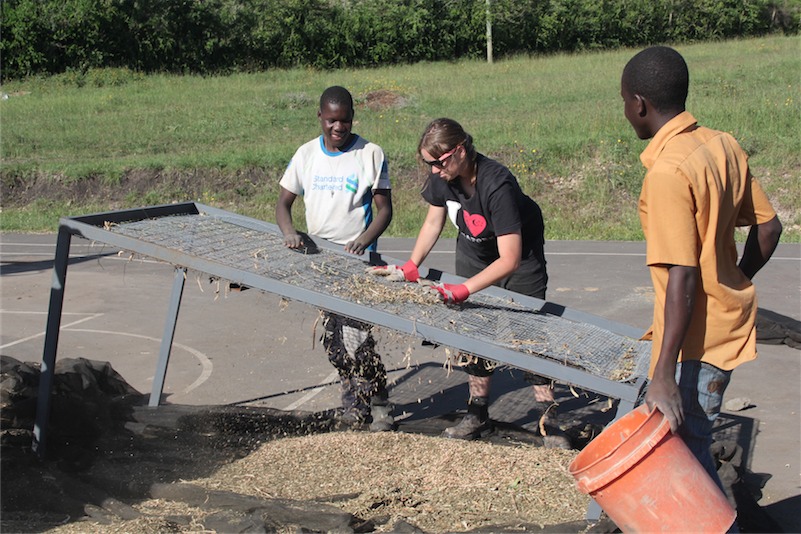
liz sorting maize

Liz showing the trainees how to use the bean sorter

Kids are going to school where before they had no way in. Others are no longer living on the street and stealing, they are being educated and are now in jobs. Some who were sponsored are now volunteering, giving back to their community. We’re working with an organisation that doesn’t have the thousands on the books but their history is quite incredible – schools, sponsorship programs, agricultural training, leadership programs are just a bit of what they’ve done. That’s because they are into developing young people and not just giving a handout.
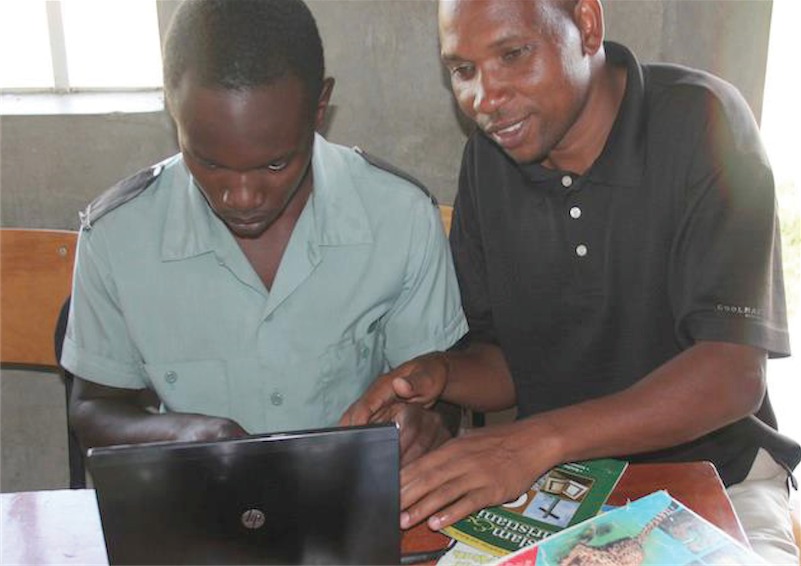
teacher 2

Teaching computers on a donated laptop

The key is not how many have come through the door of your work, but what lifetime change are you bringing?

For us personally, the person who gives us $5 a month to keep us here is as much as of a hero as someone who gives 10 times more. Every person who gives does so sacrificially. We have those in their seventies who give from their small pension. There are those who are students who have an after school job and give to us, while others give from their house rentals. It’s not about the amount but the impact it’s made.

Some generous person gave us $500 as a one off gift and from some of that we were able to give some teenage boys their first ever Christmas party. That meant small presents, a buffet lunch, party hats, streamers – the works. They got involved in making the meal and decorating the room and it was a special time for all of us – especially our family. Rather than being a day where we miss our youngest daughter (even more than normal), we were out with a bunch of kids who had no place to call home. But this was only possible because someone sacrificed A LOT.
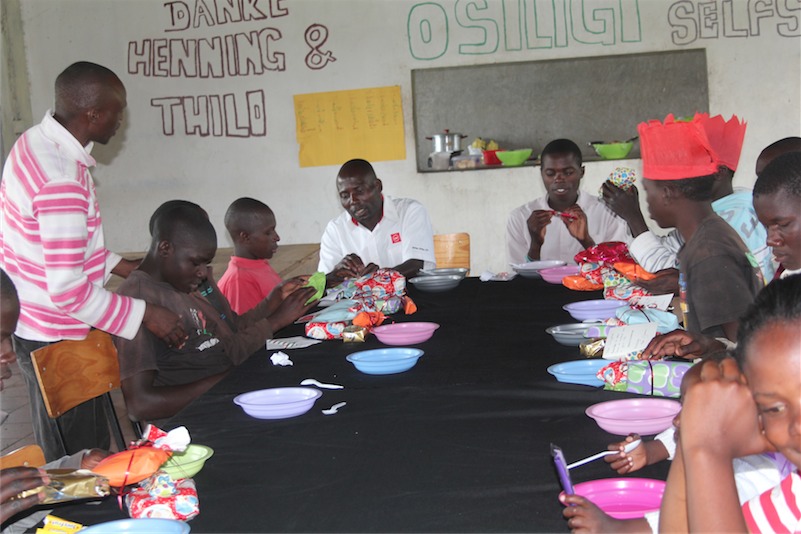
present opening

Present opening

So please don’t look down on what you do or give – it does make a difference – if not to you to the person you are helping out.

It’s not the size it’s the heart motivation that the action is done in

Want to find out how you can help in our work – check it out HERE.

Living Without Technology

The last month has been one of the most frustrating all year – for technology anyway. Technology is great, when it works. When it doesn’t I feel powerless and want to throw my laptop out the window – which of course I don’t do even though I feel like it.

techI’ve spent endless hours and Skype calls between Nairobi, Auckland and Sydney trying to sort out our new website and emails. I built this new website but couldn’t get it launched because of name servers, login details and email systems that wouldn’t work. Then of course, there’s the electricity which decides to go off for hours. In fact we had almost 2 days without power. Just to top it off the battery in my laptop decided to crap out so it decided all by itself when and where it would go.

Can you imagine being without power, the internet, your phone or computer – for a whole day? How do you work, talk to people overseas, find out addresses, look for businesses, design material, contact people or prepare school lessons?

masai

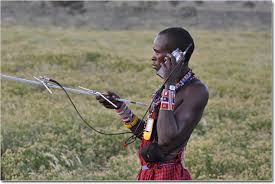
Masai warrior

I see people on Facebook who say they are going to do a fast for a week or month from it. While that’s nice, I see other people complaining that the power went out for two whole hours and their life was miserable. The thing is, we are so reliant on technology that I don’t think any of us can really do without it. I see Masai men herding their cattle in the middle of nowhere who access apps to see what the price of meat and veges are going for at the market.

lap

The only way to make my charger work.

One of the things we miss is the convenience of life, including access to technology. Living without it is a pain in the butt however it’s the reality of life for millions of people. So we learn to celebrate when we do have it, and survive when we don’t.

Here’s how we manage our challenging situation in Kenya:

  • Keep electronics charged 24/7
  • Put on surge protectors
  • Make sure you have enough credit on your phone for both airtime and the internet
  • Carry a plug in internet flash drive (with credit loaded)
  • Put at least 1,000KES (about $10) on your Mpesa system
  • Remember the cafes that have free wireless internet
  • Have a solar lamp powered up and ready to go
  • Have spare lights around the house
  • Buy a washing machine that automatically goes on when the power returns

What is your plan of action for living without technology?

Don’t Come and Live in Africa

A year ago we made the crazy move from the beautiful Northern Beaches of Sydney Australia to go and live in Nairobi, Kenya. Why do I say it was crazy (as some of our friends think)? Why would a couple in the most productive and money making years of their lives leave it all behind to go and work with the most poor young people in this part of the world?

There’s no simple answer for that one. I’ve heard people from here say ‘Why don’t people come here long term to serve on the mission field?’ There seems to be a lot of questions on both sides.

So here are my thoughts on the matter.

1. Not everyone is called to move to Africa.

Africa is not a picnic. Sure, there’s some things you only get in this part of the world but not everyone has the tenacity to hack it with all of the negatives, and that’s okay. It takes a certain amount of insanity to live here. There’s a big differences between visiting somewhere for a few weeks and dedicating the rest of your life to a cause on foreign soil with being challenged every day, having to rely on friends for your daily needs or hoping you don’t get really sick because the healthcare is limited.

Just today I had some guy yelling out “Mzungu, mzungu” the whole time I was walking up the street. It was so annoying I wanted to give him the royal finger (another reason I don’t call myself a missionary) and yell a few choice words at him. I feel like saying “Oh my goodness, I never knew I was white”.

mzungu

2. You can be of most excellent use in the West.

You can make money and support a missionary or development worker here by remaining at home. You can pay school fees, earn enough to send kids on a camp, pay travel insurance for someone. You can earn and give, it’s a win win situation. One of the best thing you can do is be an advocate/representative of someone you know who is serving in Africa. Most of the time it’s ‘out of sight, out of mind’ and you could be the key to changing that.

africa

3. Missions aren’t what they used to be.

You need to learn another language, a new culture, a new way of doing EVERYTHING. You need to have computer skills as well as practical ones. It’s not about being behind a pulpit but offering a skill to the local community. The developing world needs doctors, nurses, teacher of teachers, people skilled in media and those who are willing to rough it. You have to be prepared to have less than half of the resources you’re used to. Sometimes the power doesn’t work, you have to boil your water and the internet works when it feels like it.

You’ll end up spending much more time in the office than you thought you would’ve.

People will tell you what a noble thing it is you’re doing. It isn’t and it certainly doesn’t feel that way when you’re trudging through sewerage or spending 12 hours straight in front of a computer trying to sort out email and website issues.

sign

It ain’t what you think it is.

4. No guarantees of a holiday.

Forget about a 40 hour week and 21 days annual leave. We’ve been here a year and there’s no holidays in sight. We’ve worked on public holidays and most weekends. The average person on the international field will return to their home country every 3 years, but that’s not a holiday at all. It’s full on speaking in churches, schools, clubs and to supporters all that time. We often work on weekends running different programs. The closest beach is a 9 hour drive away and belonging to a club is way too expensive. Every now and then we take a half day off, or like this week the whole of a Wednesday just to get out of the office and out of town, but that means pulling a couple of 15 hour days beforehand. Of course, the paid staff just don’t get it. They clock off at 4.30pm, while I’m often working till 10pm.

5. The loneliness and challenges can be overwhelming.

Everyone is enthusiastic when you first leave but it doesn’t take too long for the contact to dwindle. It’s normal as people have to get on with their lives. There will only be a few dedicated friends who stay in touch. To make new friends takes a long time. For some, the gap on between is too much to bear. Being apart from family is not for everyone. While Skype is great it isn’t the same as day to day interaction. If you move here you may have to pack your kid off to boarding school and only see them every few months. Are you prepared for that. Our youngest daughter will not see Pete for 3 years – that’s 3 years too long.

Do I think that people should forever stay in the country they call home. Most definitely not!

Every person, and I mean everyone should at least once in their lives visit a developing country to get involved short term with a work that is making a difference in a local community.

Short term volunteers make a tremendous difference to an organisation. For us our volunteers have been able to assist kids who can’t read well, encourage local leaders, teach sport and give kids hope. Short term is anyone who stays under 2 years, with the average person staying just over a month. Even a 2 week stint is huge.

Coming for a few months can give you a glimmer of an idea of what it could be like long term. It will also make you grateful for all of the conveniences of life you have at home and what those on the international field have to go without.

suitacaseSo give it a go. Come for a visit and see what happens. And if you move here, don’t say you weren’t warned!!!

Church in Kenya

There seems to be a church one every corner here in Nairobi. They go from a little tin shack to the huge 5,000 seat auditorium. Some are in huge marquees, others in buildings without windows to the tabernacles that you can see from miles away. There’s some that have short names, others like ‘The Church of the Deliverance of the Holy Ghost in XYZ’. I kid you not.

Worship at Frontrunnerz

Labels and titles are so over rated here. If you’re a ‘bishop’ you almost have to treat them like a king. A Deacon is a church leader and not someone who helps physically set up the service. On the other hand you will see people in top jobs who are happy to be in the car park making sure everyone gets in. Only a few have services online but one thing they all have in common is that they like their music loud.

Dance Moves

The thing that Kenyans know how to do is praise and pray. Some church services go for 3 hours, then they have other programs in the afternoon. As far as I know there are no night services in Nairobi. Probably because people have been in church all day, but also it’s a security risk getting home when it is dark (around 6.45pm).

We decided before we came that we would got to the International Christian Centre (ICC) where I visited in 2007. One mistake people make when moving to a new place is to try every church out in town for one that suits them. Sometimes you just have to make a decision and stick with it. It’s and English speaking church with mostly Kenyans in it. Some songs are in Swahili so it’s good practise to figure out what is being sung.

Pete, Liz and I go to the 10.30am service which is aimed at young professionals, it’s called Frontrunnerz and led by Pastor Gibson (meet him below). They have 2 services in the morning, with about 600 going to the second service. They do have a Saturday night service but we work most weekends so it’s not always easy to get there.

Meet Gibson

Some people might say it’s a happy clappy church. I figure it’s much better than attending a service that is like a funeral. Sure, there’s time for reflection and quietness, I’m all into that but sometimes it’s just great to enjoy the good things that God has done. Here in Kenya things like getting a job, being able to study, making safely through the week or having food on the table is something to get super happy about.

Not a funeral service

We’ve been to some African churches where they get so excited they lift up the plastic chairs and do a dance with it. There’s been some where all the women get up and do a special dance (a good opportunity to hide behind a camera). I’ve been in ones where Pete gets to sit up the front and me way back (being just a woman of course!).

Dancing up the aisle

What I love about Frontrunnerz and ICC is that they present a relevant message in a relevant way. Sure, it’s not perfect but neither are we!!

It wasn’t our goal to come to Kenya to start a church but it is part of our DNA to be a part of a local church. We’ve all heard how no person is an island but it’s so easy to do. It’s easy to look at ‘The Church’ and point the finger, look at all the deficiencies and things that are done wrong and decide not to be a part of it. That’s the thing though, no one nor any organisation is perfect. We’re a work in progress.

Everyone getting into it

I remember Pastor Simon McIntyre who was with us when we were at C3 Oxford Falls (Sydney) saying ‘This church might not suit you, but there is a church for you, a church for everyone’.

If we stopped complaining about ‘The Church’ and decided to be a part of it, we would see some of the great things that are happening. We would meet some different people, some who would drive us up the wall. We would be challenged to get out of our comfort zones. We might even find a place we can call home and a family that accepts us, warts and all.

Worship at Frontrunnerz

Nairobi Safari Walk Adventure

Yesterday was a public holiday here in Kenya so the number one thing was to have a sleep in and then go out to do something. Liz took the whole sleep in idea a little bit far and didn’t wake up till after 10am (lucky her!).

Pete and I have never been to the Nairobi Safari Walk, so decided to give it a go. Here, because we are residence it only cost $3 each. We figured if it was a dud we hadn’t lost much. If we were tourists it would’ve cost a whopping $20.

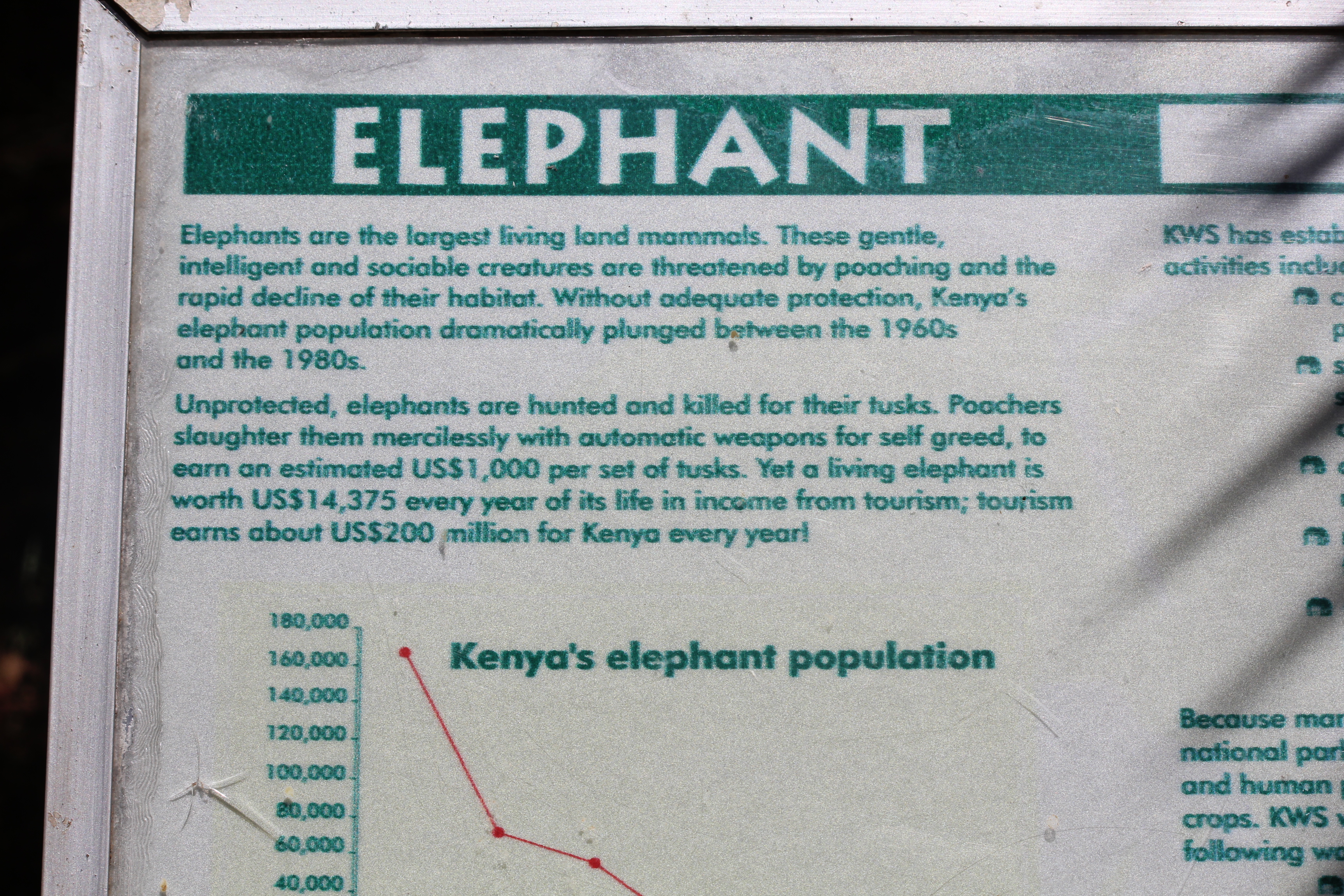
elephant sign

There were no elephants at the park

Unfortunately we went in the middle of the day so finding animals was a real challenge. In fact we saw more signposts than animals.

What they did have that was cool were the boardwalks. However there wasn’t much to look at except trees.

walkwayWe’ve visited a few other places that have more action than this place, yet there were lots of people there. I’m not sure if it was because it was a holiday or that the kids could run free. In the wildlife department I think we have been totally spoilt.

We did manage to see a couple of different animals that we hadn’t spotted before.

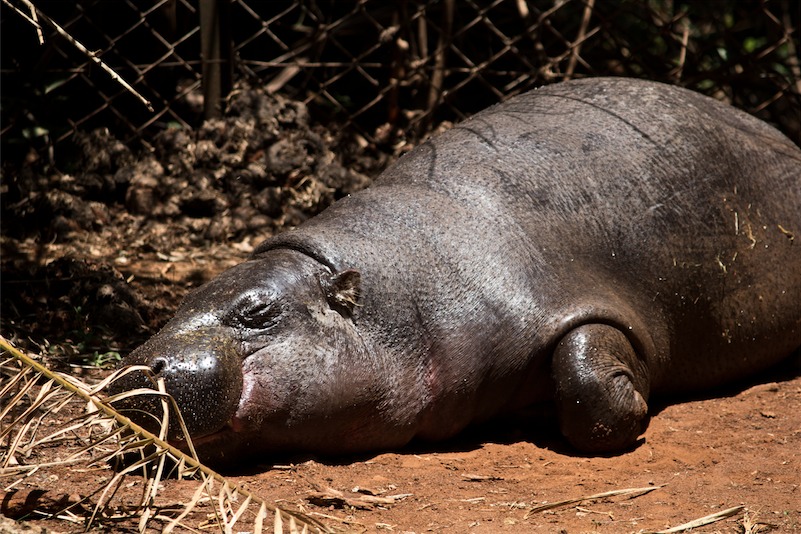
pygmy hippo

A pygmy hippo – snoozing of course

brown zebra

A brown zebra

We even managed to get close up to a cheetah. I always get cheetahs and leopards mixed up.

cheetah face 2

giraffe nice

You can never see enough of giraffes

While the number of animals wasn’t great at least we could see them, and they us.

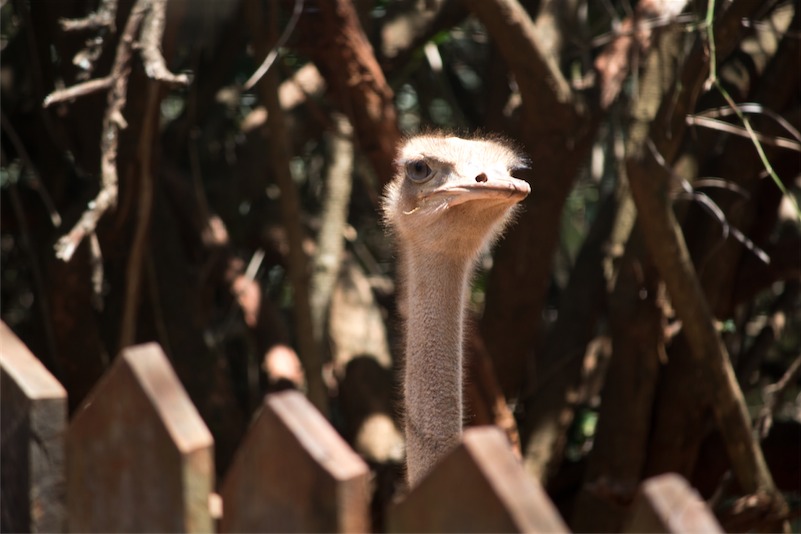
ostrich

Nosey ostrich

I wouldn’t want to meet this guy in the bush!

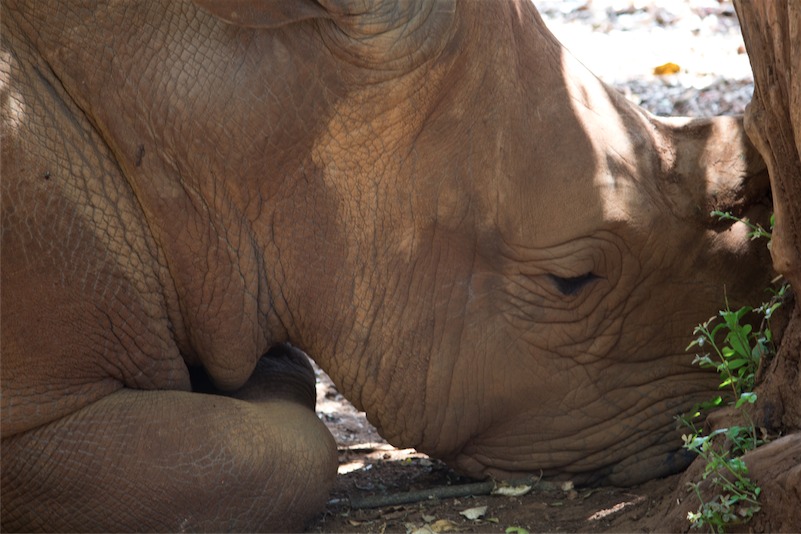
rhino headOverall it wasn’t too bad a way to spend an hour, but wouldn’t be in a hurry to go back again. If you ever come to Nairobi there are plenty of other places that are more exciting.

A Bit Different To The Easter Show

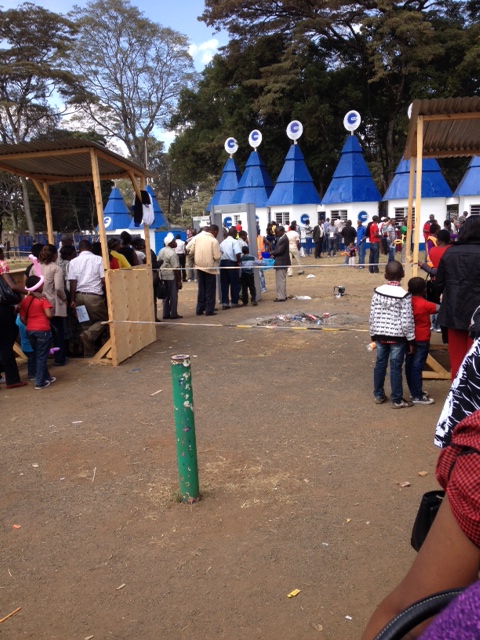
This week we attended our first ever International Agricultural Show in Nairobi. We went with Beryl, our agricultural teacher and Gary our new Canadian friend. The traffic was so congested getting there that we left our car parked at the nearest mall and we piled into Gary’s car for his driver to drop us off. We also went back another afternoon but caught pikipikis (motorbikes) and got there really fast.

Entrance into the show, cash only

Entrance into the show, cash only

Because there were 5 of us (Liz took a day off work) we ended up splitting up into two groups.

This show is nothing like Sydney’s Easter Show. Firstly, it only goes for one week and it only costs $3 to get in.  And – lunch cost a whopping $2.50. There was a large outdoor arena where the President spoke on the day we went and there were the normal shows like bands, entertainers and marching teams. However, you had to pay another $2 for that, which we forewent. There’s also no woodchopping events, which are always great to watch.

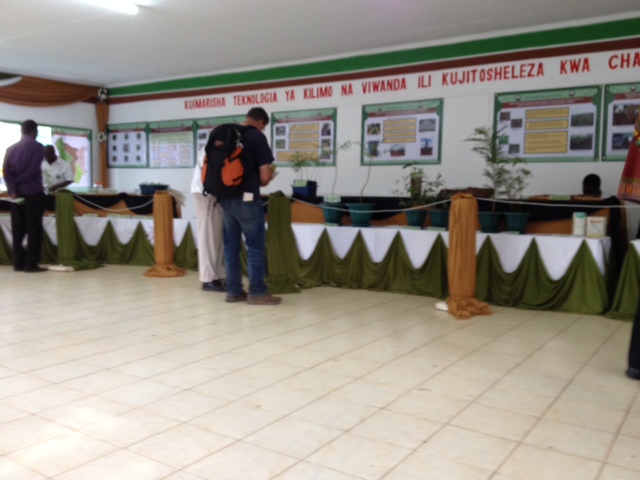
Some sites were tents, or like this one, inside a building.

Some sites were tents, or like this one, inside a building.

One thing we did notice is that there were hardly any pamphlets on offer. Every stand/tent/expo site had a guest book which you felt obliged to sign (cue endless followup calls). At some places you had to buy their handbooks ($1) but some were worth it especially on how to raise animals. Business cards seemed to be in short supply as well. At most sites there was an ‘in’ and ‘out’ sign which kept foot traffic flowing pretty well.


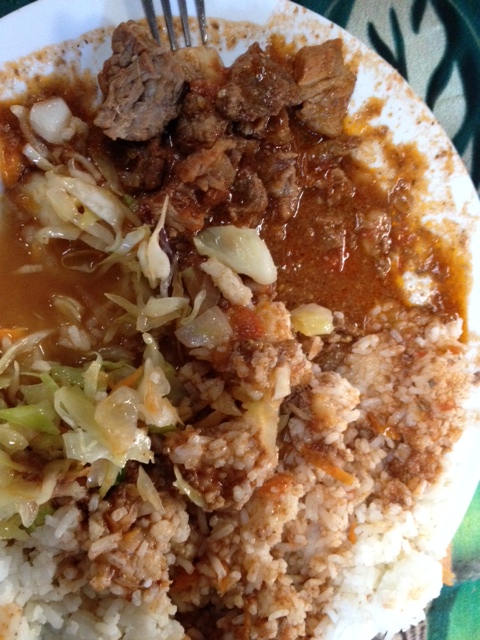
My $2.50 lunch - beef stew, rice and cabbage.

My $2.50 lunch – beef stew, rice and cabbage.

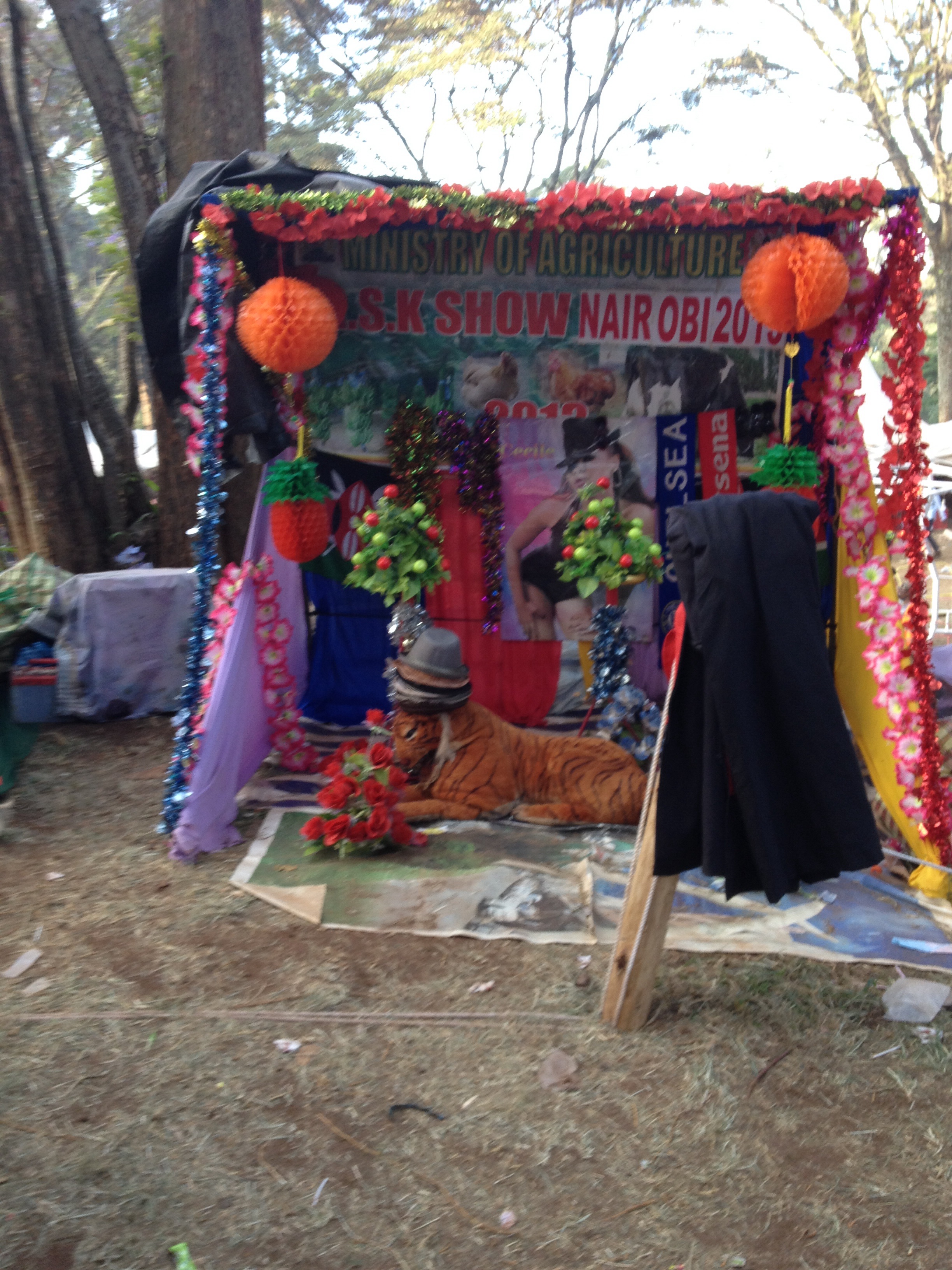
What wasn’t sparse was the amount of places to buy water or have your photo taken in front of a gaudy photobooth. Gaudy with a capital G. There didn’t seem to be any price hikes on drinks and food just because it was a special event, water was only 30 cents a bottle. There seemed to be endless ugly photobooths. I’m talking about large stuffed animals, Christmas decorations and weird backgrounds. Kenyans love photos and it amazed me how these were one of the hits of the show.


One of the photobooths.

One of the photobooths.

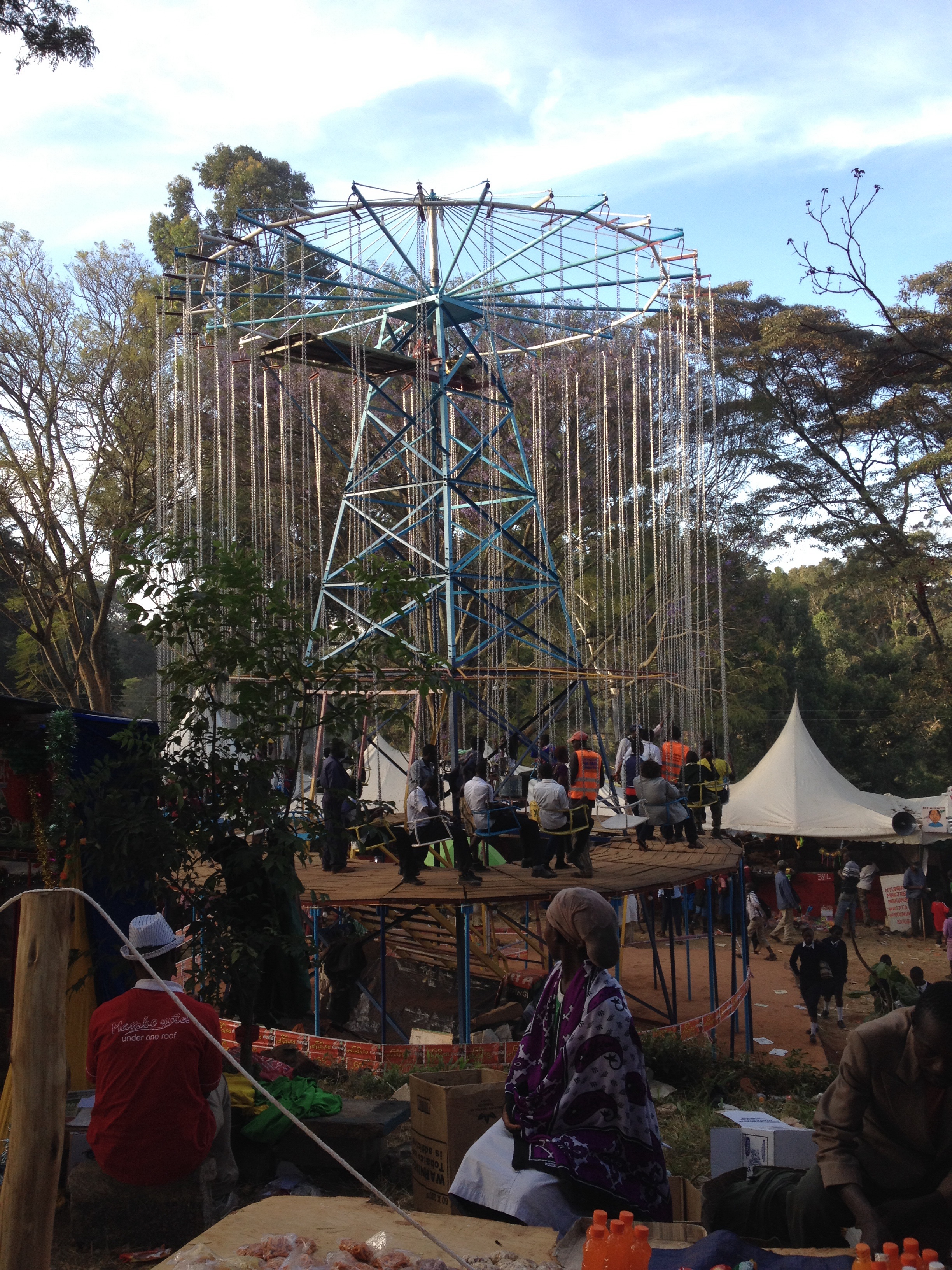
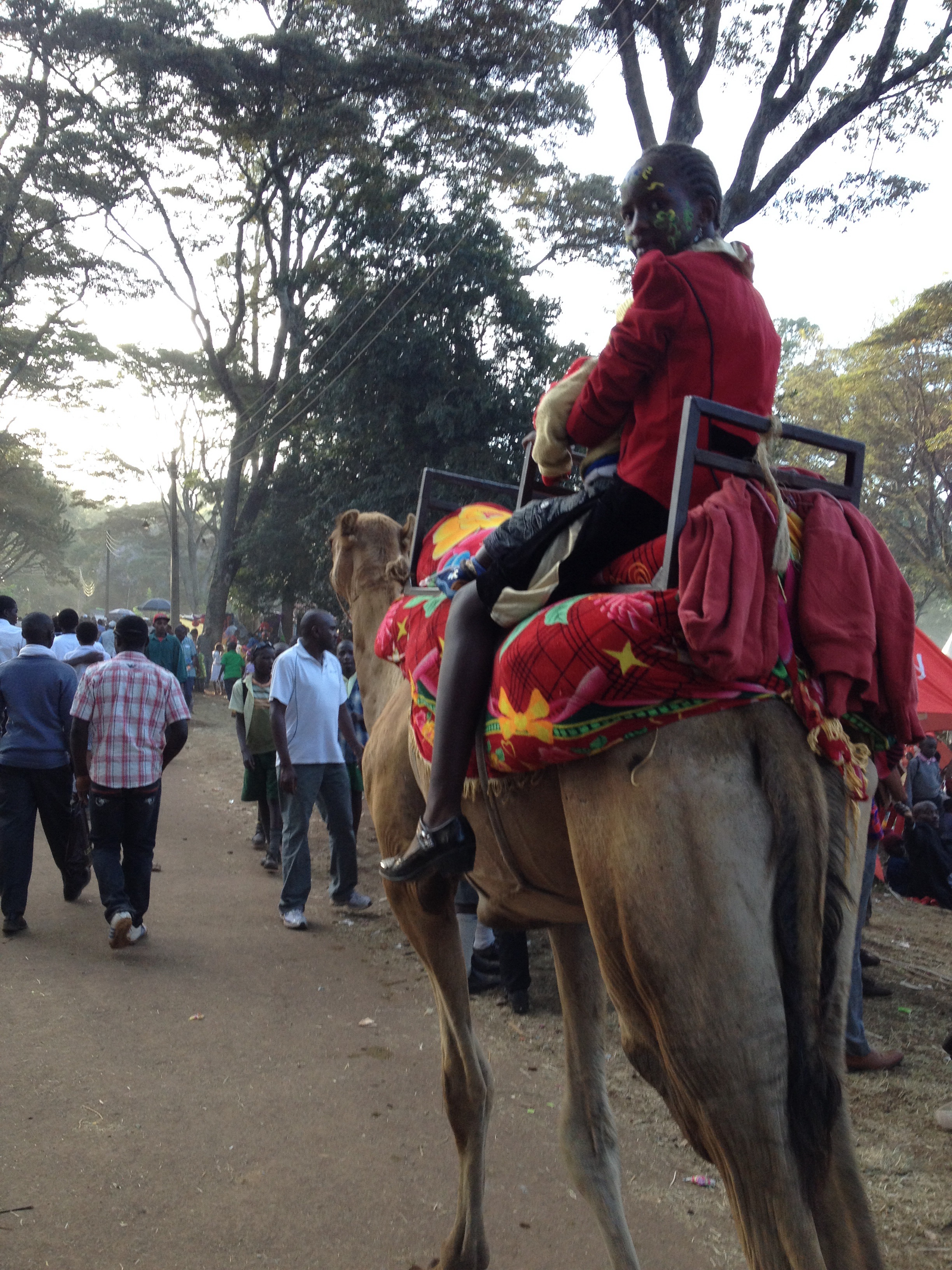
We avoided the rides and you can see why in the photo below. There were only rides that went round and round (vomit machines) and there were no safety rails. So, if you fell out, too bad. I tried to convince Liz to go on a camel ride but there was no way she was going on one of those things. Liz had a blast though and couldn’t wait to go back for a second day.

Typical ride - without safety bits on them

Typical ride – without safety bits on them

So, if you’re in Nairobi when the agricultural show is on I definitely recommend it.


Couldn't get Liz on one of these

Couldn’t get Liz on one of these

Just a few things to note:

–        Go midweek, the later in the week the more people there are

–        There are ATM’s but take cash anyway

–        Be prepared to be fully checked at the entry gates for security

–        Wear comfortable shoes, a hat and sunscreen

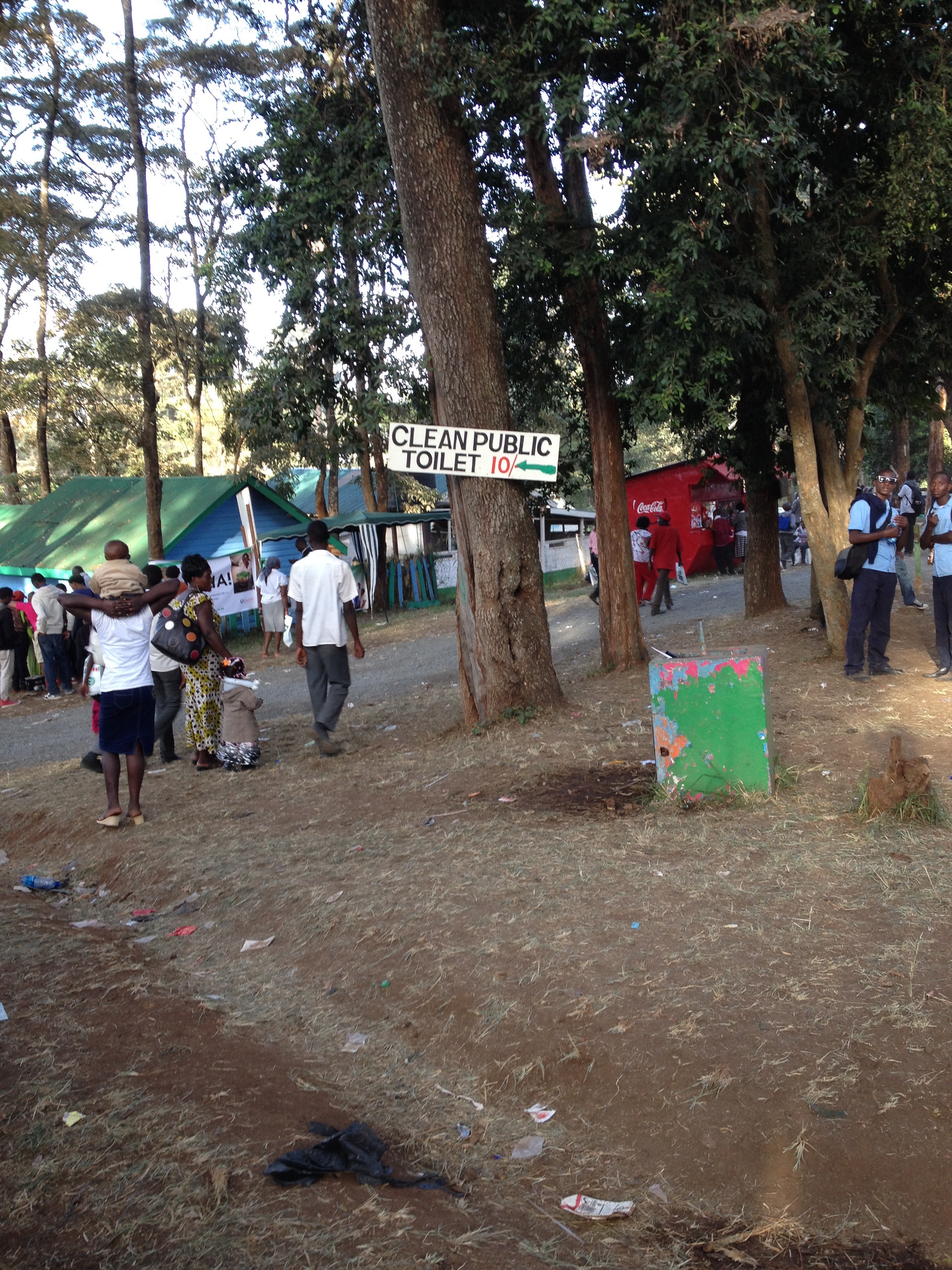
–        There are toilets, you just have to pay 10c to use one

–        Buy a map, it’s worth it


Take a look at the sign

Take a look at the sign


A Week With Terri

Terri (AKA Tee) is one of our many ‘extra’ kids we have in our family. We’ve known her since she was 4 years old, she is now 25. It was only a few weeks ago that she said she was coming here for 3 weeks, so we adjusted our calendar, planned some outings and finally got our guest room ready.

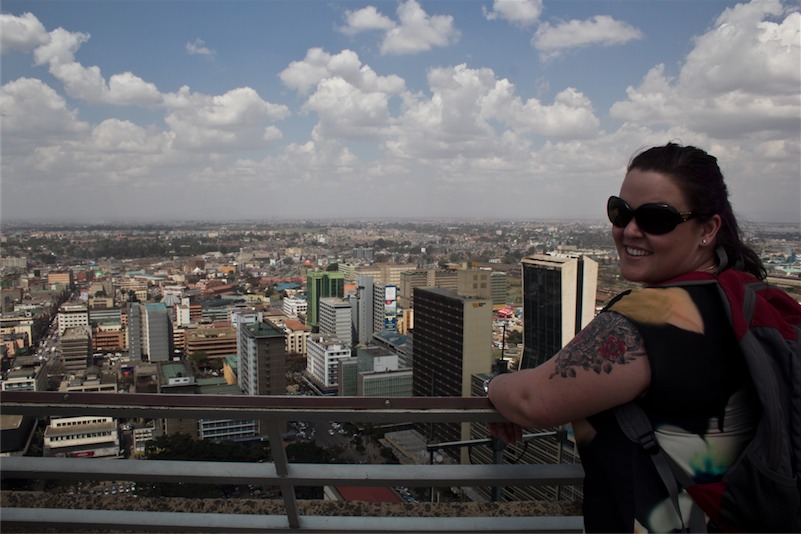
Looking out at Nairobi from the Convention Centre

Looking out at Nairobi from the Convention Centre

Until then the guest room was empty and we had always planned to furnish it, but didn’t have the funds for it. Just after we got the message that Tee was coming some New Zealand and Aussie friends gave us enough for a mattress and bed. When she arrived, another friend gave us the funds for some bedside tables. So now all we need is a BBQ, vacuum cleaner, solar backup and we are pretty much set up!

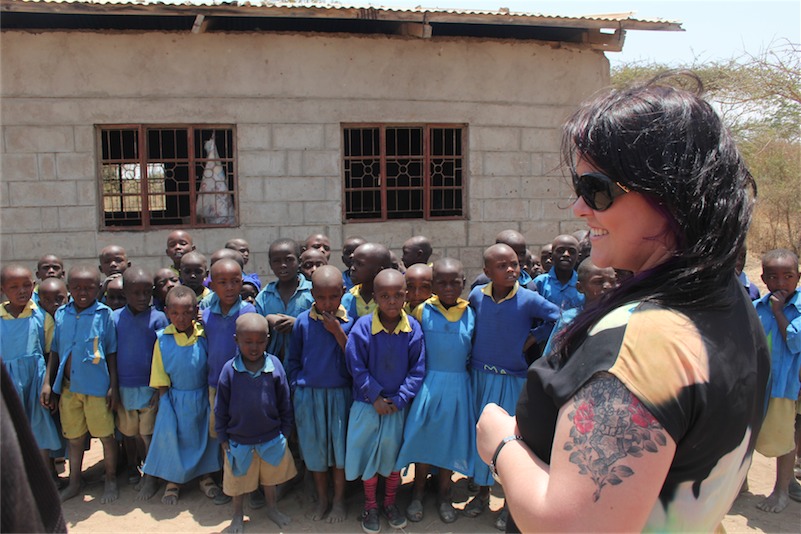
Visiting the KAG Primary School

Visiting the KAG Primary School

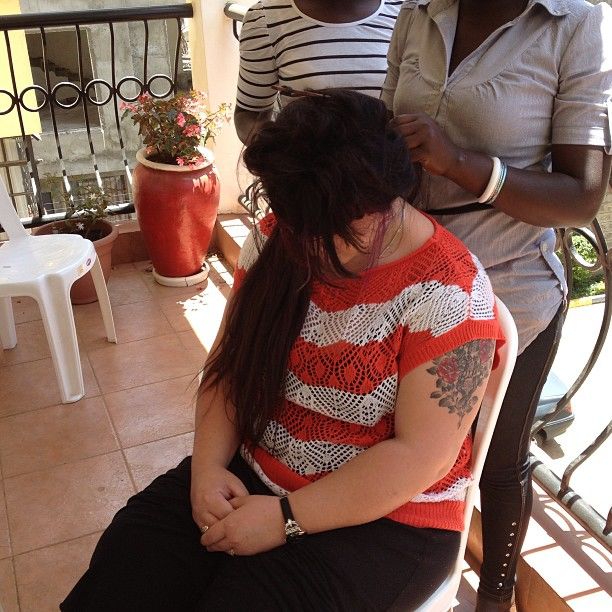
The great things about having visitors is that I get a chance to get out of the office. Not that I mind working with our team (they are the best) but endlessly looking at a computer screen gets just a bit much. So I’ve abandoned our team for the 3 weeks that Tee is here, keeping in touch online and going in only on Monday mornings. It means working at nights or sneaking in time like now when she is getting her hair braided – Kenyan style. We absolutely love having visitors and showing them that Africa is more than war, famine and poverty.

closeup kissy

This is how you kiss a giraffe

I always get amazed by what peoples reactions are to Kenya and everything it holds. Most are intrigued that we pretty much have all the modern amenities, that we drive in crazy traffic and don’t have a heart attack and how good the food is. I feel sorry for Tee because I told her that the weather had been cool, but by the time she got here it was quite warm. She came from 15 degrees in New Zealand to 25 – 27 degree heat. The other day I suggested we walk the 15 minutes to the mall – bad mistake. She has constantly reminded me and anyone we meet about how she nearly melted. Won’t be doing that one again.

Preschoolers in the Kitui District

Preschoolers in the Kitui District

The thing I love about Tee is her laugh it’s infectious. This is especially so when we’ve driven for hours and start quoting movies, Swahili practise and songs to suit the situation. That’s when we know we’re all tired and Tee’s laughs keep us going. She was only here for 2 days and we went to Kalambya in the Kitui District, around 3.5 hours from Nairobi. We left early in the morning and didn’t get back until after 9pm. It was to look at one of our new water projects but it was preceded by a 2 hour tour through a primary and secondary school. It was hot, dusty and I am sure we met everyone in the community. But, we had lots of fun along the way.

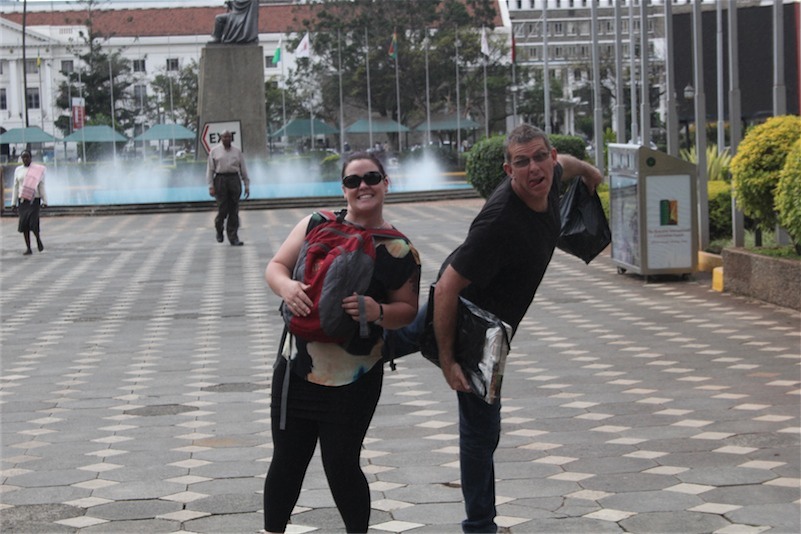
A day in the city in 26 degrees. I think they needed a coffee.

A day in the city in 26 degrees. I think they needed a coffee.

While we like to show people the touristy places we also like to show them another side of life in Kenya – where people live in poverty. We took Tee into the Kibera Slum where we were meant to take a food parcel to a needy family but their child ended up vomiting for hours and was rushed to hospital. Instead we visited some young men who are sponsored to attend school. Here we discovered that at one of their boarding schools they have to get up at 3.45am, every day! The boys were inquisitive about Tees tattoos, something happening more and more here. We also visited a school in Kibera where the little kids are so cute you want to take one home.

While you can go to some great places here, it is the people you meet who leave a lasting impression. There’s Mariam who gave us a Kenyan cooking lesson (Tee still doesn’t like ugali), Ayub and his family who came for dinner and Lucy who we took to dinner on our way back into Nairobi. Sure you can kiss a giraffe like Tee did (and who doesn’t!), feed a baby elephant or tour through a bead making factory. But it’s the incredible stories of joy and endurance that stay with you forever.

Tomorrow we take Tee to Nakuru with us to visit a school where we put down a deep bore well.  It’s only a few hours drive from here but we are staying overnight at someones house so the next day we get up at 6am to go to the national park. That afternoon we’re also out on a boat to see the animals from a water perspective.

Hair braiding takes hours.

Hair braiding takes hours.

Both Tee and Pete are big coffee drinkers. They are about half the price of what Tee would pay in New Zealand so she’s happy to stop several times at the local coffee shop. This morning I had to steer her away from Dormans, which she has come to know really well.

However, I may have to take her there later for her caffeine fix!


One Dollar At A Time

Here in Kenya we have plenty of opportunity to help people out. There are the beggars, the disabled sitting in wheelchairs and then those selling goods at the side of the road.

There are a couple of people who have stuck out here.

One of them is a man in a wheelchair who had his legs amputated from the knees down. He sits each day at the corner by a small shopping centre. He has children (we see them from time to time) and one of the world’s biggest smiles. He’s polite and doesn’t beg for cash but you can tell he’s in need.

Unfortunately there’s no disability support pension here for people like this man. They are totally reliant on having their families support them. Every now and then when we go past his spot we drop in 100 shillings, worth about $1. More than that though, we stop for a chat and ask him how he and is family is. It gives him respect that he is of value and not simply because he needs money.

A couple of weeks ago I met the most wonderful lady. Each day she stands by the road we take to work. She is there early in the morning till it starts to get dark. She has a baby strapped to her back. She holds out her right hand for the entire time, in it she has a bag of blue sweets for sale. I don’t know how much she sells them for but probably only for a shilling or two. I don’t know this lady’s name but I really admire her.

On either side of her stand men selling DVD’s, posters, flowers and the matatus (vans moving masses of people) and buses throwing out diesel fumes.

I admire her because she’s not waiting for her situation to change, she is changing her situation, one shilling at a time.

I am more than happy once a week to drop 100 shillings into her hand. I usually ask for a couple of sweets so it doesn’t look like I do it out of pity. No, I do it in admiration.

You might say that it’s only the odd dollar, what difference can it make? But to these 2 people it means they can buy some flour and make ugali that night. It means that they have something to put towards their rent. Or it may mean they can afford to buy one jerry can of water.

Even though our personal support level is short by about $1,000 per month, I’m not going to let it stop me being generous. These two people inspire me to keep going even when it all seems a bit much.

My next step is to get to know their names.

Tell me about someone who has inspired you lately.

How to Ride a Piki Piki

Actually I like the use of the word boda boda better. It’s the name we give to motorbikes that are used in the same manner as a taxi.

Boda boda originated at the border (hence shortened to boda) of Kenya and Uganda. With the drop in the price of the Chinese made motorbikes, there are plenty available.

I catch bikes every now and then and love it. Most expats freak out at the thought of catching a motorbike in Africa. Liz catches one to work each day. They are so cheap to go on you just can’t say no. For only $1 you can go a few kilometres which is about a quarter of the price of a car.

I was watching a Kenyan doco and the presenter said “Anybody who rides a piki piki takes their life into their own hands.  And they are correct!

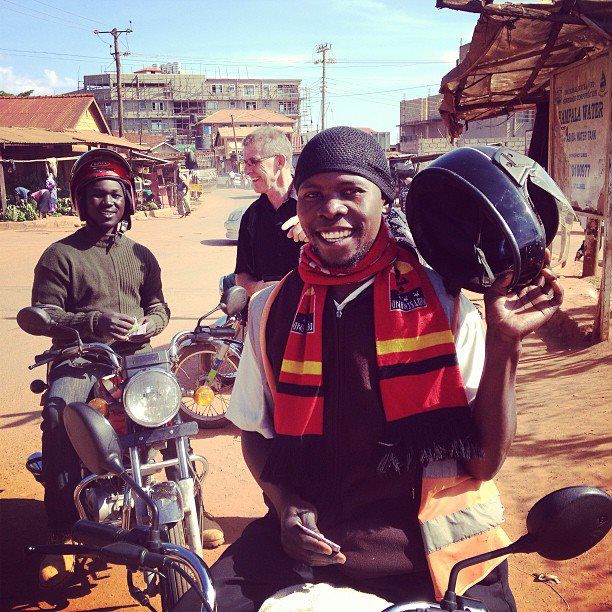
Our boda drivers in Uganda

Our boda drivers in Uganda

Thanks to our generous friends we bought our own motorbike but we made sure that we also bought high vis gear (think bright orange council jackets). Drivers are shockers here. Today I was walking on the footpath and the next minute a large bus decided it wanted to share it with me.  While we are waiting to buy a car, I catch a piki piki when Pete has the car. This year I aim to get my motorbike license.

On our last trip to Uganda Pete and I went on bodas (they shorten it in Uganda) everywhere. One of our longest trips was about 30 minutes. Kampala traffic is twice as congested as Nairobi, hard to believe but true.

There are some tricks to catching a piki piki though:

  1. Always negotiate a price beforehand.
  2. Have cash in your pocket. Getting your wallet out is a bad idea and too tempting for the price to be raised.
  3. Ask for a helmet. You can’t grow another head (although I must confess that I am bad at insisting on this).
  4. Give instructions as you go along with your hands. There seems to be more ‘lefts’ than you think.
  5. Always be on the lookout for a jump off spot. You just never know when you might need it.
  6. Get off the bike before you pay the driver.
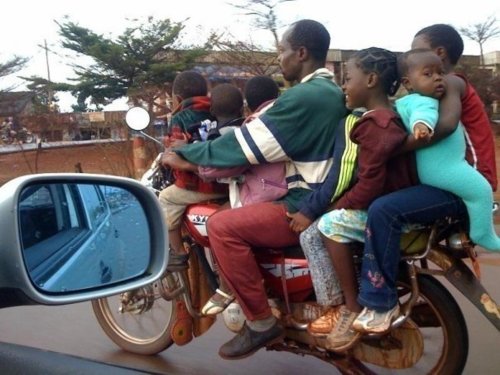
This is illegal, but it still happens

This is illegal, but it still happens


Dating, Marriage, Sex

This week we had an interesting conversation in the office and that was to do with how girls and guys date, what’s expected and what the general norm is.

It all started out when I shared about how in our family there’s a certain way we do things:

1. No boyfriends before 18

This went down like a lead balloon. Kids are too much in a hurry to grow up. They need to enjoy some of the most challenging years of their lives without the complication of ‘going out’. We always told our girls that you don’t have to be attached at the hip of a guy to be someone.


2. The guy asks permission to ‘court’ our daughter

We don’t believe in the try and buy scenario of dating. A relationship with the potential new family member is really important and if they respect you enough to ask permission, then they hopefully will respect your best investment – your child.


3. If one of our girls are in another town or country (as what we have now) they have to be sussed out and approved by a family member.

In line with our Pacific Island upbringing, Aunty is a pretty powerful person in the family. In New Zealand we have a cousin who has ‘Aunty’ status who keeps an eye on things. In Australia we had a friend who was an ex SAS member and he (okay he was a guy but you get the drift) would ask the hard questions on our behalf, it was great. I am sure they were scared of Jeff!


4. As a couple who profess to the Christian faith, they are encouraged to meet with their pastors and be accountable to them.

It takes a brave couple to tell their pastors that they are going to the next level in their friendship because it gives the pastors authority to speak into their lives and they may not like what they hear.


5. The couple set boundaries to keep themselves out of situations they may regret.

If it really doesn’t go anywhere, they can remain friends and still look each other in the eye.


6. Both parties take their ‘friend’ to their families homes.

This means involved in family activities such as dinners, going out to movies, church and special events. When you marry someone, you marry into their family as well.

Of course it all has to be in context. We have always encouraged our girls to make friends both boys and girls and if they are to go out, do it in a group.

We’ve openly talked about sex since they were 9 &10 years old (they’re 22 & 23 now) – in an appropriate manner of course. Both our parents never talked about ‘the birds and the bees’ so we decided to, bringing in a Biblical viewpoint. They were homeschooled till they were around 11 & 12 and then put into a public system when we moved to Australia.

We’ve always made a point of being involved in our girls lives. Even now we take them out of dates and a good catch up time. While we never had a lot materially we made this investment. When Hannah had finished secondary school we insisted that the whole family go on a two month tour of East Africa. At first she wasn’t happy about it (insisting she wanted to work, I pointed out that she had the rest of her life to work), but it changed her world forever. Both of our girls are global travellers and have experienced many cultures, which has broadened their personal worlds.

heartHere in Kenya I’ve discovered things are quite different.

  1. The only time the family sees the new ‘friend’ is just before the engagement happens.
  2. If the parents don’t like the potential addition to the family and the girl really wants him, she has to choose between her family or his if things get really bad.
  3. When the two families meet they sit formally opposite each other. This is when the dowry is discussed. It goes through stages of friends who can vouch for you (at the serious stage), then the uncles go.
  4. Parents don’t talk to their kids about sex. That happens in school (apparently).
  5. If a girl gets pregnant out of wedlock, she will most likely be beaten badly and kicked out of home. Some parents are more supportive but the guy involved has to front up to them.
  6. If you’re not married by your late 20’s you’re over the hill.

Of course, within the Kenyan culture there are lots of ways of doing things but above is what has been a long held tradition. I have a Kenyan friend who said when she got pregnant her mother accepted her and supported her.

I have another one who is not allowed to get married to the father of her child, but they can live together, because they don’t have the money for a huge wedding (the father knows some high ranking people who HAVE to be invited). When they go to her family in the country her partner is not allowed to sleep in the same house as everyone else.

ringsEven if my girls were raised in Africa, I still would keep to how we as a family do things.

As our kids grow into adulthood they have to make their own choices and live with the consequences. As a parent all you can do is your best and support your kids in the same manner.

So:

–        Do you talk to your kids about dating, sex, relationships or leave it up to others (school, friends, social media)?

–        When was the last time you took one of your kids out on a date by themselves, just for the sake of it?

–        What values do you hold as a family?

–        What memories are you building that your kids will take into adulthood?