Sandboarding in Namibia

On the top of our list of things to do in Namibia was to join a tour that went had the beach on one side and the dunes on the other. We were really looking forward to it but when we looked at the bank balance, we had to be realistic.

It either was, do the tour, or eat for the next month or more.

We decided that food, fuel and housing was more important that the tour.

Yes, we were disappointed but just had to move on.

Some New Zealanders we had met a few weeks back told us about sandboarding with Alter Action. They mentioned how it was a good price ($25) and the business were really responsive. And they were.

As we were staying locally, we met Alter Action in downtown Swakopmund, which was only 5 minutes away. We went to a German bakery that sold gluten free bread as lunch was going to be provided by Alter Action.

There were two more couples to pick up and then we were on our way out to the desert. Beth, the owner, had come out from the US more than 20 years ago. She was a wealth of knowledge about the history of the place.

When we arrived at the dunes, which were only 15 minutes away, the rest of Beth’s team met us. It was simply a matter of signing a waiver and gearing up. Some of the younger people decided to go stand-up boarding but we opted for laying down on boards. Our gear was a helmet and elbow pads. Since the staff went in bare feet, Liz and Pete left their shoes behind, while Sharon kept her sneakers on.

First thing was to walk up these giant sand dunes. Liz really struggled as the sand was super soft. It was easy coming down, but then, you had to go all the way up again. Rinse and repeat.

The key to a good boarding experience is holding up the board (harder than you think) and keeping your feet up (but not too high), unless you want to slow down, then the feet come down. If you don’t hold the board up, you’ll end up eating sand – which Sharon did on the first slide.

After 5 slides down (which meant 5 walks up) it was time to join the others down at the starting point for lunch. Drinks and buns with salad was on the menu – and everyone was ravenous.

Check out the video below that Alter Action put together for us (included in our booking).

Prep Day

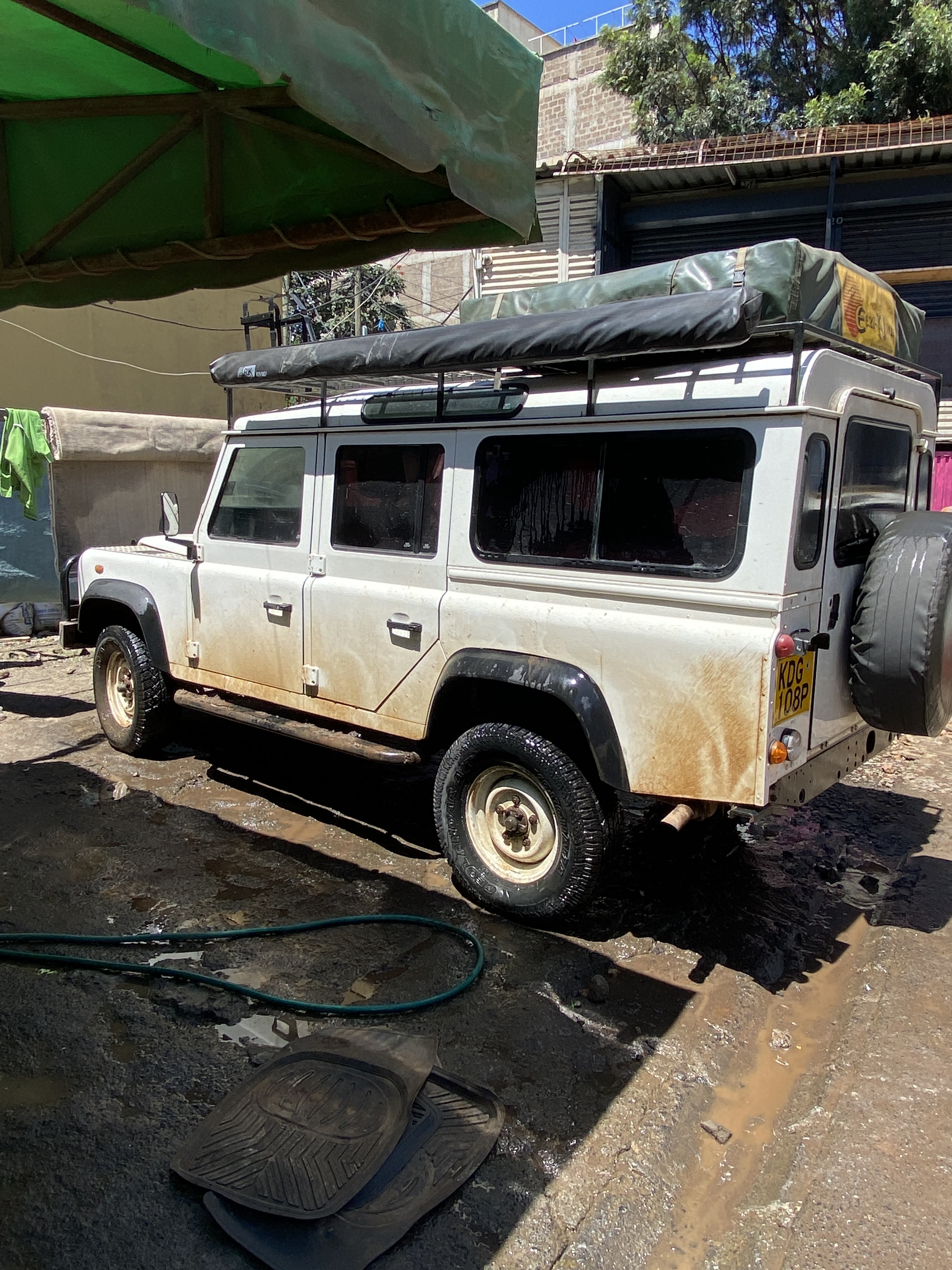
The groceries have been brought. The bags have been packed. The itinerary is coming together. The Landy has been loaded. Now all we have to do is get going.

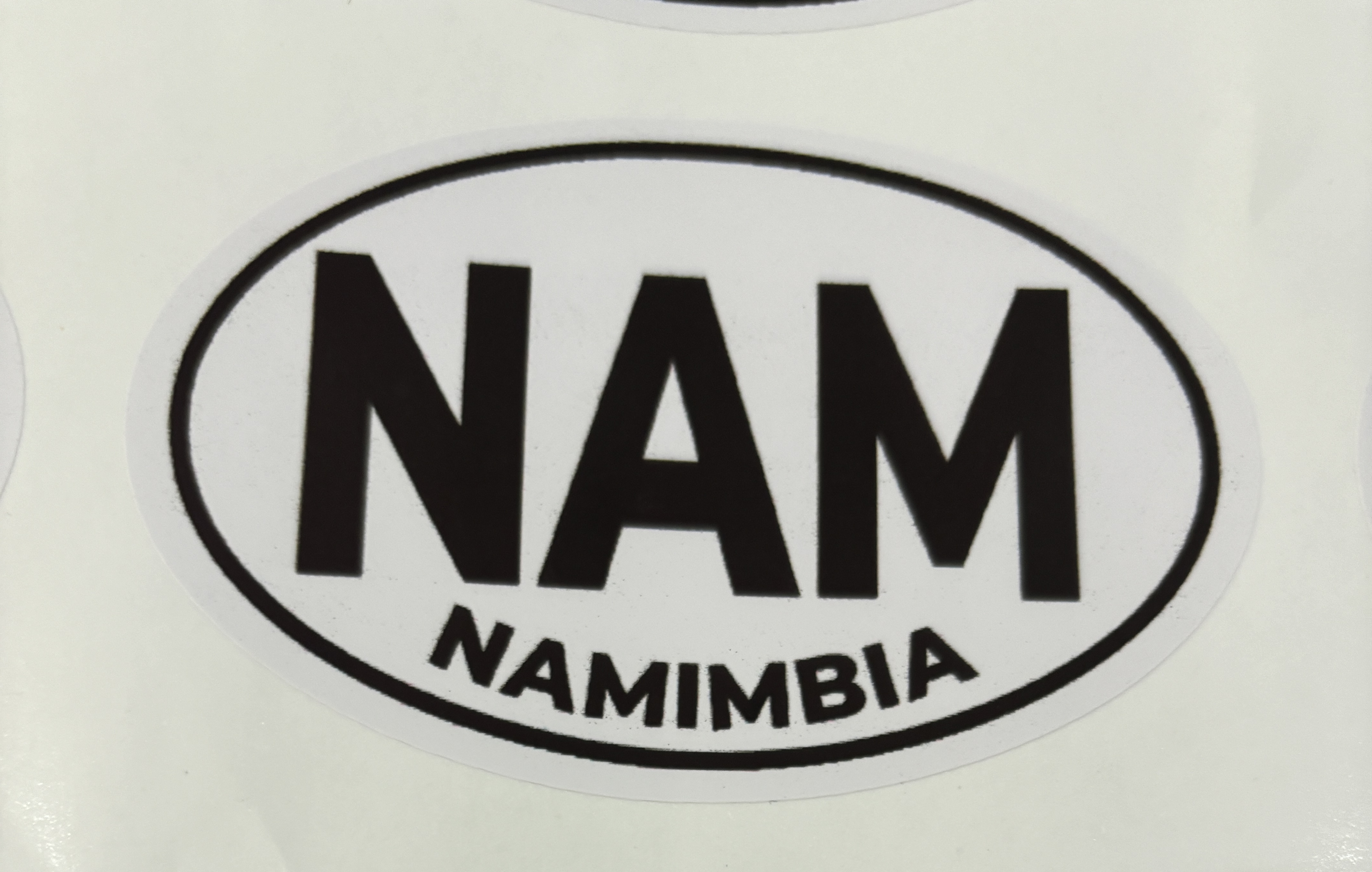
Sounds simple, but there’s no hand book that says what each country rules are. We found out just a week ago that if you don’t have a Namibia vehicle identification sticker on your car, you’ll end up getting a fine from the police. It was one of those random posts on Facebook that will save the day.

So, we downloaded some designs and sent them off to the printer. Simple instructions, print one each. A few days later we get back 5 of each sticker and two with major errors. On one of them Tanzania was places in Zambia and Namibia was spelt incorrectly. The printing company said they would redo them, but to date, still no word.

We’ll use what we can and see what we can find on the road.

Check out the video below on what else we had to do to the landy to make sure we don’t get pulled up by the police in different countries.

Where Do You Sleep?

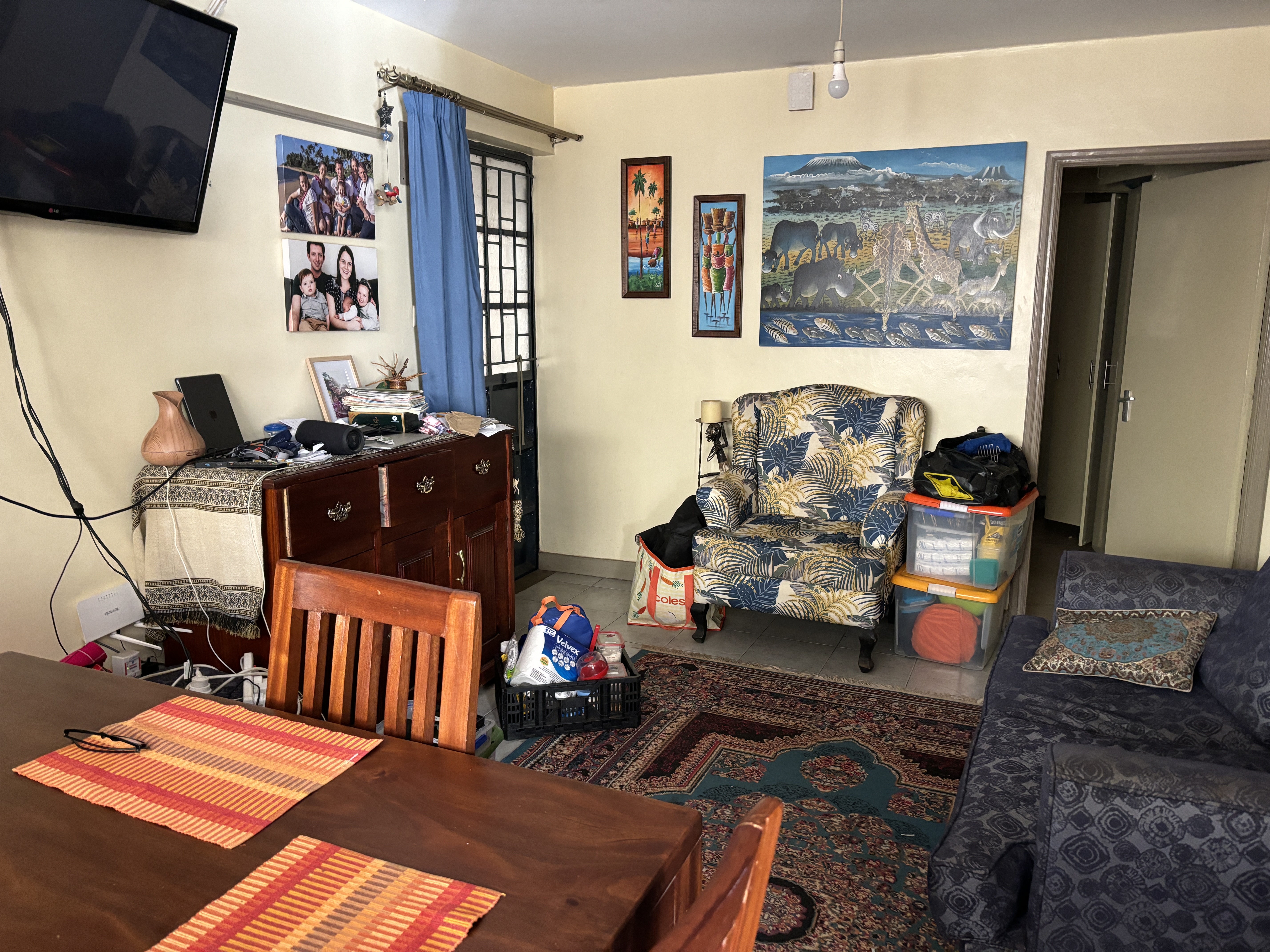
Our home is a rented two bedroom apartment in a suburb called Jamhuri in Nairobi. It’s really small but it’s affordable and across the hallway from the office. That means it’s a quick 3 second trip between the two.

The downside is that it doesn’t have a security grill, only a direct door to the hallway. If someone comes to the door, you have to ask loudly who it is. It’s a bit of a dodgy area but we actually like it. Downstairs is a open air marketplace where you can buy fruit and veges, as well as a supermarket.

Our lounge/dining area which currently has lots of camping gear ready to go.

When it comes to camping, it’s a whole other story.

We have a rooftop tent that we adults sleep in. It has a thin mattress, windows and you have to go up in it with a ladder. The downside is that if you want to go to the toilet in the middle of the night you have to go down the ladder.

Liz sleeps in a side room on the ground that comes out from the Land Rover. When we first had to put up it took a bit of working out but now it makes sense. It has sides you can let down for fresh air but keep the mossies out. Liz will have direct access to the landy at night just in case there’s a lion or leopard roaming around.

Check out our quick video of how we set up Lizzies room here.

Big News!

When we started BeyondWater in 2007, we established a Board of Directors. Their job is to set up policies, procedures and as much as possible, ensure our future. This is not always easy when we’re based in Kenya and they in Aussie.

All of our boards are hand picked business men and women who have a passion for bringing about positive change through our work. We’re all in this together.

A couple of years ago, our Aussie board asked us to consider taking 6 months off for a sabbatical/long service leave. Can you imagine Pete sitting around for 6 months? Not only is he a sanguine, he has ADD and needs to be doing something practical, otherwise we all suffer. I get what they were saying, it’s time we took time out to refresh our batteries for the next season of the work.

We managed to whittle it down to 3 months. It’s still a long time and also means we can’t do fundraising when we go. We normally travel a few months a year in the US, Australia or New Zealand but if we were to take three months off, this wouldn’t happen.

We looked at doing short courses but nothing came up. Going back to Australia to see the family would’ve cost $10,000 just in flights – and it’s very expensive being there. Would’ve been great to go back and see them but this will have to wait until the end of 2025.

So, we’ve decided to take 12 weeks leave and drive in our landy all the way down to Namibia and back. That means going through Tanzania, Zambia, Botswana, Namibia, South Africa and maybe even Malawi. We’ve all got things we want to see, the big one being Victoria Falls and the deserts of Namibia.

We were going to leave at the beginning of May but because we got back from New Zealand later than intended, we’ve delayed it. We might go at the beginning of June but we’ve a few things to wrap up in the office – like taxes first.

Check out our announcement here:

16 Years & Counting

In 2007, we came up with a crazy idea to give people across East Africa better and safer access to drinking water. Thus, BeyondWater was born. Originally it wasn’t called BeyondWater, because we were going to partner with a company in the USA, but in the end we decided along with our Board of Directors to go it alone.

Fast forward 5 years and we found ourselves moving to Nairobi, Kenya. The plan was to volunteer part time with some kiwis who had their own program and do BeyondWater part time. After two years, we parted ways.

It was then that things really started coming together. We had one part time person, then another and then we increased days and staff. We moved into a very small office and after a couple more years had to find somewhere bigger as our staff numbers increased.

Our original plan was to go back every few years to touch base with family and donors, but grandkids changed all that. Our youngest daughter Hannah, got married and then for the next few years kept birthing children. So, we (or at least Sharon) travelled back and forth to New Zealand and ended up speaking to community groups such as Rotary and also in schools. This actually set up a pattern for the next few years.

16 years later, we are active in several countries across East Africa. We have a large team based in Nairobi, community workers across Rwanda, Kenya and Uganda and Board of Directors in Australia, New Zealand, the USA and Kenya.

With the family in Aussie

In November 2023, a wonderful couple from C3 Frisco in Texas surprised us with this video celebrating our 16th anniversary and the 240,000 people who each day get access to clean drinking water and sanitation facilities.

We don’t see ourselves as missionaries, but just normal people who stepped out to do something to help people help themselves. Yes, we have our personal faith in Jesus Christ, but BeyondWater was set up as a community group.

Giving out sanitary products in The Girl Project

White People!

A few weeks ago I was talking with someone back in our home country who was trying to help out a friend who was travelling to East Africa to volunteer for a couple of weeks. This person had been before, for a few months so had a small insight into some of the challenges visitors have. No matter what she said, the other person was ‘I know, I know’ even though they had no clue what they were letting themselves in for. My friend said in exasperation “White people!” (she is white herself).

I just laughed as those two words sums up the frustration many of us have with visitors.


It doesn’t matter how many books you read or movies you watch, you just ‘don’t get it’ until you spend some time here on the ground – and with an open mind.

tourist


We recently spent a day with some people from overseas who had been here a long time ago. No matter how many times we told them not to, they became happy snappers, wanting photos. I know it’s always exciting to be in a new place and try and capture as much as possible, but we and our team actually live here and have to do life with the people you’re wanting to photograph. Too many foreigners have come with their cameras, climbed out of their large safari vehicles, snapped some shots (without asking permission) and whizzed off again.


It makes people feel like they are animals in a zoo.


So here’s some tips for when you go to a new country, whether it’s developing or not:

  • Learn some of the local language, like greetings
  • Wear appropriate clothing
  • Ask before taking photos
  • Carry little cash on you
  • If you don’t like something (like the food) keep it to yourself and try not to show it on your face (out of respect for your hosts)
  • Don’t take your security for granted


When you’re in a new place, it’s not like home, it’s different, and different is good.


If you’re visiting for a short while, you’re a tourist. Even if you go somewhere for a couple of months, you’re still a tourist. Anything up to two years, and you’re still a visitor.


Please have respect for the local culture, take things slowly, and pretend youre back in school – it’s a great learning experience.

tourist-2


Not Quite What I Thought It Would Be Like

Yesterday we moved our belongings into an apartment. For the past 6 months we’ve been living out of suitcases while we went on a fundraising tour. Pretty much we were in a different bed every second night, so we got into a routine and where everything went. We had our ‘speaking clothes’, ‘casual wear’ and ‘travel clothes’. We knew where our toiletries would be and most importantly, where to find the hair brush.

Of course, after 6 months it did get a bit tedious but we were there for work so we made it the easiest for us.

So when we decided to return I was really looking forward to settling down and having a home to ourselves.

However, it hasn’t turned out so wonderful as I thought.

I thought finding an apartment would be easy. What I didn’t take into account was how prices for rent had risen since we’d been away. We were pretty specific on what we wanted. We needed a balcony for our BBQ (and I love sitting out there) and I wanted somewhere for my washing machine. I also wanted to drop how much we would pay per month because we hadn’t raised our personal income enough to spend more.

To find a place here you decide on the area you want to live in, then go from gate to gate and ask the guards if there is anything available. After a couple of fruitless days we employed the skills of two agents. I’d had other agents call me after I made some enquiries online but they all wanted $50 upfront for a commitment fee. At least these two guys wanted nothing (they got paid by the landlady).

We ended up with two options, none we were 100% happy about but we needed to find something this week. On the Friday we signed for the apartment and then discovered that the President announced a public holiday on Monday. Thankfully, the guy we’ve used before was able to bring together a team to work on the Monday anyway.

I’m used to moving so it was no big deal to do it for the umpteenth time.

What got me was when we started unpacking the 30 something boxes. I got so overwhelmed by the amount of stuff we had accumulated over 4 years. I was used to just a few clothes and here I was looking at more clothes than I ever saw. Then when I went to unpack the kitchenware I got annoyed with myself in how many plastic containers we had. Seriously, did we need that many containers? Did we need that many clothes and shoes?

I know after a few weeks I’ll adjust but right now I’m staring at my wardrobe and already deciding that if I don’t wear them in the next few months, I’ll pass them on to someone who actually needs them.

We do have to ask ourselves if we really NEED the amount of belongings we own. While travelling I’ve seen some people who have a whole room dedicated to just their shoes. Isn’t there a better investment in life than that?

Stuff disintegrates, but the investment we can make into the lives of people is what continues forever.

That’s where I’ll be making more of an investment in. What about you?

Where Have You Been?

We’ve literally spent since February on the road. Pete and Liz travelled to Uganda, back to Kenya, Tanzania, Zambia, Botswana and then South Africa, just to drop off a safari vehicle for someone. They then hitched a flight from Johannesburg back to Nairobi then on to Abu Dhabi, Sydney and then Auckland. All that time Sharon was with their growing family in New Zealand.

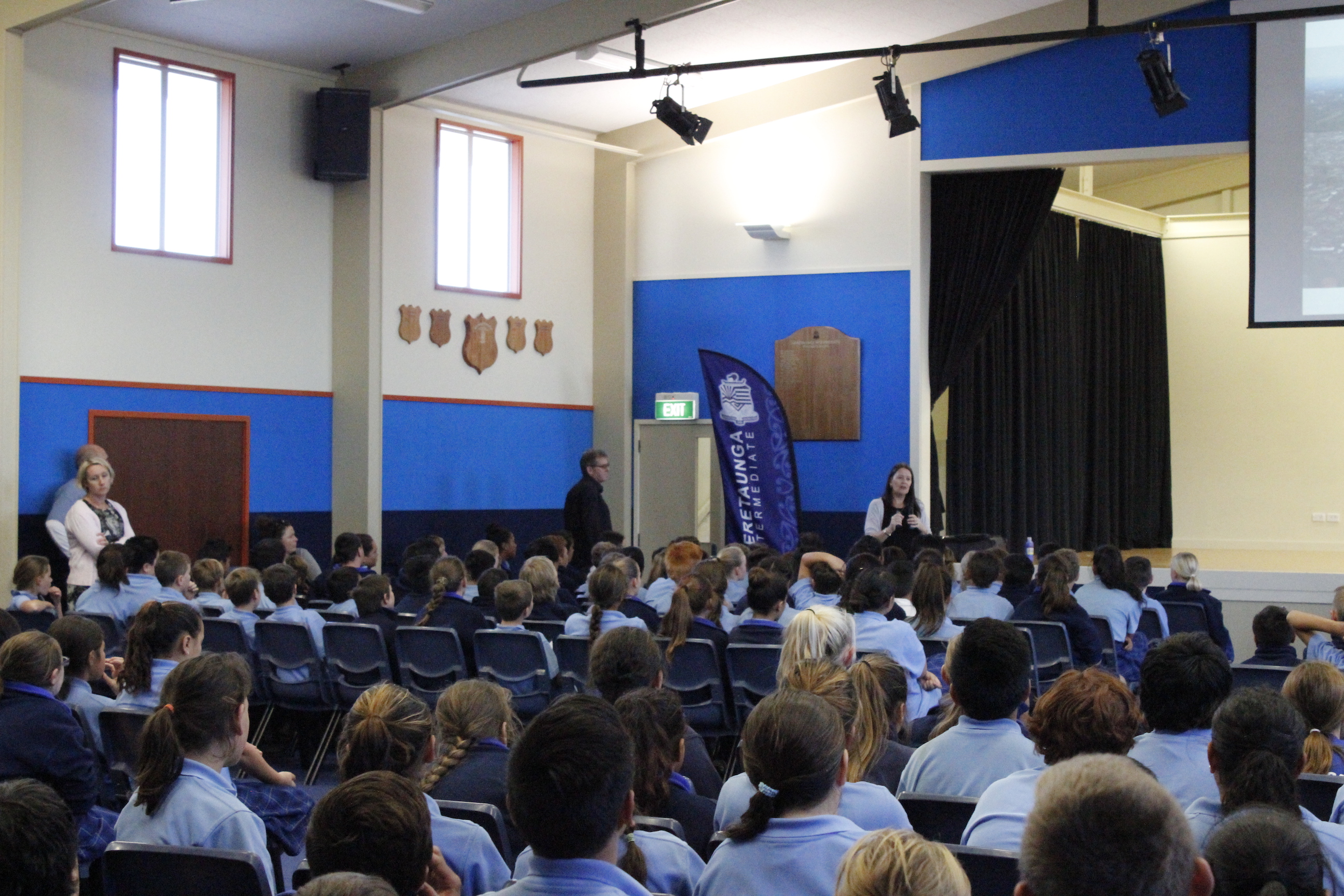
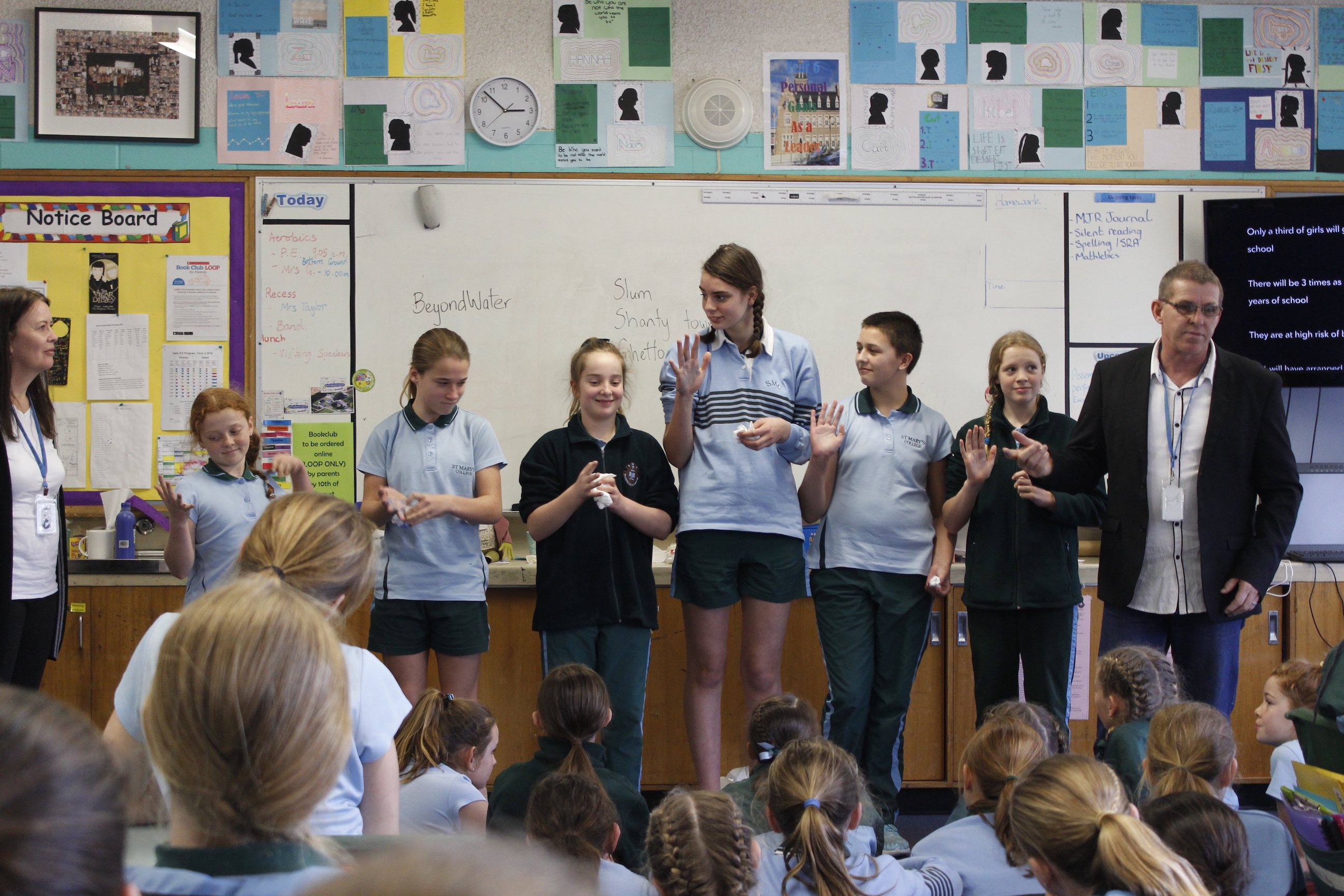
Once Pete and Liz arrived, the three of us spent April through to July travelling throughout New Zealand speaking to schools, Rotary Clubs, churches, mens and womens meetings, talking about our work in East Africa.

liz n bub

Right now we’re in Sydney, but have spent the last few weeks in Canberra, Melbourne and Tasmania. The reason we went to Tasmania was to visit one of the kids from Kenya who we helped get to Australia, his father was a refugee here. So we kept our word and went all the way down. This Thursday we head to Queensland for a week. We’re looking forward to the warmth but won’t have much of a chance to relax as there’s plenty of speaking opportunities and catchups with people that we know.

IMG_5530

A big reason to return to Sydney was to rebuild our team which had depleted over the last few years. Because we work with volunteers, it’s very hard to keep our people. One day, we hope to employ people at this end of the world.

_MG_4563

So this trip has been part fundraiser, part family and friend catchup but pretty much all business. It’s been great but we’re looking forward to returning home to Kenya to our hard working team who have been doing a great job.

_MG_5428

We’re Not In Kansas Any More Toto

The enormity of what we are undertaking this year is really sinking in now. Who in their right mind would spend 6 months away from Kenya and try and raise $50,000 for projects as well as double their own personal income? The itinerary is always evolving and there are lots of variables to work with that complicate it. It’s an insane plan and I sure hope it pays off.

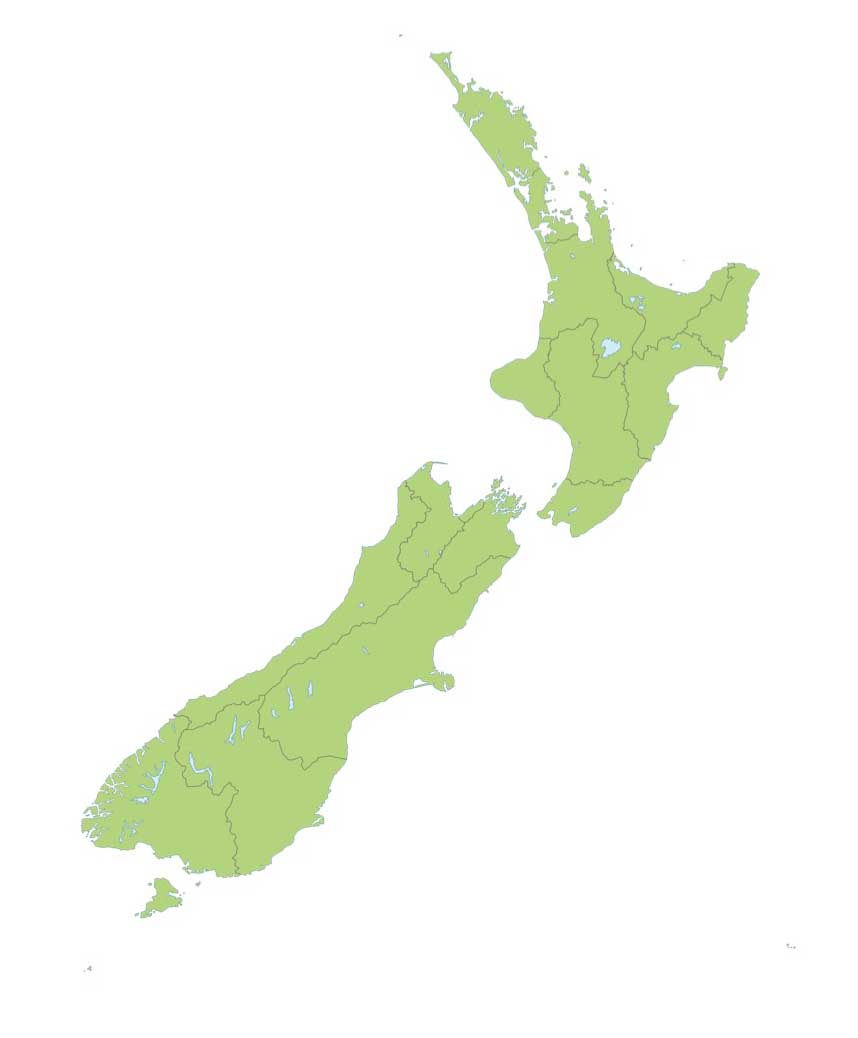
So here we are, in our country of birth (New Zealand), total strangers to the system, language, food and culture. Google maps confuses me as it says the names of the roads in an odd accent and isn’t helping me pronounce Maori words.

You would think that after 6 weeks I would’ve become accustomed to things here. Actually, I’m better than Pete and Liz who’ve only just arrived. I feel sorry for them because I understand what a head spin it is being here.  nz

The Driving

People indicate! Wow, what an experience. Everyone here complains about how bad the traffic is. Ha, if they only knew what it could really be like. I have to admit that it gets frustrating having to wait for the traffic lights to change, it seems like forever. I don’t like driving at night but here I’ve done it a few times and because of the overhead lights and reflector lights on the roads, it is no effort.


Food

The variety of food here is AMAZING! I can even get gluten free food wherever I go. However, there is lots of food we shouldn’t be eating because of the sugar levels. Fruit is fairly expensive and when you pay 10 times the amount for a smaller avocado, it does your head in. For the first time in about 6 years we’ve had fejoas, which is phenomenal. The problem is that we are here for a few months and because of the good food, we’ve all put on weight already.


Language

I’ve never heard so many ‘sweet as’ and ‘sure bro’ in one conversation. Even coming from people serving at a counter, the answer always seems to be ‘sweet as’. I suppose it’s better than saying ‘cool’ after every conversation. Kiwis say a lot of ‘aye’ at the end of their sentences. Pete’s picked it up so that just about every sentence finishes with ‘aye’ and it drives me up the wall. I hope it’s something he can wean off when we leave.


Shopping

The sales here are phenomenal. Whenever we come out of Kenya, we always have a shopping list ready to go. Things in Kenya are very expensive and we know that places like NZ and Aussie have great sales. In Kenya it’s a sale if there is 1 or 2 percent discount. I picked up a frying pan that had 50% off, now that’s a sale. Unfortunately we couldn’t find many summer clothes to take home because it’s all about winter here now. However, after a few weeks I’m a bit tired of trailing the malls for a good deal. All we seem to have done is see the inside of the car, the inside of a meeting room and the inside of a mall.


The Reverse Culture Shock will pass, but it might take some time. How did you cope when moving to another country?

When We Return Home

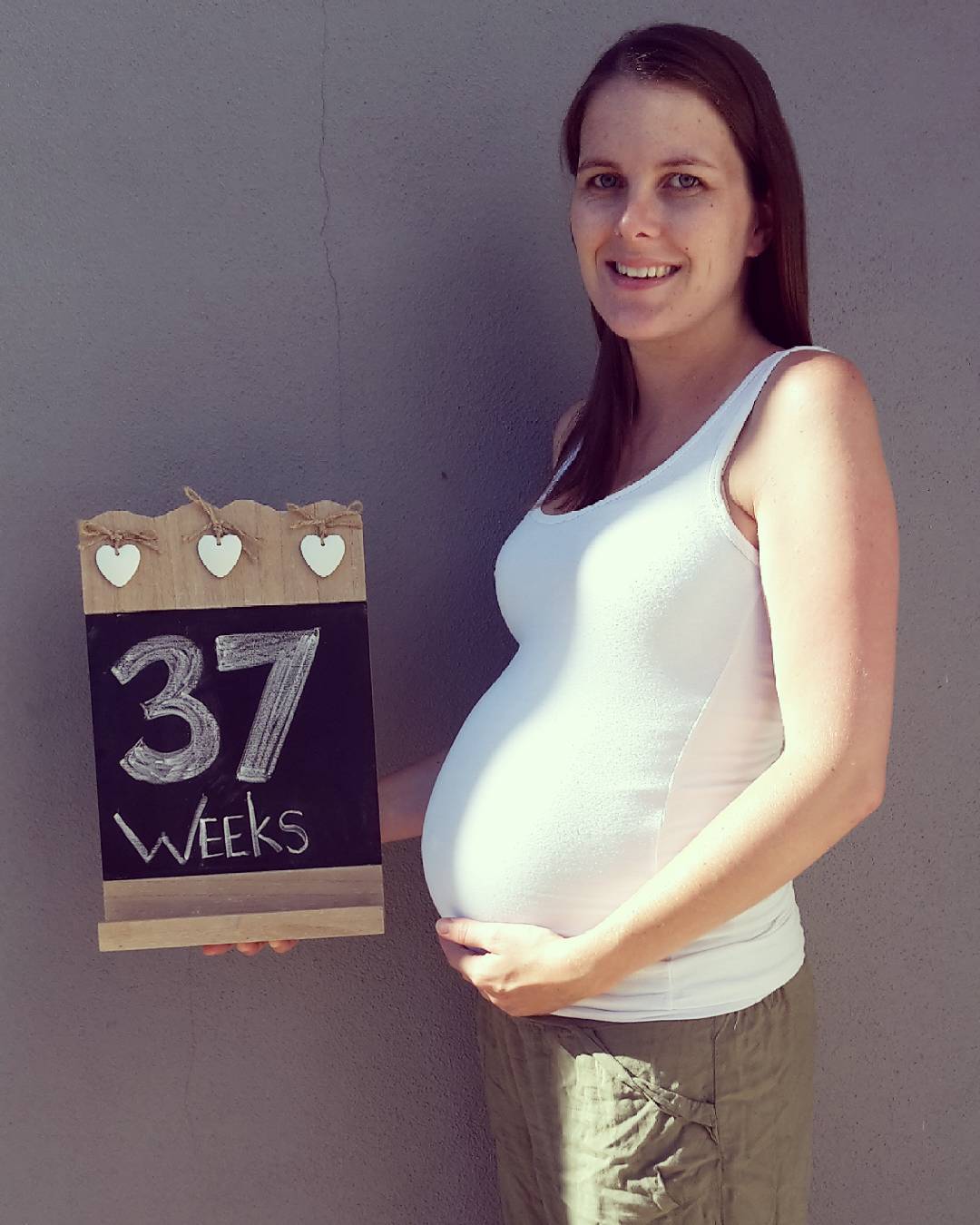
It feels weird to say I’m going home, because Kenya is home for us and the thought of leaving it for 6 months just breaks my heart. I definitely want to be with our daughter Hannah for the arrival of our first grandbaby but leaving Nairobi, everyone close to us and the familiarity of home weighs heavy on me.
han

Hannah is ready to go!

I thought I would write about how YOU can help others like me who return to their home land, even though it is foreign for us. You see we often don’t understand the language, culture, politics and general day to day procedures in our homeland

To me, home is where my heart is at that time and especially where I am with my husband. While were living in Australia that was definitely home. I’ve returned a few times since being on assignment in Kenya and now I feel uncomfortable there. I’ve had several friends move back permanently to their homelands and I’ve asked them how long it took for them to adjust and they all say at least 8 weeks. I can identify with this as we spent 6 weeks in the States last year and it got quite comfortable by the end of the trip.


Sharon’s Tips:

  1. Give us time.

Homecomers (HC) usually travel a long way to get back. For me it was more than 30 hours in transit, that’s a really long time. I have done longer but on my ticket I had to be back in New Zealand by a certain date. It can take up to a week to get over jetlag.

Besides that though there are often things HC have to deal with. Organising bank accounts, health checks, drivers licenses and buying appropriate clothes for the local scene. And of course, you have to figure out how to get from A to B to do those things. We only hold Kenyan drivers licenses but it looks like we have to re-sit everything to get our New Zealand ones. That means I have to spend time studying, making sure I get my crazy driving ways out of my system and get to obey the laws here.

While it’s great to catch up with everyone, we come with a priority. For me, it was our daughter. For others it may be relocating back permanently or sorting out family issues. I had lots of people sending me messages and requests for catch ups and I’d only been in the country for 24 hours. It was all a bit much when what I really wanted to do was to just sit down after more than 3 years and watch a movie with my daughter.
flight

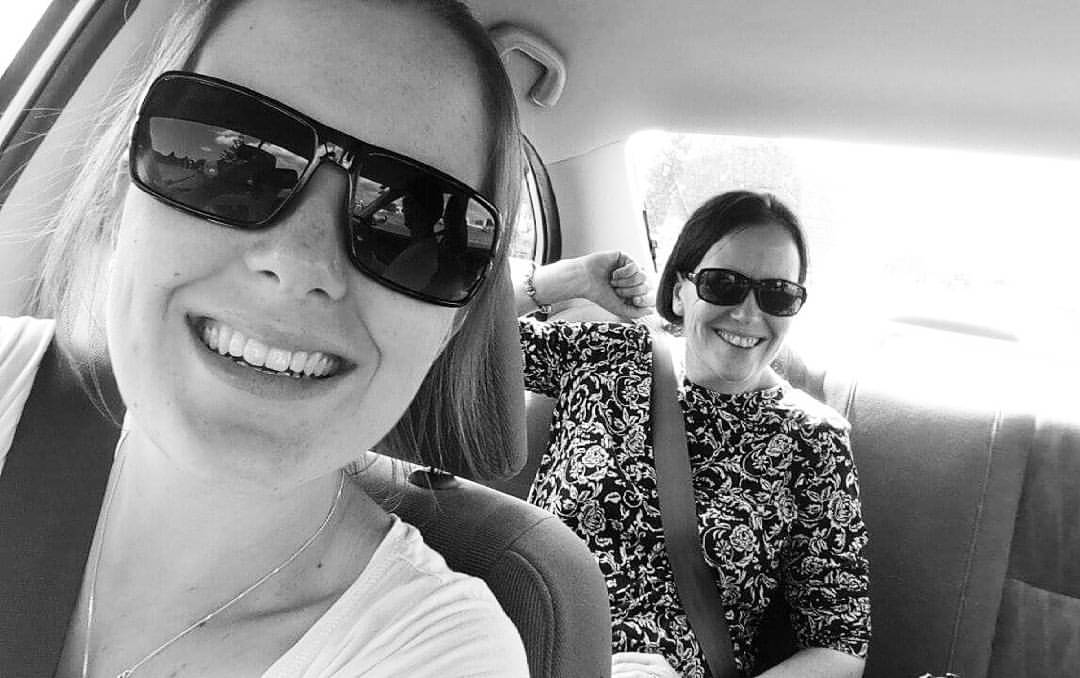
Just after landing


  1. Don’t assume.

A really hard things is that people assume that you know people, politics, current affairs and where to go for something. While we get a lot of news online, it’s just one of many things our brains are taking in. Our main focus is on the foreign country where we are based, not our homeland. Yes we attend events at embassies but that is to catch up with people of the same nationality and relax for a night. We know who our ambassador or high commissioner are but we don’t know who the MP is in the suburb we used to live in.


I haven’t lived in NZ for 15 years, it’s pretty much ALL foreign to me.


  1. Realise we are in two minds/hearts.

While we want to be with our families in times of need, we also have a new family in our foreign country. We have a new set of friends there, a new way of living, a new reality. We adjust.

When we return to our homeland we are torn in two. While we try to adjust here, our thoughts are with what is happening in the country we’ve just left. Today is the 2nd birthday of Alisa, our friends daughter. Tomorrow a group of friends will be going to their house for her party. We gave a gift to be unwrapped then but we will miss out on all of the fun. You can’t help but think about it, yet you wouldn’t be anywhere else right now.

Some people are forced to come back to their homeland as their visa might have run out, or there are family matters to attend to. Some have HAD to return for their kids. It’s very expensive to fly your whole family back so many have to decide who gets to return every now and then to the foreign country.


kids

At the beach for the first time in over a year

  1. Invite us home.

We find that people like to meet up for coffee or take us out for meals. While that’s great try and see it from our viewpoint. It costs at least double to go to a restaurant and we often think in our minds ‘I could take that extra $70 and put a kid through school for a couple of months’. Do that 20 times and you see a number of children’s faces or the local street children who could actually be getting educated rather than begging, or worse.

We come out for a couple of months at a time but hardly ever get invited into peoples homes. When you’re out speaking/fundraising you get tired of seeing the inside of buildings, offices and meeting rooms. You’re presenting non-stop about your cause, which you are passionate about, and you don’t get ‘down time’. Last time I was on tour I just got my feet wet in the ocean and my daughter said “Mum, your next appointment is early”. 30 seconds is all I got – our ocean is a 9 hour drive away.


Give us an option of where to meet.


  1. Support us.

It’s VERY expensive to travel to our homeland. It’s the number one reason we don’t return more often. Many of us rely on personal donors to keep us in the field. Some people just stop supporting because they think that the money isn’t needed any more. Often it’s the opposite. Many times things like eating out are cheaper overseas but that’s about it. If you’re going to stop financially supporting someone, at least write them an email explaining it.


  1. We still have a job to do.

When we are in New Zealand and Australia this year we are travelling to schools and Rotary clubs to try and raise project funds. It’s certainly no holiday when you return, even though people think so. There’s lots of emails, contacting your team back in the foreign country, making sure there’s funds for projects, visiting people here, grant writing, setting up legal entities and more. You are also working across time zones to balance everything out.

Work does not stop just because you’re in a different geographical place. It’s hard because you want to spend time with everyone but need to keep working. My brother asked what I’m up to while here and I really couldn’t be bothered trying to explain that I’m working because he just wouldn’t get it.

To me a holiday is hanging at the beach with the family, everyone off their phones and out playing games. This trip is so not a holiday. We need to quadruple our personal support level to be able to return to the work we do. Money does not automatically come in and it takes a lot of arm twisting to convince people to part with their hard earned dollars.

me