4 Things I Don’t Think God Really Cares About

I know God cares, but I think there are some things He doesn’t really care about at all. When I say ‘care about’, I mean He doesn’t mind.


1. What Type Of Music You Play In Church.

Pentecostal churches like it loud, more traditional churches like it, well, traditional. Sometimes they are quick to criticise the way they do worship. I don’t think God really minds at all. He’s more interested in people’s heart attitude and whether they connect with Him or not. Nothing must bore God more than some songs thrown together where people come in and go through the motions of ‘church’. He also doesn’t mind if you sit, stand, wave your hands in the air like you just don’t care or even prostrate yourself. You can have your hands raised and be thinking about the football.


2. If You Live In Africa Or America.

Jesus wasn’t blue eyed, blonde nor spoke in English. Actually, I know God is colour-blind. He reacts to people the same wherever they are. He doesn’t go ‘Oh, those poor people in Africa, I think I’ll love them more than the Brits because they’ve got more’. That wouldn’t be fair now would it? God loves everyone, full stop, no doubt. His love is not based on our need, but Him. Therefore, He cares about multimillionaires, those who live on the street and everyone in between.
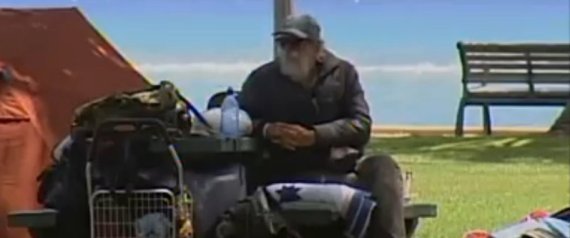
Homeless in Hawaii

Homeless in Hawaii


3. About Your Age.

I’m not sure why people of mature age think that they are ‘more spiritual’ or in a better position to be used by God. God can use whoever He wants, however He wants. If we wait until we’re spiritual enough, old enough, rich enough or knowledgeable enough – we might be dead and in the grave. It’s about being obedient in the small things, regardless of your age. It’s not about how many years you’ve got but about who you serve. I’ve heard amazing things come out of the mouths of little kids and those well advanced in years. We need to get over ourselves and drop the whole generation gap thing.
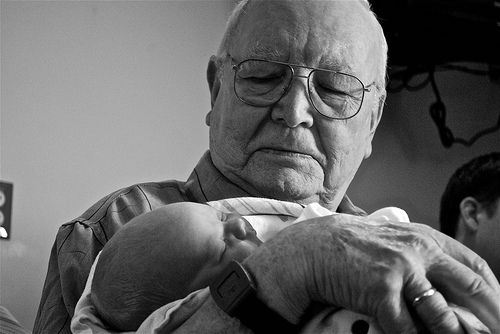
old

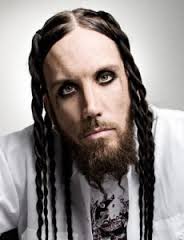
4. Whether You Have Dreadlocks Or Look Like A Goth Or Skinhead.

Yep, God doesn’t care about your hairstyle. People do, but I doubt that’s high on His priority list. We live in a country where those who have dreads are looked at as druggies and ‘from the Coast’ – rebels. Personally, I’m not sure how on earth people with dreadlocks can keep them clean but each to their own. Even Nairobi has a Goth shop – imagine wearing leather pants in 30 degree heat! As humans we are quick to judge by the outward appearance. Once you get to know the person you find out what they are really like and often we are surprised by what we find.
tommy

Tommy Kyllonen – pastor in Florida

brian

Brian Welch – Jesus follower and founding member of Korn

Read THIS quick article about one woman in Adelaide, Australia and what she encountered on a train.


What else do you think God doesn’t really care about?
About Money Matters

In light of what has occurred in the last few hours I thought I’d write my thoughts on giving online. If there is anything that will pull a person or organisation down is how they handle their finances.

I am sure all of us have received via email or social media a request for money for some need, or we have received a million dollars from some unknown relative. This week I’ve had someone offer our organisation $7,000 if we give $4,000 of it to another African organisation they have nominated. Also, an overzealous family member Facebooked a lot of our friends asking them to give money to help get Pete home to see his dad before he dies, and put the money in their own personal bank account.

So here goes:

1. Always Check the Spelling

It is more than obvious if the spelling, the grammar or their English is incorrect that you should just hit the delete button. If someone is asking for money they should at least have the decency to spell the words right.


2. Emotional Blackmail

I hate it when people post up photos from famine areas, use emotion to twist you into giving or give the ‘this is the last ditch effort’ type of ploy. If people feel to give, then let them do it.


3. Give Intelligently

Ask yourself ‘Can I afford to do this right this very second or will next week be better when I can give more?’ Find out more about the situation. Make sure your money gets to where it is meant to go and not in someone’s personal pocket (we call it lunch money here). Think about the way you can give that has the most impact.


4. Ask Questions

When will this money be spent, by whom, will I see the results, why do they need it right there and then? It’s okay to ask questions and if more people did they would be giving to areas that really bring about change.


5. Bank Accounts

Red flags go off if people ask me to give to their personal bank accounts. Where is the accountability and how will I be receipted? For us, we have a personal bank account in New Zealand that friends and family put money into to help keep us in Africa. That’s only because we haven’t set up a Trust there (yet). However, if it’s a business we have a partner trust people can give into and get a tax deductible receipt. In Australia, the US and the UK we have partner organisations who collect donations on our behalf and issue receipts.

Ensure everything is kept above board.


6. Ask the Person Involved Themselves

We’ve had some people who out of the kindness of their hearts asked for money on our behalf for personal costs. We became aware of it because a cousin sent me a message on Facebook telling us about it and did we know them. Hence, 3 hours later I am still cleaning up the fallout of that. Thankfully my cousin did that otherwise we would’ve been oblivious to it all and it really could’ve done some damage to our credibility. If you get a request from someone you think you know give them a call and ask them did they send it out or what is the best way they can help.

We want people to keep giving, no question about that one. However, we also don’t want to bring into disrepute the good work that volunteers around the world are doing. We have many friends who work with babies, children, the elderly and the special needs in countries some haven’t even heard of. Let’s keep supporting them because they really do need it. The vision is always bigger than the resources and while money doesn’t bring happiness it does help bring positive change to millions of people on our earth.

Daughter of a Missionary

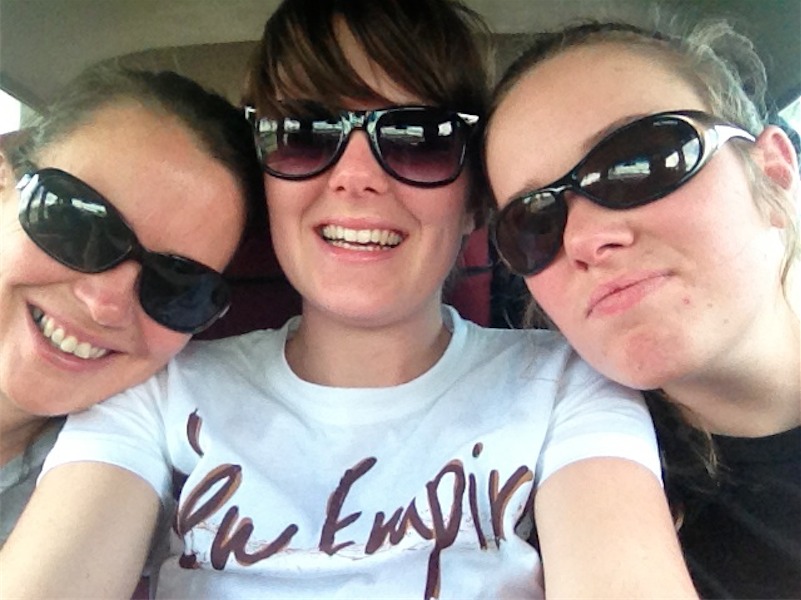
To be honest, when mum asked me to write this blog post it was just after I had a huge blowout at her about how much I dislike (to say the least) the fact that they live on the other side of the world and had given up their lives to help those in need. People often look at missionaries and volunteer workers and say how wonderful it is that they have given up their lives to help those in need and that it’s such a heroic act. It seems that people don’t often think of the practical things like the sacrifice the rest of their family makes for this to happen. When mum and dad told me that they had decided to move to Kenya I thought that it was a “nice idea” for them to do something different. I had lived overseas before and knew that I would survive without them. But not long after they left for Kenya I felt like my right arm was chopped off. I think this was because I knew they weren’t coming back easily. After a few months of them being over in Kenya I was struggling a lot and decided to move back to New Zealand where all my extended family are.

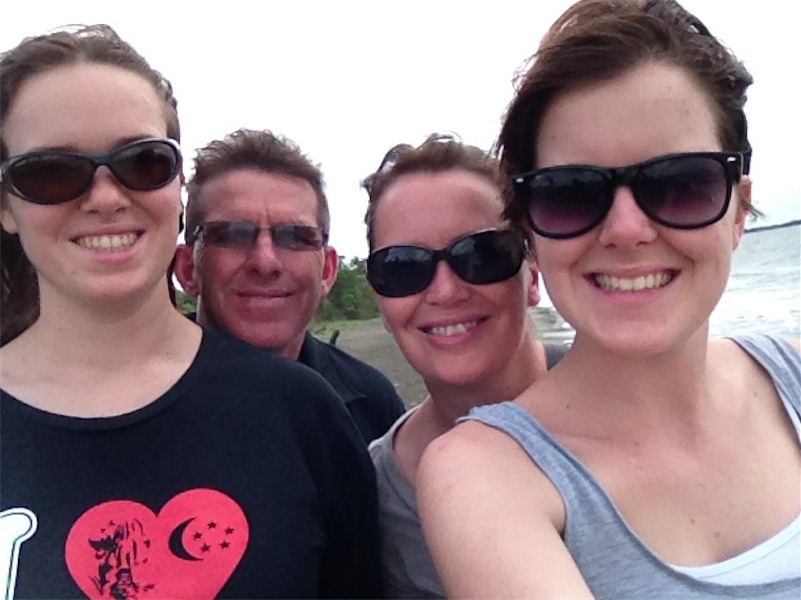
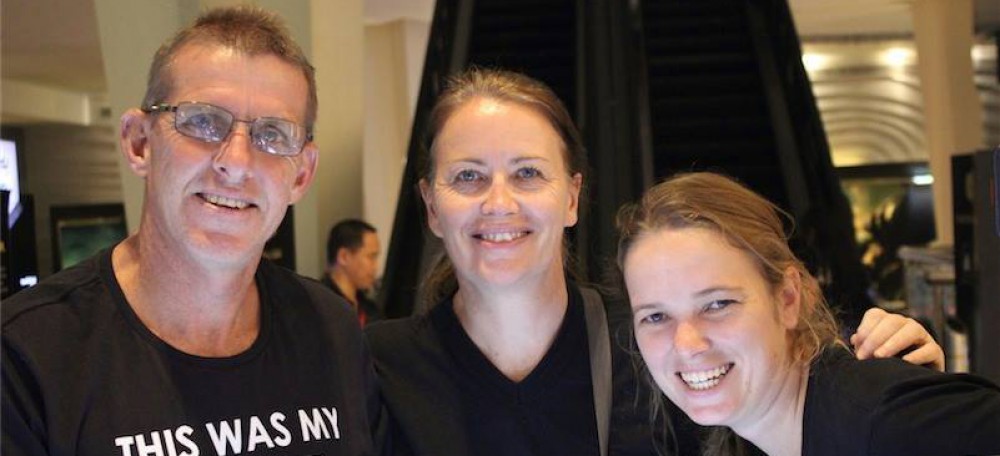
all of us

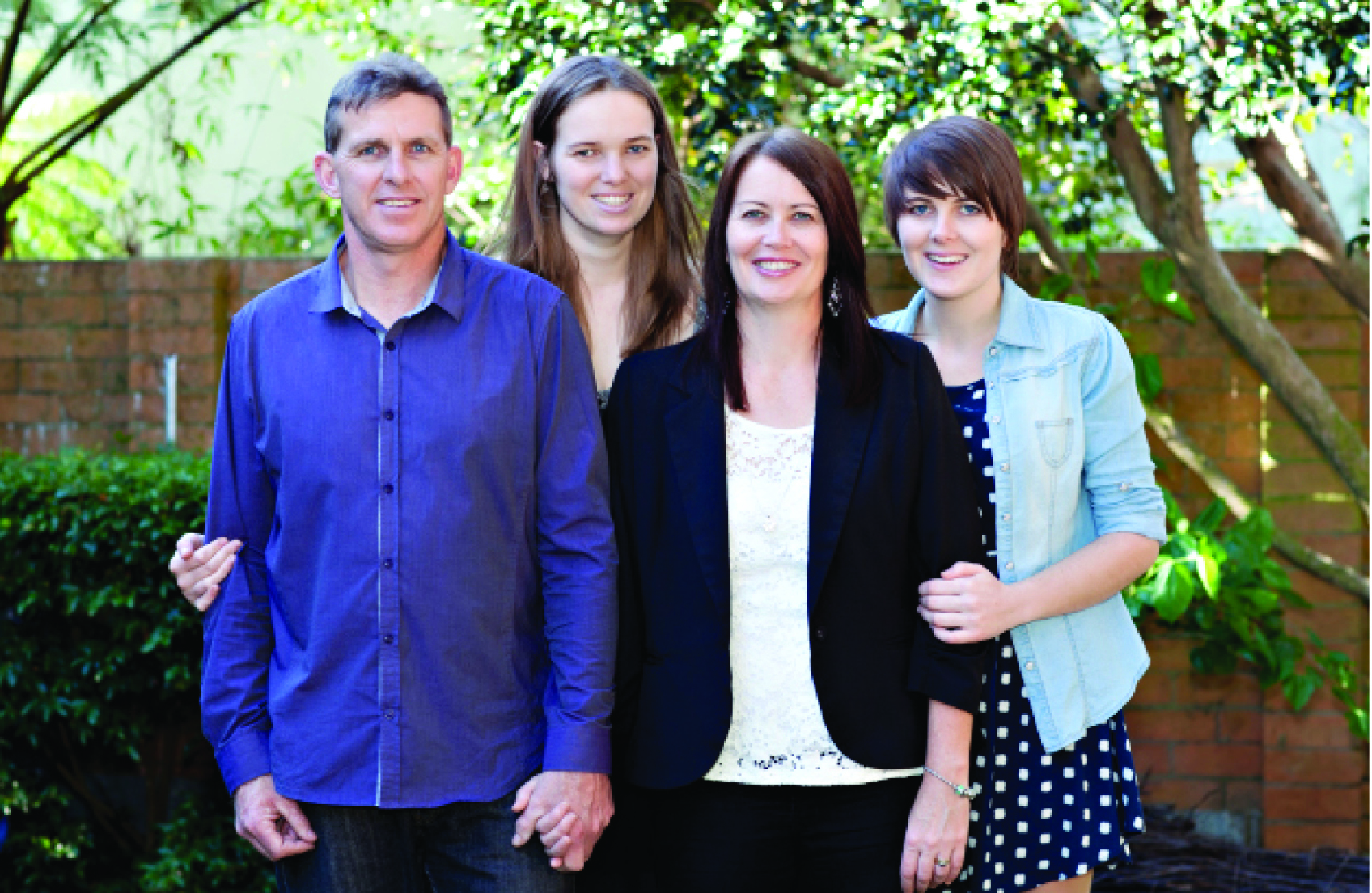
This was taken one week before my parents and sister left for Africa in 2012.

Here are 5 things I have learned over the past year and a half:

  1. You’re allowed to miss them

I miss the daddy daughter coffee dates, the ability to live at home (DON’T UNDERESTIMATE THE AWESOMENESS OF BEING ABLE TO LIVE AT HOME! Seriously though, I miss it quite a lot and wish I hadn’t taken it for granted), the painful but great back and neck massages mum gives, the long walks on the beach talking about life with my parents, family outings, special moments with my sister (which were few and far between since we were always arguing), and the list goes on. At first I felt guilty that I missed them because they were doing “such an amazing thing” but then came to realise that it’s my right as their daughter to say I miss them.

  1. Most people don’t understand

No one tells you how empty life can be without family. No one tells you how hard it is to organise skype dates between different time zones. No one tells you how scary it is when you hear of bombings and disasters that are just around the corner from where you know your parents are. The matter of the fact is no one tells you because no one really knows until you’re in the same situation. I don’t actually know anyone else who is a missionary’s kid.

Dad's 3 girls. Not sure how he puts up with us!

Dad’s 3 girls. Not sure how he puts up with us!

  1. Your parents are irreplaceable

The other week I was thinking about the future. What is going to happen when I get married one day? Is my dad going to be able to afford to come to my wedding and walk me down the isle? (He has no option; he’s going to be there whether he likes it or not thank you very much!) When I have my first child is my mum going to be able to be there to hold my hand through the ordeal? How often will they be able to see their grandkids? I don’t want my kids to miss out on having their crazy Crean grandparents around. There is no one who can ever replace my parents in those moments.

  1. Make “other family”

Throughout my life when travelling I have learnt to make other people my “other family” when mine aren’t around. Since living in New Zealand I have somehow managed to find Luke, my prince charming. (Awww!) His family, the Rutlands, have become my family, not because its kind of what happens when you get in a relationship, but because I chose for them to be. His dad, Andrew, takes me for driving lessons, makes me laugh, and gives me great advice. His mum, Sharon, (it’s a weird coincidence that our mums have the same name…) takes me for coffee, gives me hugs and talks with me about life. His sisters, Amy and Hannah, (another weird name coincidence which gets very, VERY confusing) have become my other sisters whom I can laugh with, argue with and cause mischief with. And his gran is one of the coolest gran’s around! I couldn’t do life here without them. I can’t say thank you enough to them for being so supportive and loving me like their own.

Mum and I Skype each week and we message each other all the time.

Mum and I Skype each week and we message each other all the time.

  1. Accept the fact that there is no such thing as normal anymore

As a missionaries kid you have to learn to modify your thinking of the basic things. What do you do at Christmas time, Fathers Day, Mothers Day, your birthday? Who do you spend those days with? Everyone else has his or her families.

The 4 of us in the US. I left them to come back to Aussie. They went to Kenya.

The 4 of us in the US. I left them to come back to Aussie. They went to Kenya.

I’ll tell you a secret: every other day I feel like calling my parents and telling them that I hate the fact that they chose to live in Kenya and that they should come back and live close to me. But I know deep down that this is what my parents are called to do. I know they wouldn’t be happy just living a “normal” life in Australia or New Zealand. And even though most of the time it sucks not having a normal family, I am really proud and glad that they are doing what they love.

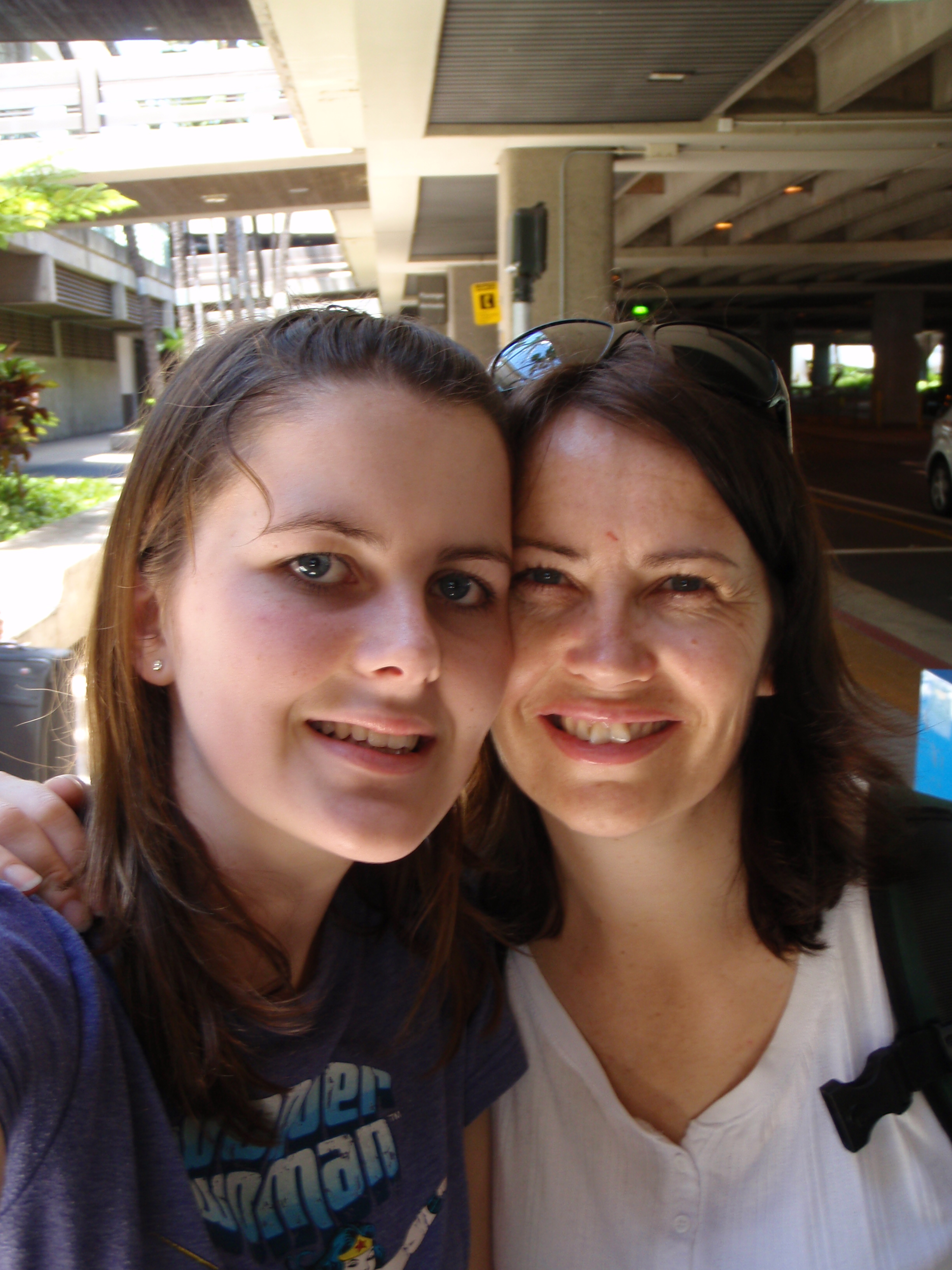
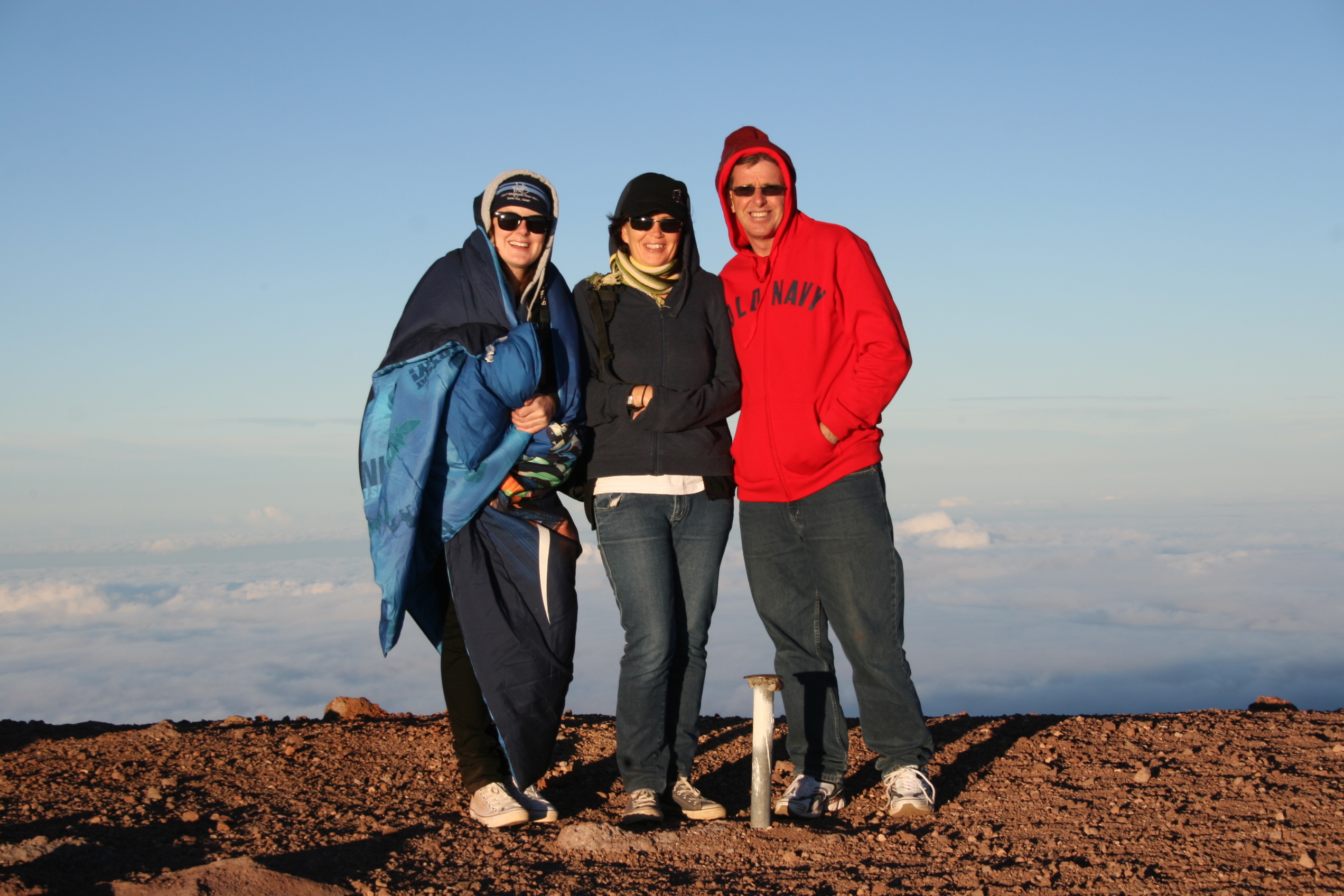
This is us on top of Mauna Kea in Hawaii before I went to school there.

This is us on top of Mauna Kea in Hawaii before I went to school there.


So, what do you do actually do for a job?

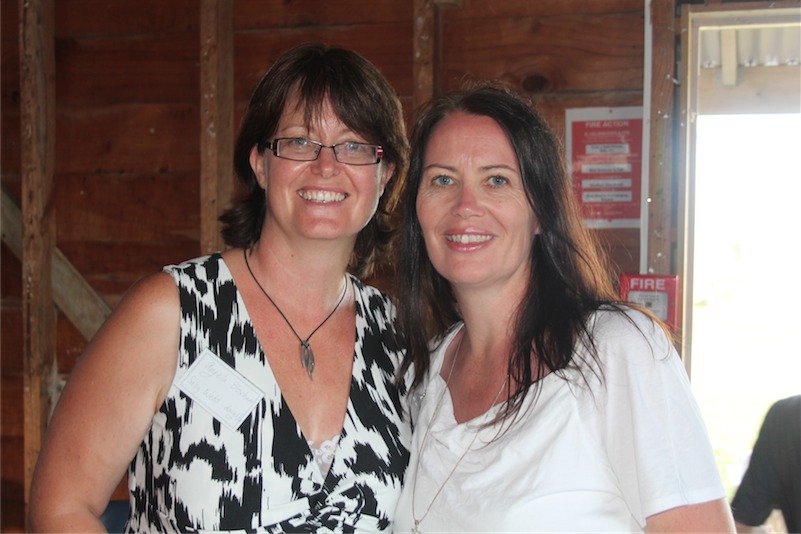
Here we (Shaz and Liz) are in the last week of a month speaking tour in New Zealand (NZ) before we head to Aussie to do the same. We’ve been in schools, unis, Rotary Clubs and had lots and lots of coffee catchups with people.

In this month alone we’ve slept in 12 different beds.

Besides the question of corruption the other question I mainly get asked is “So, what do you actually do for a job?” So here’s what we actually do, although every day is different.


Sharon

I try to be in the office by 8.45am but it depends on traffic. Sometimes it takes 5 minutes, other days 30. Basically in the mornings I volunteer with an organisation called Afri-Lift which works with children and youth for very poor backgrounds. On Mondays I’m in meetings until 2pm, Tuesdays I write grants for fundraising, Wednesday’s prepare for a 6 hour teaching day, Thursday teach, Friday do marketing.


The afternoons/evenings are taken up with work for BeyondWater (the Aussie charity we started in 2007), writing LOTS of emails, blogging, social network updates, looking at projects and every now and then taking Pete out for a coffee. I work till about 9pm most nights with my other spouse – the laptop.

IMG_7193

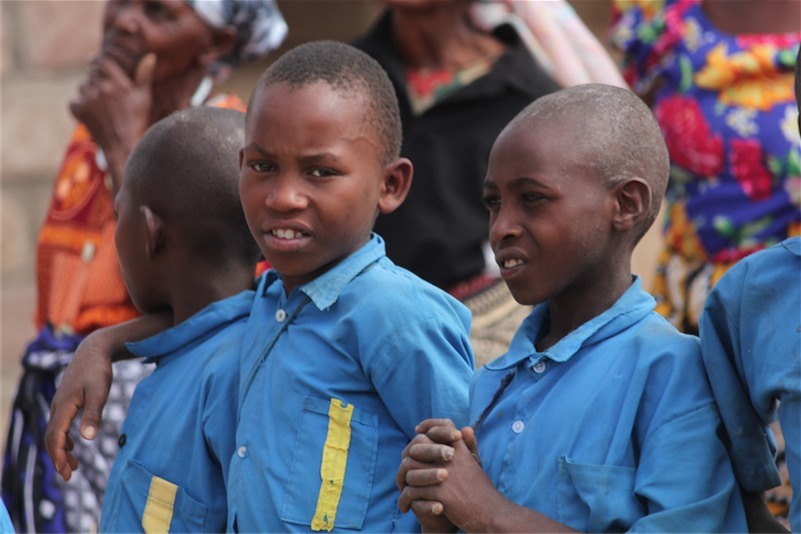
Some of the great kids we get to work with.

Three out of four weekends we also have programs on. One Saturday we train youth leaders, another we have a tuition program in the Kibera Slum and the third Sunday of the month we assist with the Riziki Childrens Program. That leaves us one extra Sunday to meet up with some young couples we are mentoring.


In addition we host lots of international visitors, sometimes go to the Kibera Slum with food packages or randomly do things like have the odd day off.


Pete

My days are certainly never dull and boring. Like Sharon, on Mondays we have a staff meeting for a couple of hours but every day/week is different. Sometimes you’ll find me tiling a kitchen, fixing a tractor, buying a truckload full of seeds to transporting tomatoes. You will also see me working with teenage boys training them on the ‘how tos’ of farming. This might mean pulling apart something that doesn’t work and showing them how to fix it. A lot tends to break down and it’s giving the locals the skills so next time they can fix it themselves. When I say things are varied, it’s a slight understatement. One morning I might be trying to find a market for the produce that the trainees grow and then that afternoon helping to install a water tank.

pete

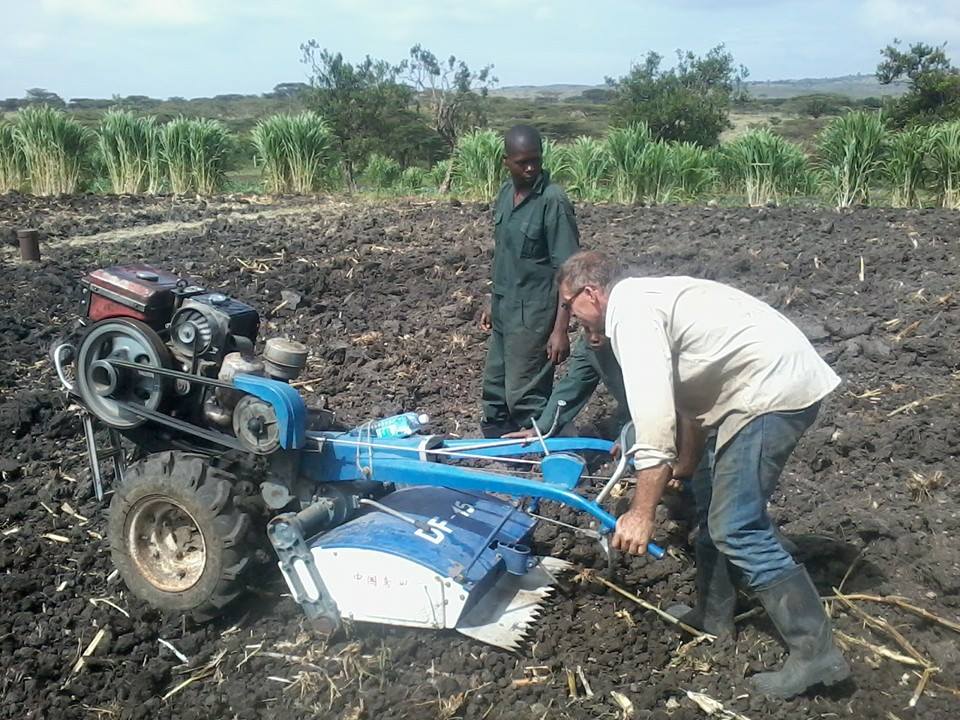
Pete showing one of the boys how to use machinery.

I try and spend 2 – 3 days out at the farm which is about an hours drive. But I also need to be in town to work out all the other stuff. I’m not confined to an office or computer but every couple of days you can’t get away from paperwork. I work with a small team of people who have different roles but one thing I’ve learnt is that you can never over communicate.

Here in Kenya things are complicated and take much longer than say in Australia. You can’t go to one hardware store and get everything you want. Just because they say something is definitely in stock doesn’t mean it’s actually there.

This year I’m trying to take a couple of afternoons off a week. So far I’ve failed miserably.

Every couple of months we get personally involved with our water projects. That might mean driving a few hours to meet up with the community to make sure they’re on track.

That in a nutshell is our life, but it’s much more interesting in reality than in print. We meet amazing people, every day is a challenge and there is lots of work yet to be done.


Why not join us by:

  1. Giving (ask me how)
  2. Joining us (long or short tem)
  3. Find out more (shoot me an email – thewildcreanberries@gmail.com)

The Expat Dilemma

I’ve read about it, but experiencing it is quite different. I haven’t lived in New Zealand for 12 years and Australia for 16 months. We’re on assignment in Kenya (East Africa) and this visit was to make connections and raise much needed funds to keep us in Nairobi.

Firstly of course is the reverse culture shock – where you return to your home of previous residence. The only chance on our 4 flight trip to exit an airport was in Singapore where we went to my cousins for the day. I’d never been to Singapore so everything was very cool until I spotted a sign that said ‘Be considerate of other drivers and indicate’. I just started laughing in the back seat, I’m not quite sure if it was the 2 sleepless days catching up with me or the thought that this would NEVER happen in Kenya. When we arrived in Sydney there was the increase in early morning train rides that were a shocker and where you felt like an idiot for not knowing. One of the things that really bugged me was the lack of free wireless on offer at the malls. Every mall in Nairobi has some form of free wifi. Because labour is so cheap, toilets at the airport and malls leave for dead the quality of toilets in Aussie. I was so disgusted with Sydney airport toilets but I did appreciate those hand driers that are supersonic and dry your hands with just one pass in the drier.

liz surfing

Liz boarding. The bonus of NOT being 9hrs from the nearest beach.

The biggest sense is that of not belonging. I miss the familiarity of Nairobi and how Kenya works. Sydney is definitely not home anymore. Partly because Pete isn’t there and partly because we have moved on. Liz and I even went to a leaders meeting at our local church and my thought was ‘It’s great here but man would we be bored if we returned’. While it was great seeing friends and family, I also have friends and family in Kenya.

We were only in Sydney for just under 2 days to fly to NZ for a family reunion and then kick off a 6 week speaking tour. The last time I was at a family reunion I was 8 and our family lived about 4 hours away so we didn’t see the others very often anyway. So here’s this bunch of total strangers spending a weekend together at a remote beach that only those 60+ really have memories of. The rest of us sort of knew each other but it was just a matter of who are you, whose your parent and what have you been up to for the last 36 years? The saddest thing about choosing to live overseas is the lack of connection with family. There’s no holidays together, no shared memories. It doesn’t sound much, but it is quite a huge thing.

ang n shaz

Downside of 8 weeks on the road – wild hair.

In Kenya, customer service is a top priority but obviously not here. A taxi driver said about our one suitcase “I’m not lifting that into the car by myself”, hmm, don’t become a cab driver then!

I keep reminding myself that it is just different and we are not here forever. It’s not all bad. Family go out of their way to make you feel welcome. People are interested in your story and so far the weather has been good.

It’s early days yet but I think this trip will be worth it. I hold my breath and hope that we raise the necessary funds because we really do want to stay in Nairobi and work with the most amazing young people on the planet.


Size doesn’t Matter

We seem to be caught up in a world of numbers (how big your church, outreach, youth group), money (how much you are on) strength (how many pushups you can do) and belongings (how many properties you own). Sometimes I get a bit over it. When did numbers and money become the ultimate goal of life?

Sure, I love having money to do the things we want to do, who doesn’t? I love travelling (been to 18 countries, and not just airports), I love speaking to the thousands and I love doing crazy things like white water rafting on The Nile.

my 2 loves

Bushwalking in Kenya

But one thing I’ve learned over the years is that there will always be someone smarter, richer, more fit and better at some things than myself – and that’s okay. I’ve completed an MBA but want to do another Masters Degree some time soon but does that make me more than someone who has just done their undergrad? Does it make me lesser of a person because I choose not to do a PhD?

I think it’s time we put quantity aside and look at quality of something.

We are on assignment in Kenya (that’s East Africa if you didn’t know) for who knows how long. There’s no shortage of NGO’s, community help groups, churches or ‘mega outreaches’. If you go into the slums you can see endless schools in tin shacks, lunchtime church meetings and welfare organisations operating. I dread to think how much aid and development money has gone into organisations and I ask myself ‘What impact is it making?’

Now while this might sound a tad negative, actually it’s a good thing. We constantly look at what we’re involved in and are more than happy to see lives changed forever.

liz sorting maize

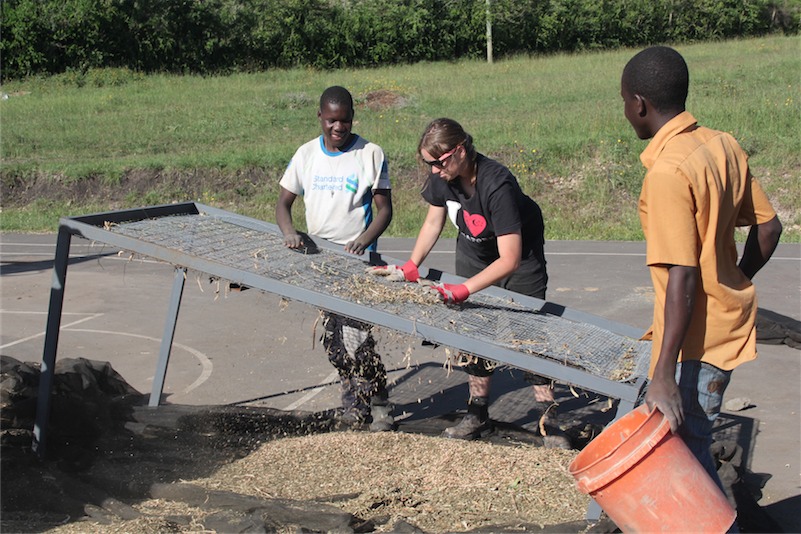
Liz showing the trainees how to use the bean sorter

Kids are going to school where before they had no way in. Others are no longer living on the street and stealing, they are being educated and are now in jobs. Some who were sponsored are now volunteering, giving back to their community. We’re working with an organisation that doesn’t have the thousands on the books but their history is quite incredible – schools, sponsorship programs, agricultural training, leadership programs are just a bit of what they’ve done. That’s because they are into developing young people and not just giving a handout.

teacher 2

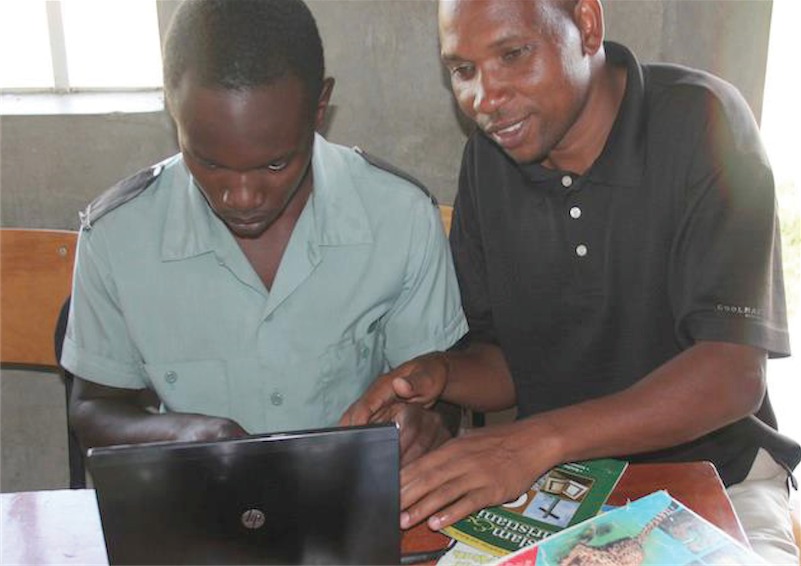
Teaching computers on a donated laptop

The key is not how many have come through the door of your work, but what lifetime change are you bringing?

For us personally, the person who gives us $5 a month to keep us here is as much as of a hero as someone who gives 10 times more. Every person who gives does so sacrificially. We have those in their seventies who give from their small pension. There are those who are students who have an after school job and give to us, while others give from their house rentals. It’s not about the amount but the impact it’s made.

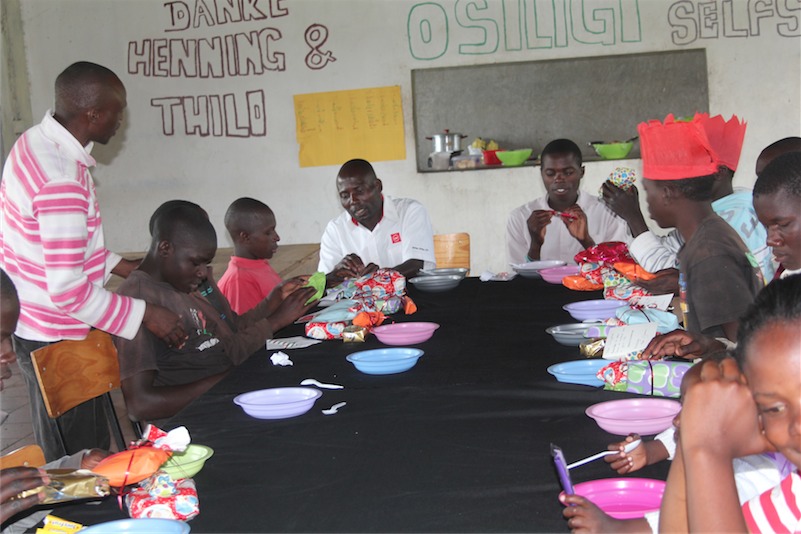
Some generous person gave us $500 as a one off gift and from some of that we were able to give some teenage boys their first ever Christmas party. That meant small presents, a buffet lunch, party hats, streamers – the works. They got involved in making the meal and decorating the room and it was a special time for all of us – especially our family. Rather than being a day where we miss our youngest daughter (even more than normal), we were out with a bunch of kids who had no place to call home. But this was only possible because someone sacrificed A LOT.

present opening

Present opening

So please don’t look down on what you do or give – it does make a difference – if not to you to the person you are helping out.

It’s not the size it’s the heart motivation that the action is done in

Want to find out how you can help in our work – check it out HERE.

Don’t Come and Live in Africa

A year ago we made the crazy move from the beautiful Northern Beaches of Sydney Australia to go and live in Nairobi, Kenya. Why do I say it was crazy (as some of our friends think)? Why would a couple in the most productive and money making years of their lives leave it all behind to go and work with the most poor young people in this part of the world?

There’s no simple answer for that one. I’ve heard people from here say ‘Why don’t people come here long term to serve on the mission field?’ There seems to be a lot of questions on both sides.

So here are my thoughts on the matter.

1. Not everyone is called to move to Africa.

Africa is not a picnic. Sure, there’s some things you only get in this part of the world but not everyone has the tenacity to hack it with all of the negatives, and that’s okay. It takes a certain amount of insanity to live here. There’s a big differences between visiting somewhere for a few weeks and dedicating the rest of your life to a cause on foreign soil with being challenged every day, having to rely on friends for your daily needs or hoping you don’t get really sick because the healthcare is limited.

Just today I had some guy yelling out “Mzungu, mzungu” the whole time I was walking up the street. It was so annoying I wanted to give him the royal finger (another reason I don’t call myself a missionary) and yell a few choice words at him. I feel like saying “Oh my goodness, I never knew I was white”.

mzungu

2. You can be of most excellent use in the West.

You can make money and support a missionary or development worker here by remaining at home. You can pay school fees, earn enough to send kids on a camp, pay travel insurance for someone. You can earn and give, it’s a win win situation. One of the best thing you can do is be an advocate/representative of someone you know who is serving in Africa. Most of the time it’s ‘out of sight, out of mind’ and you could be the key to changing that.

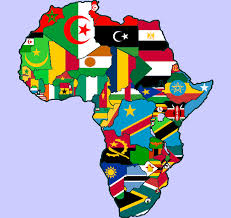
africa

3. Missions aren’t what they used to be.

You need to learn another language, a new culture, a new way of doing EVERYTHING. You need to have computer skills as well as practical ones. It’s not about being behind a pulpit but offering a skill to the local community. The developing world needs doctors, nurses, teacher of teachers, people skilled in media and those who are willing to rough it. You have to be prepared to have less than half of the resources you’re used to. Sometimes the power doesn’t work, you have to boil your water and the internet works when it feels like it.

You’ll end up spending much more time in the office than you thought you would’ve.

People will tell you what a noble thing it is you’re doing. It isn’t and it certainly doesn’t feel that way when you’re trudging through sewerage or spending 12 hours straight in front of a computer trying to sort out email and website issues.

sign

It ain’t what you think it is.

4. No guarantees of a holiday.

Forget about a 40 hour week and 21 days annual leave. We’ve been here a year and there’s no holidays in sight. We’ve worked on public holidays and most weekends. The average person on the international field will return to their home country every 3 years, but that’s not a holiday at all. It’s full on speaking in churches, schools, clubs and to supporters all that time. We often work on weekends running different programs. The closest beach is a 9 hour drive away and belonging to a club is way too expensive. Every now and then we take a half day off, or like this week the whole of a Wednesday just to get out of the office and out of town, but that means pulling a couple of 15 hour days beforehand. Of course, the paid staff just don’t get it. They clock off at 4.30pm, while I’m often working till 10pm.

5. The loneliness and challenges can be overwhelming.

Everyone is enthusiastic when you first leave but it doesn’t take too long for the contact to dwindle. It’s normal as people have to get on with their lives. There will only be a few dedicated friends who stay in touch. To make new friends takes a long time. For some, the gap on between is too much to bear. Being apart from family is not for everyone. While Skype is great it isn’t the same as day to day interaction. If you move here you may have to pack your kid off to boarding school and only see them every few months. Are you prepared for that. Our youngest daughter will not see Pete for 3 years – that’s 3 years too long.

Do I think that people should forever stay in the country they call home. Most definitely not!

Every person, and I mean everyone should at least once in their lives visit a developing country to get involved short term with a work that is making a difference in a local community.

Short term volunteers make a tremendous difference to an organisation. For us our volunteers have been able to assist kids who can’t read well, encourage local leaders, teach sport and give kids hope. Short term is anyone who stays under 2 years, with the average person staying just over a month. Even a 2 week stint is huge.

Coming for a few months can give you a glimmer of an idea of what it could be like long term. It will also make you grateful for all of the conveniences of life you have at home and what those on the international field have to go without.

suitacaseSo give it a go. Come for a visit and see what happens. And if you move here, don’t say you weren’t warned!!!

Church in Kenya

There seems to be a church one every corner here in Nairobi. They go from a little tin shack to the huge 5,000 seat auditorium. Some are in huge marquees, others in buildings without windows to the tabernacles that you can see from miles away. There’s some that have short names, others like ‘The Church of the Deliverance of the Holy Ghost in XYZ’. I kid you not.

Worship at Frontrunnerz

Labels and titles are so over rated here. If you’re a ‘bishop’ you almost have to treat them like a king. A Deacon is a church leader and not someone who helps physically set up the service. On the other hand you will see people in top jobs who are happy to be in the car park making sure everyone gets in. Only a few have services online but one thing they all have in common is that they like their music loud.

Dance Moves

The thing that Kenyans know how to do is praise and pray. Some church services go for 3 hours, then they have other programs in the afternoon. As far as I know there are no night services in Nairobi. Probably because people have been in church all day, but also it’s a security risk getting home when it is dark (around 6.45pm).

We decided before we came that we would got to the International Christian Centre (ICC) where I visited in 2007. One mistake people make when moving to a new place is to try every church out in town for one that suits them. Sometimes you just have to make a decision and stick with it. It’s and English speaking church with mostly Kenyans in it. Some songs are in Swahili so it’s good practise to figure out what is being sung.

Pete, Liz and I go to the 10.30am service which is aimed at young professionals, it’s called Frontrunnerz and led by Pastor Gibson (meet him below). They have 2 services in the morning, with about 600 going to the second service. They do have a Saturday night service but we work most weekends so it’s not always easy to get there.

Meet Gibson

Some people might say it’s a happy clappy church. I figure it’s much better than attending a service that is like a funeral. Sure, there’s time for reflection and quietness, I’m all into that but sometimes it’s just great to enjoy the good things that God has done. Here in Kenya things like getting a job, being able to study, making safely through the week or having food on the table is something to get super happy about.

Not a funeral service

We’ve been to some African churches where they get so excited they lift up the plastic chairs and do a dance with it. There’s been some where all the women get up and do a special dance (a good opportunity to hide behind a camera). I’ve been in ones where Pete gets to sit up the front and me way back (being just a woman of course!).

Dancing up the aisle

What I love about Frontrunnerz and ICC is that they present a relevant message in a relevant way. Sure, it’s not perfect but neither are we!!

It wasn’t our goal to come to Kenya to start a church but it is part of our DNA to be a part of a local church. We’ve all heard how no person is an island but it’s so easy to do. It’s easy to look at ‘The Church’ and point the finger, look at all the deficiencies and things that are done wrong and decide not to be a part of it. That’s the thing though, no one nor any organisation is perfect. We’re a work in progress.

Everyone getting into it

I remember Pastor Simon McIntyre who was with us when we were at C3 Oxford Falls (Sydney) saying ‘This church might not suit you, but there is a church for you, a church for everyone’.

If we stopped complaining about ‘The Church’ and decided to be a part of it, we would see some of the great things that are happening. We would meet some different people, some who would drive us up the wall. We would be challenged to get out of our comfort zones. We might even find a place we can call home and a family that accepts us, warts and all.

Worship at Frontrunnerz

When Terrorists Strike

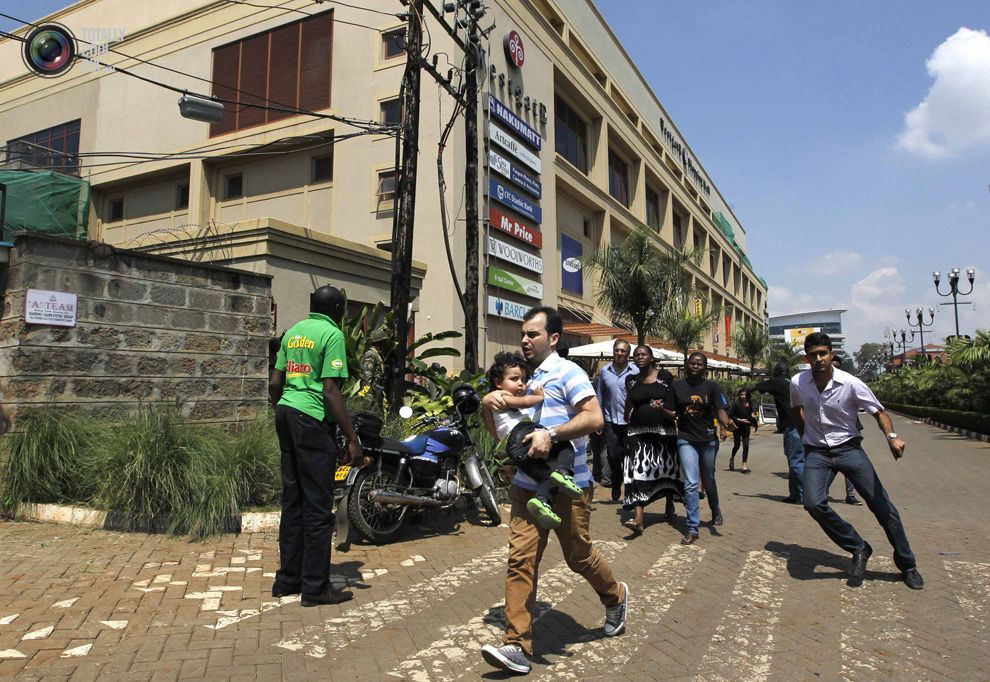
This weekend in many parts of the world there were terrorist attacks. To us it was brought close to home when a mall we visit was taken over by terrorists. As I write this blog it is going into it’s 4th day of the siege. Only a few minutes ago an Australian friend found out three of her close friends perished, one of them to give birth in two weeks time.

People escaping from Westgate Mall.

People escaping from Westgate Mall.

A lack of security is a reality here, but when a mall we frequent is taken over and people die it brings in a whole new level of things. Already we don’t travel at night, go for a walk at night and always lock the car when we get in it. We have a security gate on our apartment door and two night guards on the apartment block.

The thing is that you hardly ever ‘feel’ insecure. We walk through the slums (even though the Aussie High Commission says not to) to visit families and the biggest threat is shaking all of the hands of the kids who say ‘How are you?’ We are more worried about avoiding people as they step out in front of our car or suddenly seeing a donkey and cart pull out and there isn’t enough space to stop.

You get used to having your car checked at the mall, or being security scanned on the way into church. However, the thought of people attacking people as their children are in a cooking class is totally different.

The first thing that happened to us was the numerous questions on Facebook checking if we were okay. We were 4 hours away at the Amboseli National Park looking at wild elephants when I just happened to check FB to find out about the tragedy. Automatically I posted that we were fine. What I didn’t let people know is that we actually would’ve been there as already planned.

When we got back to Nairobi, like everyone else we were glued to the TV to see what the story was about. We had planned to go to the movies at the local mall, but when things like this happen you are best to stay at home. So it was toast for dinner and we put on a comedy to lighten the situation. I used this time to field through the endless questions online and SMS our pastors back home. Both responded even though it was really late, which was great. We have a number of expat friends so you instantly go through the list to make sure they weren’t near the incident. Thankfully they were all fine.

When terrorism happens people put their lives on hold. While you don’t want it to stop you from doing everyday things you can’t help yourself. You choose your seat at a café based on how you can escape. You look at people a bit more suspiciously. You decide if you really need to get a few groceries.

Waiting to get our car checked

Waiting to get our car checked

We ventured to the mall yesterday and things are very different. There is normally a check of your boot, but now they check the glove box, back seat and boot. Instead of two lines for the check, they’ve merged it into one, barriers up on both sides, and very long lines. That’s just to get into the carpark. Normally there would be plenty of cars but yesterday there were only 4 others. Javahouse is a café which is packed at lunchtime, there were two people.

At our mall you just walk in – normally. Now they are doing a full bag and body check. Pete went there on his motorbike and he had to thoroughly empty his bag out. Churches were only half full on Sunday. This is because they are normally the next target. I’m not sure if we would’ve gone had we been home.

Normally this carpark is full

Normally this carpark is full

Liz had a co-worker who was injured and like us, they started their day in prayer for our nation.

When terrorism strikes it does a couple of things. It makes people retrench and it also makes them come out and do extraordinary things. It will take a good month for businesses to recover from this incident and for those at the mall it could be a number of months. It will have a huge economic impact for those in that business district.

On the positive side people here rally in times of disaster. There was an outpouring of money, food items, counsellors and also blood donations. The Red Cross were at the forefront of this tragedy and did a great job in the face of so many challenges. It gave people a chance to go out of their comfort zones and care for others. I heard of one lady that was giving out cups of tea from the boot of her car to the police on the scene. It might not seem much but here no one does anything without payment.

Wherever we went people were glued to TV’s on updates. At our mall there were crowds of young, old, black, white trying to get a viewing point on a TV to keep updated. Some businesses closed down and had an all day of prayer. People took time out to talk to their colleagues to make sure they were okay. There were the conversations of ‘where you were when it happened’.

The Westgate Mall siege is over. The TV channels are showing less about it. People give a sigh of relief. Children return back to school and people resume their lives as normal as possible.

However, we have to create a ‘new normal’. Things won’t be the same for a very long time, especially for those involved. We will still look with suspicion and keep as secure as possible and unfortunately terrorism will happen on our back doorstep and we will go on the emotional rollercoaster all over again.

Life is not certain but our faith in God is. Stuff happens and some people equate life with God, which is not true. We live in a broken and fallen world and have to suffer the consequences of that.

What humbled us is the number of people from around the world that sent us messages of support and concern. Each and every one made a huge impact on us and wasn’t taken lightly. It reminded us that we are not here alone.

This incident also reminded me that we need to update our insurance!!


One Dollar At A Time

Here in Kenya we have plenty of opportunity to help people out. There are the beggars, the disabled sitting in wheelchairs and then those selling goods at the side of the road.

There are a couple of people who have stuck out here.

One of them is a man in a wheelchair who had his legs amputated from the knees down. He sits each day at the corner by a small shopping centre. He has children (we see them from time to time) and one of the world’s biggest smiles. He’s polite and doesn’t beg for cash but you can tell he’s in need.

Unfortunately there’s no disability support pension here for people like this man. They are totally reliant on having their families support them. Every now and then when we go past his spot we drop in 100 shillings, worth about $1. More than that though, we stop for a chat and ask him how he and is family is. It gives him respect that he is of value and not simply because he needs money.

A couple of weeks ago I met the most wonderful lady. Each day she stands by the road we take to work. She is there early in the morning till it starts to get dark. She has a baby strapped to her back. She holds out her right hand for the entire time, in it she has a bag of blue sweets for sale. I don’t know how much she sells them for but probably only for a shilling or two. I don’t know this lady’s name but I really admire her.

On either side of her stand men selling DVD’s, posters, flowers and the matatus (vans moving masses of people) and buses throwing out diesel fumes.

I admire her because she’s not waiting for her situation to change, she is changing her situation, one shilling at a time.

I am more than happy once a week to drop 100 shillings into her hand. I usually ask for a couple of sweets so it doesn’t look like I do it out of pity. No, I do it in admiration.

You might say that it’s only the odd dollar, what difference can it make? But to these 2 people it means they can buy some flour and make ugali that night. It means that they have something to put towards their rent. Or it may mean they can afford to buy one jerry can of water.

Even though our personal support level is short by about $1,000 per month, I’m not going to let it stop me being generous. These two people inspire me to keep going even when it all seems a bit much.

My next step is to get to know their names.

Tell me about someone who has inspired you lately.