Life as a Teacher

I really enjoy teaching. Whether it’s one on one or in a classroom.

I actually wanted to become a teacher but became a youth worker instead. Where we lived the nearest university was at least an hour away. I was married and there was no way I was leaving my husband just to do what I wanted. Then the kids came along and it never happened.

I home schooled our girls and there were a few extra bodies along the way. Now looking back I would do things differently but at the time you do the best that you can. When we moved to Australia in 2002, I gave up the schooling and the youth work as we needed the money and Sydney was way more expensive than Christchurch to live in.

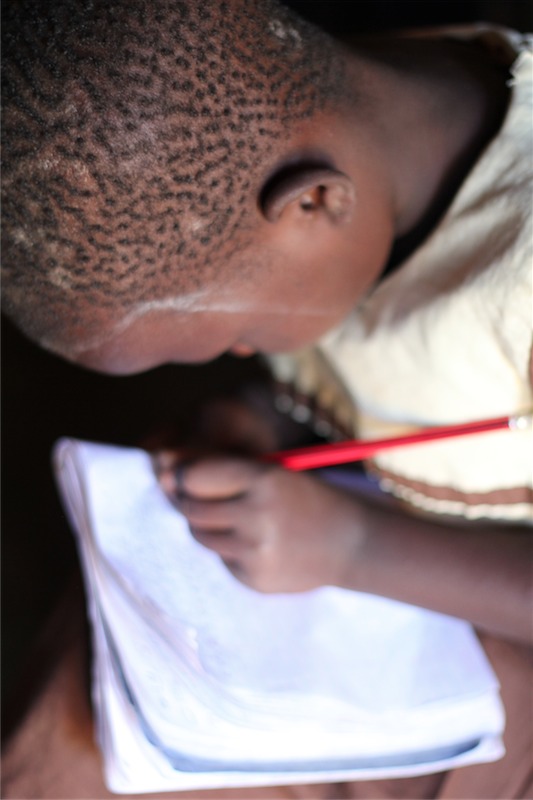
As I’m writing this I’m overseeing 15 students who have completed a 6 week business skills class that I’ve taught. These are young men who only a short while ago where living on the streets of Nairobi. They didn’t finish primary school, but they could be great businessmen if they believe in themselves.

It’s kind of weird how everything from the past 25 years happens just for that moment. I mean, we moved to Aussie, I ended up working in a high school and then went on to working for a university. I got my MBA (Masters of Business Administration) and we started our work in Africa. I’m tutoring kids here and teaching classes. In the next 5 years we’re looking at building a boarding school.
IMG_5724

I didn’t even finish high school.

I dropped out at just before my final year. In those days you just walked into a job, not like now.

But I’ve also become the student again.

Each Monday I have Kiswahili lessons with Judy, she’s a whizz at languages, I’m not. I’ve taught English as a second language and decided I’d much rather be a teacher than a student. I’m envious of these Kenyan kids, they have to learn at least 2 languages throughout their school life.

I’m 44 and yet feel like a 4 year old trying to learn Kiswahili.

I’ve heard people say that you can never stop learning. Heck, move to a country like Kenya and then you have the right to say that. I was wanting to get my Masters in Development some time in the future, but every day here in Kenya is a classroom.

Society here is our teacher and she’s not always nice or patient.

Sometimes I don’t want to hear what she is saying and some times I just don’t care. Sometimes I just want to go to a movie and forget that I’m in Africa.

The fact is though that we are here and we do have to learn. As someone told us ‘Coming to Africa shows you what’s really inside of you, how big a capacity you have’. I thought I was a big person inside but discovered that I’m not. I’m too judgemental, opinionated, narrow-minded and set in my own ways – thank you very much!!

While life is a schoolroom, we have to be willing to learn.

I’m always telling my students that attitude determines altitude, now I have to take my own medicine. While the medicine might not taste great, it is good for us.


7 Myths About Kenya

1. It’s Hot

Sure, there are some places that are pretty warm, but overall, Australia is hotter. For the 6 months we’ve been living here there was probably only one week of really hot. Today I am wearing jeans, jumper and ugg boots. Why the boots I hear you ask – floors are tiled here and they get pretty cold on an overcast day.

Living on the Equator is handy, the length of days doesn’t change. You know it will be light by about 6.30am and dark by 7pm. While my arms are tanned, the legs have a lot to be desired.


2. It’s Cheap

You must be kidding me. Sure, fruit is cheaper than in the West but everything else is equal to or more expensive than back home. I think it makes a difference for us because we aren’t allowed to earn money so we’re super careful with what we get in. Import tax is anywhere in between 75% and 110%. A couple of weeks ago we were in Uganda and things were half the price of here, to the point that I bought an iron.


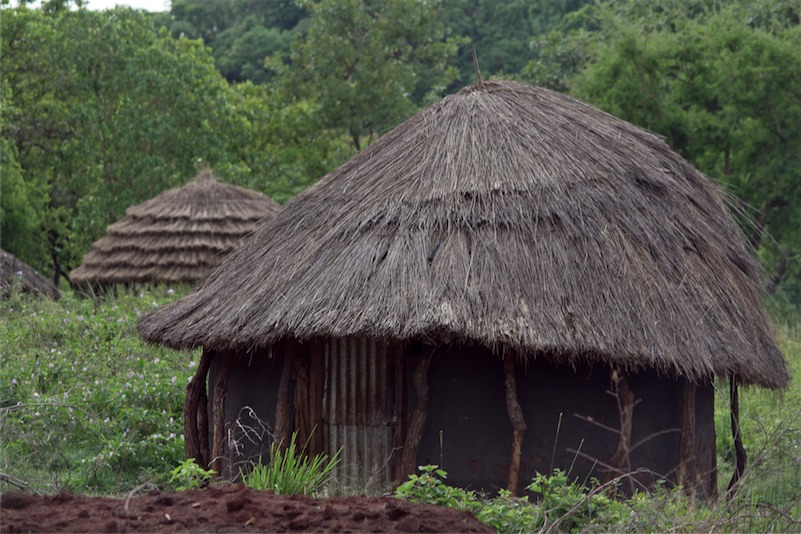
3. We Live In A Mud Hut

While we work with the poor, we don’t have to live like that. Sure there are hundreds of thousands of people who do live in mud huts but not us. Right now we’re on the search for a 3 bedroom apartment, which we can get for 90,000Kshs (about $1,050 dollars). That’s great compared to what were paying in Australia but it’s a challenge for us. At least when we have friends and family come to stay there’s somewhere nice. We also plan to get some leadership training sessions going with the young people and hiring buildings is pretty expensive so we can host them at our place.

IMG_5685

4. There Are Only Black People Here

You’re either a Kenyan or Mzungu. Anyone white is a Mzungu, it doesn’t matter if you’re from New Zealand, the US, Europe or Australia. Sure, the whites are in a minority but you’re never sure where they are from and why they are hear. There are even white Kenyans, these are children of people who came in the colonial days. They don’t belong here but England is not their home either. They’re in between 2 worlds. I’ve bumped into so many Dutch people I never need to go to Holland. You can pick out the Aussie and Kiwi accents from a long distance. Last month we went to the ANZAC dawn service and there would’ve been around 200 people there. So, there’s a few from the Pacific over this way.

IMG_5911

5. It’s All About War, Poverty & Famine

Yep, there’s lots of poverty around here, but there’s also some serious money to be made. If you can go through all the legal loops and corruption, Kenya is a good place for investing in. Especially so if it’s roads, IT or building.

There’s also lots of money to be made in war and famine. While people in the West get shocked about the crisis up north, they don’t realise that the refugee camps have been there for 20 years. In our travels around East Africa, there are some very nice vehicles, and hotels kept busy because of civil unrest and disasters. Unfortunately, as soon as it’s all peaceful these NGO’s pull out and the businesses close up because of a lack of customers.

You only have to spend 10 minutes at one of the local malls to see that the middle class here is getting bigger.


6. It’s A Really Hard Place To Live In

Depends what you mean by hard. Sure, only knowing a small amount of Swahili is a pain, so you’ll get charged more outside of the malls, but it’s not tragic here. You have to be willing to adapt. You make sure you lock your care, when you’re in it. You put your mobile phone in your front pocket. The food isn’t great but you won’t starve. The traffic sucks and you get over paying bribes to the police every time you get pulled up – otherwise you go to jail.

It’s not so much hard as complicated.

IMG_5965

7. People Only Come Here For Safaris

True, most people come here for a safari. They come for a look at an allusive lion, zebra, elephant or giraffe. No, we don’t have tigers, they are in India. It’s surprising though how many people come for other things though. I ran into a lady from Sydney who came over just to catch up with friends. Some people come to build classrooms, visit their sponsored child or volunteer. Sometimes students who are at university need to intern somewhere and that’s one of the areas we work with. We give them opportunity to teach, see the different projects and assist the staff. Right now we need lots of volunteers as the work continues to grow.

Don’t think that what is on the 6pm news is all there is about Kenya or Africa itself. There’s a whole world of amazing things happening here. Sure it’s not Hawaii, but it’s not hell either.

Want to help bring positive change to the lives of young people in East Africa through our work? Why not donate today – click HERE


Uganda

This past week Pete and I had the privilege of traveling to Uganda to look at many of our water projects there. Because of the generosity of our Board we were able to fly the 40 minutes and not the overnight bus which takes about 14 hours. Liz stayed behind because she was heading to Australia, so there was a lot to do to organise two totally different trips.

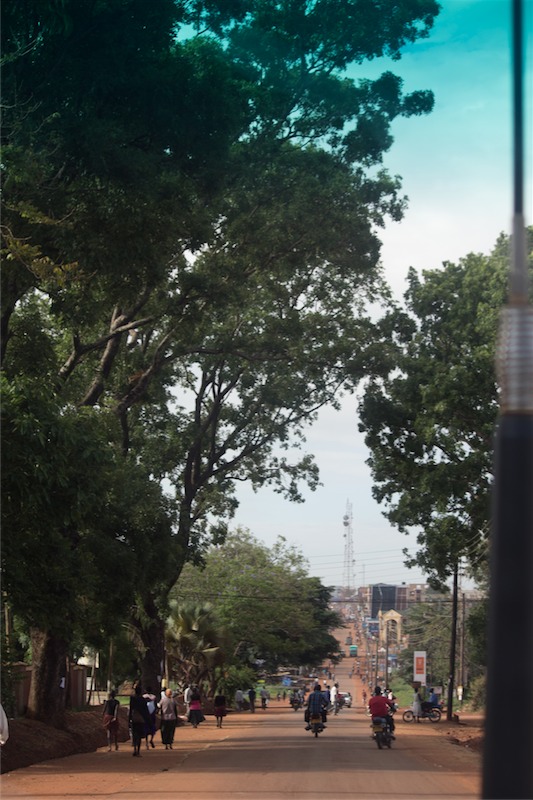
Downtown Gulu

Downtown Gulu

Going to Uganda was great for us. It’s been a long 5 months adjusting to life in Kenya and as they say, a change is as good as a holiday.

A holiday it certainly wasn’t.

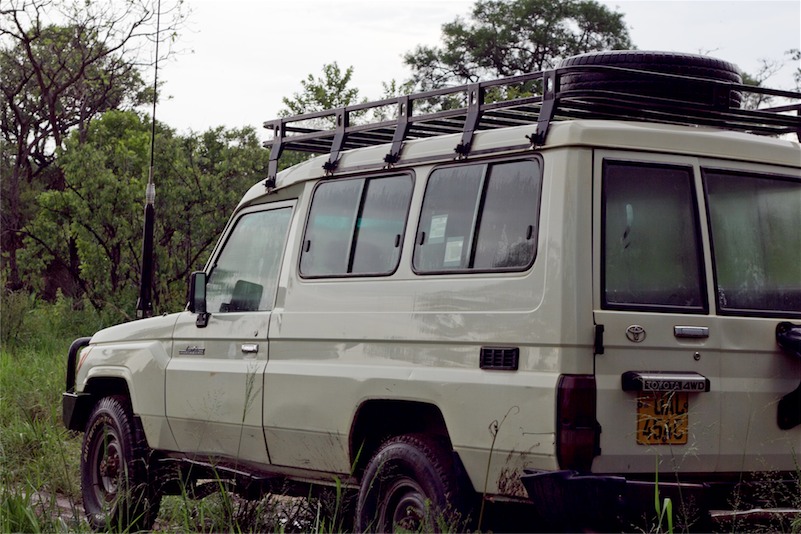
Our vehicle to get around Northern Uganda - much needed!

Our vehicle to get around Northern Uganda – much needed!

We traveled long hours with our driver Rodney, who had been kidnapped when he was a child by LRA soldiers. We got to meet his dad as we drove around Northern Uganda.

Uganda and Kenya are like chalk and cheese in many ways.

A deep bore well about an hours' drive from Kitgum

A deep bore well about an hours’ drive from Kitgum

The roads are way better in Uganda than in Kenya. However, Kenya is more developed economically. In Kenya you can get around $400 out of an ATM, in Uganda it’s only just over $100. Imagine when you have to pay everything in cash how many international bank fees you’re paying!

And Uganda is about 5 degrees warmer than where we live in Nairobi. One of those places that as soon as you’ve had a shower you are bathed in sweat again and ask yourself ‘Why did I bother?’

One of the many memorials around Northern Uganda

One of the many memorials around Northern Uganda

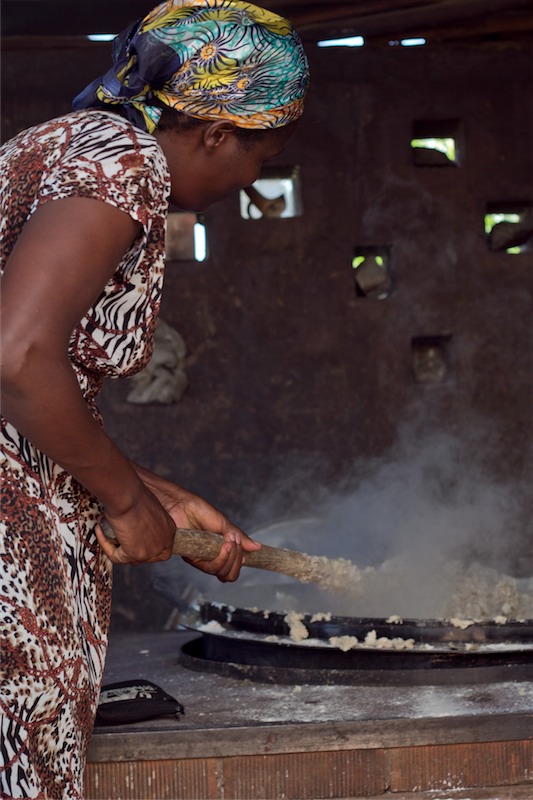
Alice from Pader stirring lunch for hundreds of girls

Alice from Pader stirring lunch for hundreds of girls

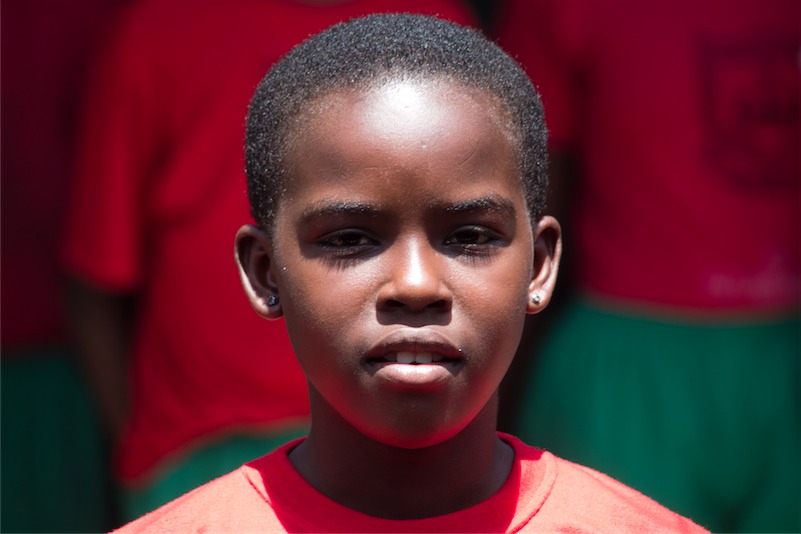
There was a real downside to going to Uganda and that was we had to rush from one place to another. Next time I would love to spend time just taking photos, especially of the Northern Ugandans. Of all the people I’ve seen in the world, I really love their faces. Their eyes are deep, they say everything just by looking at you. You see their pain, their history, their hopes.

Got to love the kids!

Got to love the kids!

For the first time we weren’t staying in $10 a night guest houses or hotels. Not that we went overboard but it was great to get a decent nights sleep without paperthin walls. Mind you, I told a friend up north that $80 was the most we were prepared to pay for a room, so he put us in a $15 place. It had no water or a door on the toilet, but it did have electricity, which was surprising.

Alice and I under the tree she started her work in Pader

Alice and I under the tree she started her work in Pader

We visited hospitals, schools, churches and remote communities. While I was there 18 months ago, it’s been 4 years for Pete, so he was really excited about visiting the friends we had made.

Pete and a mate at the school opening at Kituso

Pete and a mate at the school opening at Kituso

In Kampala at the opening of the water project

In Kampala at the opening of the water project

Seeing all of your hard work of organising water projects is a real highlight, but more so, meeting the people whose lives are changed forever. That’s why we are here in Africa, to change lives.

Uganda was great, but now it’s time to get back to work.

The Challenges of Living in the Third World

I hate the wording ‘Third World’ it seems so second handy and demeaning. I’ve been living and working in Kenya for 5 months. While it’s early days yet, there is no time for putting one’s feet up and enjoying the scenery.

There are some big challenges here though:

1. Language

Just when you think you start understanding Kiswahili, you try and enter a conversation and you’re blocked out. On top of that there’s the different languages in different areas and then the slang called ‘sheng’ which is the street language in Nairobi. Having lessons is like going back to school. I’ve taught English as a second language for years, now the teacher has become the student.

2. Electricity

Or the lack of it. When we travel to the farm, an hour away, it’s in a rural setting. You expect the power to go off there and brace yourself for heating up water on the gas stove and use the headlamp to get around. You don’t expect to be in the city and have no power for days on end. So, you have to compensate by using solar, making sure everything is charged when there is power and know where the torch is. I’ve got my laptop down to 2% just before the power returned.

It’s amazing how having lights and access to electricity can change your mood. Sure, we have a TV and an office on solar power but to be able to work in the light makes you feel better.

3. Internet

Where we are living there is wireless internet but for no apparent reason it just stops working. This usually happens just when you urgently need to find something on the web. I’ve resorted to getting a plugin modem that I can use anywhere. $2.50 of internet can last for weeks, so it’s rather handy.

It’s amazing that you can be in the middle of nowhere, and you run across (as opposed to over) a Masai warrior dressed in traditional clothes and there he is on his phone Tweeting about events in the field. I’m off to Uganda next week so here’s hoping I have no hassles in getting the internet there. Not that I;m addicted to the internet but without it I can’t work.

4. Clothes

The clothes shops in the malls are so expensive, I’m talking about label price for something that isn’t. There are plenty of places you can buy cheap second hand clothes but I don’t have the time nor the patience to go hunting for them. Pete refuses to buy second hand, it’s below him. Import duty here can be between 75 – 125%, uping the prices hugely. We bought enough clothes to last us a year but now I realise that most of my tee shirts are black. I’m not a floral person (I do like flowers) and a lot of clothes have flowers on them. I hope to head to Sydney in February next year and I sure will be shopping there.

5. Being Forgotten

We made the choice to come to Kenya. Nobody forced us, no one twisted our arms, we came of our own free will. I totally understand that everyone’s lives are busy but it’s frustrating when your old friends don’t keep in touch with us. It is true that when you are out of sight, you’re out of mind. In our online world no one has an excuse to not keep in touch. I remember the CEO of Compassion years ago saying that the thing that breaks his heart is that so many sponsors don’t write to the children. I totally understand this. Not that I’m expecting a letter but the odd SMS, email, hi on Facebook goes a long way. I work about 90 hours a week and sometimes the work is overwhelming. Then, I get an SMS from a friend just to say hello and it encourages me to go on.

To me, relationships are the most important asset we have in life.

All the other things like terrible roads, limited money, distance from family, long hours and still not being in our own home pale in comparison to the opportunity we have in impacting the lives of young people here.

Challenges are here not to break us but to make us into better people.

Well, that’s what I keep telling myself anyway!

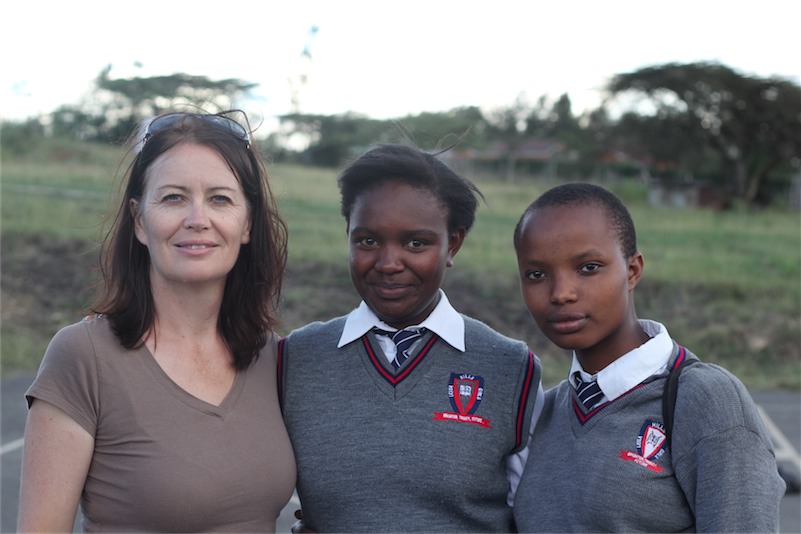
Me and the girls

Me and the girls

Going to the Movies

I’ve been to the cinema twice here in Nairobi, once to see The Hobbit and then the latest Die Hard movie. When we are in a new country we go and see a movie just for the experience.

It all started with watching 2012, showing in Arusha Tanzania. Pete hated going especially since there was an outdoor cafe outside and he despises those types of movies. After 8 weeks on the road I told him he owed his kids that much. He survived.

In 2011, Liz and I were on our almost solo trip to Uganda as Pete was holed up in a very nice hospital in Kenya with a broken leg. Since we were staying in a $15 a night motel we splurged out and went to see Rise of The Planet of the Apes. We thought it was a bit risky to leave our bags at the security desk but had no option. But for $6 we got a movie and a Coke. A pity there was no air conditioning but since we there were only 3 of us in there I ripped off my hiking boots and rolled up my pants. There’s not many fun things to do in Kampala, but I do suggest the cinema.

As soon as the Hobbit arrived in Nairobi, Liz and I jumped on some motorbikes and headed up to the local mall. Actually, bodaboda’s are a really cheap way to get around town, all of $1 to get to our mall. I hadn’t read the book so it was kind of vague and I didn’t know the movie was a trilogy so I was a bit of a let down. Also, the teenyboppers behind me were like “OMG is that for real, if it were me…” the whole way through the movie. Really wanted to turn around and slap them silly but you’ll be pleased to know I didn’t. On the upside, we didn’t fry because of a lack of air conditioning and then we accidentally bumped into some fellow Aussies in the cafe next door.

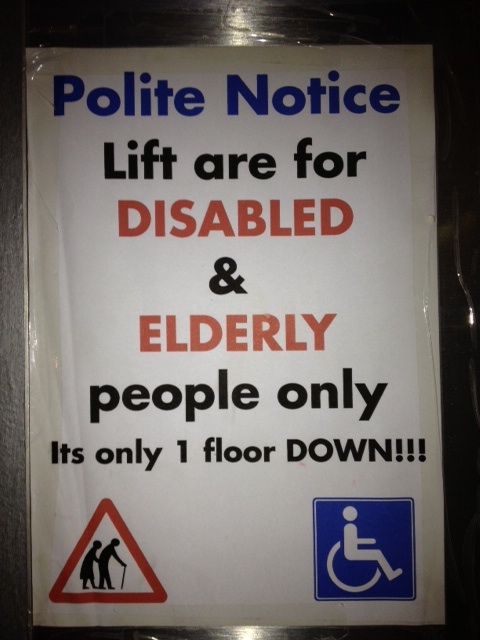
There’s a small but nice waiting area where you can buy some snacks and wait for the doors to open, there’s a flat screen TV playing previews and there’s even some toilets. Here’s the sign outside the lift:

theatre 2

Roll forward to 2013 and Die Hard. Liz was keen as mustard to see it. Me, I like the action, hate Bruce Willis’ language, I just want to get in there with some soap and a toothbrush to wash out his mouth. Seriously, there’s no need for every second word to be the ‘F word’. We dragged Pete along under the guise of a dad/daughter date, with me as the tag along. I was seriously surprised at how little swearing there was in comparison to his other Die Hard movies (or it’s been so long since I saw them that I’ve forgotten). Entry was a whopping $5 each and for another $5 we all got a bottle of fizzy and the most delicious caramel popcorn. Because it’s been here for so long there were only 7 of us in the theatre, all adults and although the air con wasn’t on, it was quite pleasant.

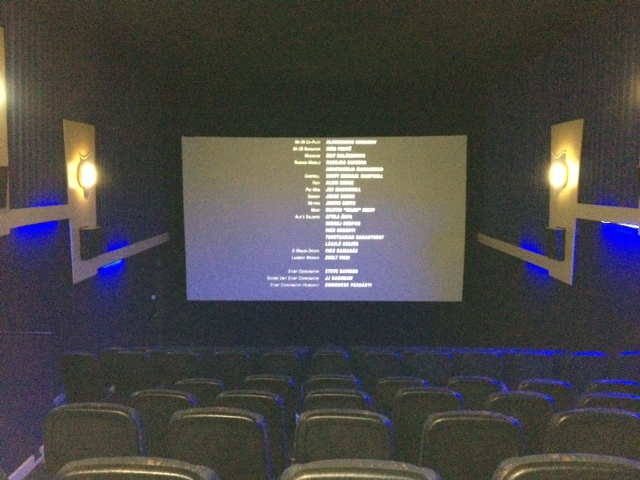
theatreHere’s one of the theatres, there’s 4 in the nearest cinema.

I’m looking forward to May when a whole bunch of decent movies come out. The TV shows here are really old and if you choose to buy DVD’s on the side of the road (we don’t) the sound can be terrible, the movies don’t work or they suddenly stop halfway through.

I’m not sure if I can convince Pete to come again as he’s not a big theatre fan, but Liz and I will definitely take some time out from all of our work here. There’s nothing quite like zoning out of reality for a couple of hours and having a breather. While most people here can’t afford the $5 to go to the movies, it’s something we can do every few months that doesn’t mean eating ugali, corruption, dealing with poverty or avoiding potholes bigger than the car.

I have a slave

Well, that’s what Hannah calls it. In reality, it’s an employee whose job it is to cook, clean and do the laundry, her name is Mariam.

Over here in Kenya, most people have some form of house help. When you have a baby you hire an ayah, someone to take care of your child. They usually live in your house and may or may not have their own child.

Some people have more than one employee in their care. They may have a gardener, a child minder, a cook and a cleaner. They may even have a driver or someone to do all the errands and pay the bills.

Our home help comes with the house we are renting from friends. Normally we wouldn’t bother, but we also want to keep her employed until they return from overseas.

I must admit it’s really convenient. I do a meal plan for the week (Monday to Friday), get the groceries and let her know if there’s anything special to be done. Because I work around 60 – 70 hours a week it’s nice to know that I don’t have to squeeze in making dinner or doing the laundry. We even get our clothes ironed, which Pete thinks is fantastic as he has to do his own ironing in the past.

Every day I come home and it’s both clean and tidy. Straight after dinner I am usually tutoring a young man so it’s not like I can have a relaxing evening in front of the TV. We simply rinse the dishes and leave them for Mariam for the morning.

In a few months we move out to our own place. Pete asked me today if I would consider getting a person in to do a few hours a day. I’d love to say yes, but to find someone for 3 hours is just about impossible. Here’s hoping it becomes a possibility!

Slavery was outlawed centuries ago, but in many countries it still happens. All employees should be paid fairly, treated well and given an opportunity to prove themselves.

Our home help is so great to have around not just because of the work we do, but her cheerful nature that she brings into the house each day. Some people have difficulty finding ideal staff, so we are super lucky indeed.

I’m glad we can help someone keep their kids in school and a roof over their head. We win, they win.

Despite what my youngest child thinks, we don’t have a slave, we have a short term member of the Crean Team. While it takes a whole village to raise a child, it takes a whole team to keep the Wild Creanberries alive and well.

Okay, I’m Ready To Go Home Now

I woke up this morning feeling angry, frustrated and ready to kill the rooster next door who announces EVERY morning that it’s 4am. I was over constantly finding new areas of my body swollen from mosquito bites overnight even though we have the state of the art bug killer system in our room. The fact that I haven’t got malaria yet is a miracle. Both wrists look broken but they’re only swollen. My forehead is a racing track for mossies and they leave not little hills where they’ve been. I have to sleep with a pillow over my head to keep the buggers away (yes, that’s how I feel) but they are so persistent they burrow under. I feel very justified squashing them and are SO happy when I find a dead one on my pillow.

Then I whacked my head on the window because it has a small frame to keep out burglars, even on the second floor. I had to buy a cheap second phone for a system here called MPESA, which enables me to transfer funds to you via a phone if needed. We’ve taken it in twice now and it still won’t work on the system. I’m told that I will get a text message so I can put credit on it. Three days later, still nothing.

We’ve waited 2 ½ months for our visas so we can stay in the country rather than drive 3 hours to the border and visit Tanzania for a day and then come back. On the same day I get a rejection letter from last year I get an approval letter from the lawyer. He tells me it’s costing $100, the Minister of Immigration’s letter says $1,000. Flip, I’m a development worker, we live from day to day, where would I find $1,000 from? Eventually we find out it’s a typo (sack the secretary I say) and I stop having a heart attack.

I realised today that I haven’t been out in the sun in over 8 weeks and I’m lily white. It’s ironic since I live in East Africa and not far from the Equator. All simply because it’s been head down and bum up working 24/7.

To put it in a nutshell, I miss the ease of life in Sydney. Sure, people complain they have to wait 25 minutes to talk to someone on Optus, but at least you can actually talk to someone.  Traffic is bad in any city, but if you get pulled up by a cop he’s not going to threaten to throw you in jail because you indicated to turn then changed your mind. And he won’t demand a $100 on the spot bribe while holding a rifle. If you take your phone in because it’s dodgy then they ask for your passport first, which you want to leave at home because you don’t want it stolen.

What I really wanted to do was put my head back under the covers and ignore the fact that I had to head to the office to answer the never ending stream of emails. I wanted to cry, kick something and pack a pre-school tantrum. Of course, I couldn’t because it changes nothing, and our housemaid (comes with the house sitting) would arrive soon and she would tell me to have more faith and get myself together (got to love her honesty).

Instead I went where I should’ve and that was to the Word of God. I’m reading through Matthew and at the end of chapter 19 the disciples say to Jesus ‘Hey, we’ve given up everything to follow you, what are we going to get out of it’ (my version). Jesus quick reply is that they’ll get back one hundredfold, and eternal life. Nice one Jesus! Put everything in perspective, what really is the thing that matters in life, is the eternity we get to hang with him.

A wise friend once said that when we get to Heaven our life on Earth will be like some vague memory compared to what we’ll have – forever. I quite like that philosophy.

So when I say I’m ready to go home you can be super spiro and think ‘Okay she’s ready to die and go to Heaven’. Not really, while to live is Christ and to die is gain, I’ve got a whole lot more to get in my life before I quit this place.

Am I ready to go back to Sydney? No, but when I do get to go on holiday boy am I going to enjoy it! Kenya doesn’t feel like ‘home’ yet, but we both agree, we aren’t meant to be anywhere else.

So when I say I’m ready to go home I’m talking about having a whole day off tomorrow. Staying in bed and reading, hanging out in my pj’s watching a DVD and then maybe cook something wickedly yummy and full of chocolate.

Until then, I will keep my eyes on where they are meant to be, on Christ who endured everything just for me. That’s when I’m trying NOT to scratch my myriad of mossie bites! Right now, I’m getting a towel, laying it on the ground and taking the next 10 minutes to try and get a tan.

Life In A Shipping Container

This coming week sees us living in Kenya for 2 months. It also sees us moving out of living in a shipping container (converted of course) and into a real, life house. In all we haven’t lived in our own place for 5 months, so we are going to be very happy campers.

Most of the time it’s been great living there. It’s onsite, so we’re close to work. We have some immediate neighbours as there are quite a few people living here too.  However, it’s had it’s challenges and ‘cabin fever’ has taken on a new meaning.

While most people wouldn’t even consider living in a 6 metre container, it’s a good learning curve.

Millions of people around the world for whom poverty is an everyday occurrence live in nothing bigger than a 3 by 3 metre area, usually with 5 family members. It got me thinking about what life in a extremely small area is really like.


Here’s what I’ve learned:

1. It’s complicated

You plan and then something comes in to interrupt it. The power goes out unexpectedly and if you don’t have charcoal for the BBQ, or it happens just as you go to start cooking, what will you have for dinner. Belongings have to be stacked up because there’s no room for drawers or a wardrobe, it is so easy to mess up. Over the last couple of months we’ve bought some plastic drawers and a sort of freestanding wardrobe. I think to myself of the millions of people who the amount of belongings they have fit into one plastic bag. They don’t have several pairs of sneakers or two jackets for when it gets cold. They wear one set of clothes until they literally fall off their bodies. If their home gets destroyed by fire, war or floods there’s no government handout, but somehow they start all over again.


2. There’s no privacy

If I had a lounge, I would purposely sit in it wearing my pyjamas watching a DVD. Where we are living there are two rooms and at any time, the people living in the same compound can come in. Both rooms have doors to outside that have large glass panels in them. I wait some time in the mornings before I open them just to have ‘our’ space. If I were living with poverty, my whole family would use the same room for everything. There’s no ‘time out’ space, if you want to study you have to do with everything else going on.


3. It can be noisy

Sound travels and bounces off walls. You can hear all sorts of body sounds, music, animals outside and anything else happening.  While our container is lined and painted, those in poverty may have a shack that leaks, doesn’t lock and is unsafe. When it rains here, it pours, but at least our roof is a good one. I often think of those in places like Kibera Slum whose homes have rushing streams through them when it rains.


4. You can use one thing at a time

As with most places, ours doesn’t have lots of power points. We were clever and bought a multi-box with us from Australia which helps. But, our kitchenette (a benchtop) is all we have to work with. If someone is working in the kitchen the other person has to wait. You can’t have two of you preparing vegetables at the same time, the other one has to go outside to do it.  Compared to those living in small shacks in the slum, we are living in luxury. We have electricity (most of the time) and a kitchen area. Often the one room home is shared for all activities. Or, they work outside their house where a dirt track, chickens, an open sewer system is.


5. Sometimes you’re climbing over each other

The sink isn’t deep enough to do the dishes. We have a huge bowl to wash our dinner dishes in. However, the person drying the dishes needs the person washing to move over to the right to put the dishes away. But, we have a tap. We have the ability to boil hot water. We have a place to hang the drying towel. What we don’t have to do is walk to the nearest water point and carry back 25kg’s of water after paying for it. While we can pour the dirty water down the sink, many people have to throw it outside their front door.


6. One bathroom means you have to wait – even if you can’t

One of our sayings here is ‘Go when you can’.  Once you leave the property you don’t know where your next toilet stop will be because there might not just be one. Last weekend we had a parents meeting but had a huge lunch beforehand. The meeting went for 5 hours and there are no toilets in the slum that we would choose to use. So, the first stop afterwards was at the mall for a bathroom break. It can get frustrating when someone is in the one and only bathroom and you want to brush your teeth. I’m not sure what I’m whinging about though, we actually have our own bathroom and a flushing toilet. We don’t have to do our business into a plastic bag and throw it away, and hope I don’t walk into someone else’s plastic bag.  A billion people don’t have access to a toilet. We do.


So, living out of a suitcase for months on end isn’t my ideal, it’s a good reality check and opens one’s eyes to what it’s like for millions of people around the world.

However, I am going to live up being in a house!


Image

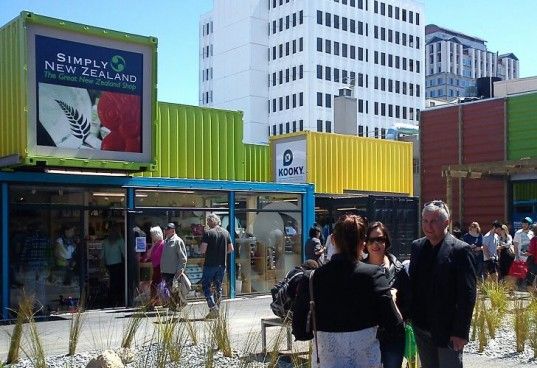
Christchurch CBD now is made of converted shipping containers.

New Years, Gunshots and Sparklers

It was only a few days ago we were glad to see the back of 2012 and celebrated the coming in of 2013, hoping it would be more prosperous, peaceful and an improvement on the past.

While we’ve been in Kenya for New Years before, it was different this time because we’re actually living here, not just visiting.

It was the first time I can say I got home sick for Sydney, for the entire day. I thought watching the fireworks online might help, but it made it worse. I missed the beach, the cafes by the beach, and being able to walk down the beach any time I wanted. I missed the conveniences of living in a first world country, like internet all of the time.

By the end of the day we had a large group of people over for a good Aussie barbeque, some fireworks and an outdoor movie (Mission Impossible 4), and the homesickness had gone.

It was interesting to hear from different people at the barbeque, from 5 different countries talking about their usual New Years Eve habits. What interested me most though was what has happened in Kenya over the last few years.

The last elections were held in 2007 and resulted in a lot of deaths, tribal fighting, destruction of homes and businesses and overall civil unrest. It all kicked off on Boxing Day. I remember being in Australia on the phone and internet for the whole day making sure my university students from here were all okay. I remember some saying that there were gunshots everywhere and they weren’t sure if their family members were even alive.

Move a few days ahead and apparently some people were letting off fireworks, the really noisy ones, which when people are already traumatised, is totally wrong. Hence, fireworks are now illegal. But, they are still sold in shops – go figure.

We had a few sparklers and even some loud fireworks which totally freaked out the little kids.

Not our Kenyan fireworks

Not our Kenyan fireworks

Kenya seems to be a country of irony. There are armed police everywhere, but their AK47’s are so old they probably wouldn’t even fire properly. In fact forty something police were killed by cattle rustlers not that long ago. If they had working guns, they would’ve had the upper hand.

People are now fined $1,000 if they don’t have a first aid kit, emergency triangle and fire extinguisher in the car. However, you can get away without your brakes, indicators or lights not working.

Guards at the malls check the boot of your car for explosives but in reality if you wanted to blow up a place you could put them under your seat.

Of course, the best one is that there are a few sets of traffic lights, but no one seems to obey them.

I’m sure the shine of a new year is fading for many already but we’ve decided to embrace all the differences of living in a new country until we can really call it ‘home’. I’ll probably watch the fireworks of Sydney online again, but by Dec 2013 I am sure that I’ll simply shrug my shoulders at any new and whacky laws that come out and simply say TIA (This Is Africa).