Swakopmund – Namibia

Ever Heard of Swakopmund? Us neither, until we started planning our trip to Namibia.

After freezing our butts off in Namibia, we were really looking forward to getting to the beach where we hoped things would warm up. Winter is a great time to visit Namibia, but we weren’t prepared for how cold it would get.

And when we got to Swakopmund, we really got a reminder of how cold, cold could be.

We drove a few hours from the capital city of Windhoek (still can’t pronounce it properly). The roads in Namibia are near to perfect but can be boringly straight. Liz can sleep anywhere and took the opportunity to catch a few zz’s.

Swakop actually has a large population of 75,000 people but it certainly didn’t feel like it. It sits on the edge of the Namib Desert and is a big tourist destination. Apparently in summer time, people come from Windhoek for their break and get the cool Atlantic breeze.

I don’t think the waters ever warm up though. Every day fog rolls in from the ocean, and this is what waters the desert, hence, how plants survive, without rainfall. When we were there, the fog never left. When we went further north, the fog lifted but sat out in the ocean.

Swakop has some great food places. We found a nice German bakery on the pier (check out the video HERE). There was a really eerie feel at the end of the pier. The waves were big and the fog thick as soup. Liz got disorientated and didn’t like it at the end of the pier.

The town is very German with street names and the buildings all giving you a feel of old Germany. People’s accents were really thick and hard to understand. Locals presumed we spoke Afrikaans because we were white.

One of the highlights was discovering a German bakery that sold gluten free bread. This has been near impossible to find. They had run out so we returned early the next morning and were successful in our quest! To have jam on toast after many months was pure delight.

Swakop has some great touristy things to do. We chose to visit the Kristall Gallerie  which has one of the largest cut gemstones and crystals in the world on show. We weren’t allowed to take photos so you’ll need to check out their website.

There’s plenty of things you can do in Swakop and it’s a great place to see the coast – if there’s no fog!
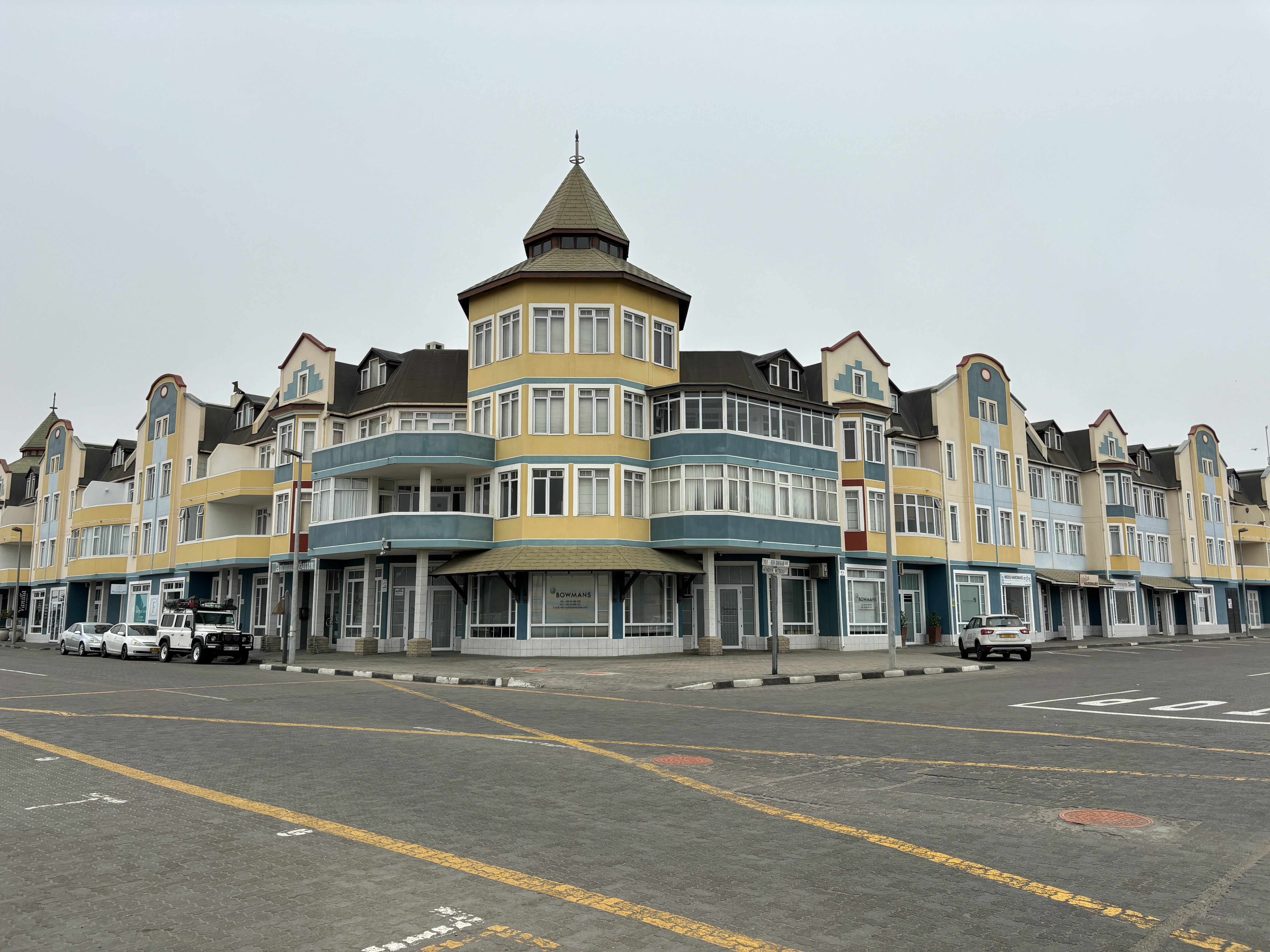
Some of the roads in Swakop are covered in sand and salt. They’d had a big sand storm a week before we arrived but they had cleaned up a lot of the sand.

The pier on the clearest day we had when we were there.
Sandboarding in Namibia

On the top of our list of things to do in Namibia was to join a tour that went had the beach on one side and the dunes on the other. We were really looking forward to it but when we looked at the bank balance, we had to be realistic.

It either was, do the tour, or eat for the next month or more.

We decided that food, fuel and housing was more important that the tour.

Yes, we were disappointed but just had to move on.

Some New Zealanders we had met a few weeks back told us about sandboarding with Alter Action. They mentioned how it was a good price ($25) and the business were really responsive. And they were.

As we were staying locally, we met Alter Action in downtown Swakopmund, which was only 5 minutes away. We went to a German bakery that sold gluten free bread as lunch was going to be provided by Alter Action.

There were two more couples to pick up and then we were on our way out to the desert. Beth, the owner, had come out from the US more than 20 years ago. She was a wealth of knowledge about the history of the place.

When we arrived at the dunes, which were only 15 minutes away, the rest of Beth’s team met us. It was simply a matter of signing a waiver and gearing up. Some of the younger people decided to go stand-up boarding but we opted for laying down on boards. Our gear was a helmet and elbow pads. Since the staff went in bare feet, Liz and Pete left their shoes behind, while Sharon kept her sneakers on.

First thing was to walk up these giant sand dunes. Liz really struggled as the sand was super soft. It was easy coming down, but then, you had to go all the way up again. Rinse and repeat.

The key to a good boarding experience is holding up the board (harder than you think) and keeping your feet up (but not too high), unless you want to slow down, then the feet come down. If you don’t hold the board up, you’ll end up eating sand – which Sharon did on the first slide.

After 5 slides down (which meant 5 walks up) it was time to join the others down at the starting point for lunch. Drinks and buns with salad was on the menu – and everyone was ravenous.

Check out the video below that Alter Action put together for us (included in our booking).

A Walk On The Wild Side

We weren’t sure if we wanted to go to the Etosha National Park as we’re surrounded in Kenya by lots of different parks. But we’re glad we did.

The drive from Grootfontein was pretty easy and only a couple of hours. We were meant to stop in at the Hobas Meteorite, but we refused to pay $60 to see a large piece of rock. Our trip budget is pretty small so we’re prioritising what we want to spend our dollars on. The night before we met some Kiwis who are taking their two kids on a 12 month trip around the world (flyingkiwis.nz). They gave us some great advice on some activities on our next few legs of Namibia.

Getting into Etosha is straightforward, you can pay everything by card. Kenya has become really complicated to enter the game parks, they need to learn from Namibia. Once in, we went to the Namutoni Campsite to set up. The place was packed and so glad we booked in early.

The campground is super flash. It has a swimming pool, restaurant, a shop, lots of bathrooms and a waterhole to watch the animals.

This is what we did at night time. You have to be totally silent, which some people were terrible at. It was so annoying when people thought that having a loud chat while we were waiting for animals to come and drink – was a good idea. By 9.30pm not a lot was happening so Liz started making her way to bed. Ten minutes later a large elephant came to the waterhole and started drinking and munching on a bush. I (Sharon) was the only one there and it was mesmerising.

The next day we drove through the park to a place called Hallali – and the roads were horrible. They were corrugated, which was really painful. Onwards we went to Okaukuejo, the next campsite we would be staying in.

Pete wasn’t impressed at all as we were given a really small piece of dirt right next to the toilets – and we had no other place to go. It actually ended up being okay and one of the best viewing places at the park. Yes, we saw animals throughout the day but it was what we saw at night that really made us want to come back.

In the park, the campsites are pretty much the same, but we felt the setup of the waterhole was WAY better than at Namutoni. You have to take our word for it and also watch the video below to see the wildlife we saw at night. We had to drag ourselves to bed at 10pm because we had a long drive the next day, and apparently when we left all the lions came to drink.

Enjoy!

Let’s Go On A Free Boat Ride

The crossing from Zambia into Namibia was the fastest ever for us – one hour in total.

In most border places, there’s plenty of people wanting to sell you a SIM card and data, but heading into Zambia, there were none. We walked into the border town but were told that the system was down. It was okay as we had the directions to our camping spot from some friends.

We were highly recommended to stop in at the Rainbow River Lodge in Divindu, Namibia. We were really looking forward to it especially since we would have two nights somewhere. It’s been a bit hard packing up every morning, do 8 hours on the road and then have to set up again – day after day.

We arrived in the dark but were given a space right by the river. The lodge has chalets as well as camping areas. There’s a restaurant onsite, but we weren’t impressed with the food choices so cooked for ourselves. There’s wifi at the restaurant and bar, which was important because we weren’t able to get a local sim card. We did go to the post office but the girl behind the desk couldn’t be bothered selling us a card as it was close to her lunch break.

Rainbow River Lodge is located on the banks of the Okavango River in the Kavango-Zambezi Region, north-eastern Namibia. The area is rich in bird life of which as many as 339 bird species has been recorded. It’s surrounded by the Buffalo and Mahango Parks, where 4 of the big five can be found (African Elephant, Cape Buffalo, African Leopard and African Lion). Less than 1 kilometre from Rainbow River Lodge Popa Falls lies, this is where the Kavango River breaks through a 4 meter high rocky entrusion, surrounded by beautiful forests.

This is where we were blessed with a complimentary boat ride from the owner. He gave us lots of insight into the history of the country as well as his journey. We spotted a good number of hippos and stopped off at the falls. When it’s the wet season you can’t see the falls at all because the river rises so much. I would’ve liked to have stayed there longer to practise with my camera but when someone gives you a free ride, you take what you can get.

Check out the video below.

Kapishya Hot Springs

We had been advised that a great place to break up the long journey through Zambia was the Kapishya Hot Springs.

One thing we’ve noticed is that you can spend many hours on the road and not get very far. Once we crossed the border at Tunduma, the road was good for about 160km’s, but after that, it was hard work. There’s endless trucks coming to and fro from the copper mines but at least they were decent drivers and kept a good speed. However, the road was riddled with potholes.

Once we left the Great North Road we hit red dust. We did wonder if we were going to find the place as some roads were blocked but people pointed us in the right direction.

Kapishya Hot Springs was a welcome relief to traveling. We wished we had booked longer than two nights. The natural hot springs are purposely kept at a shallow depth so that it is safe for children. There’s both campsites – where we stayed, and chalets. The restaurant caters for small and large numbers. There’s a cold pool and a very nice area you can have sundowners at.

Mark is the son of the original owners and even though he was raised in Zambia, sounds very British. He’s built up the business with farms, community development projects, chickens, greenhouses and fruit areas. There’s also a spa at the venue in case you want to have a good massage.

Kapishya takes credit card and also has free wifi – both a rare occurence in this part of the world. If you’re going to visit, you need to book ahead of time, and be aware, there are way easier ways to get there than what we took!

Camping in Tanzania

We are often torn between booking every step of our trip, and winging it for accommodation. We decided that doing long hours and just hoping to find somewhere to sleep wasn’t going to be a happening thing, for the first week anyway.

So, we booked into The Old Farm House in a remote area but on our route. It was way better than we anticipated. It was quiet, plenty of water, and hot showers!

As we drove in, we met some people who were from Namibia – our ultimate destination. They gave us a bottle of sand from one of their sand dunes and told us to come over later. They had some friends who were coming in later too. These two couples traveled in super flash mtoorhomes, so it was an easy setup for them.

For us, it took quite some time. This was the very first time we had done a setup and actually stayed somewhere. Admittedly, it probably took us a couple of hours to get everything where we wanted.

The facilities at The Old Farm House are fantastic. You can choose to stay in a chalet which is very nice and well setup. You can get meals there but have to prebook as they do it all from scratch. We did our own meals.

We had a great night with our friends from Namibia and learnt a lot about their homeland.

The next day – we spent a lot of time packing up (we’ll get better) and headed to our next destination.

Prep Day

The groceries have been brought. The bags have been packed. The itinerary is coming together. The Landy has been loaded. Now all we have to do is get going.

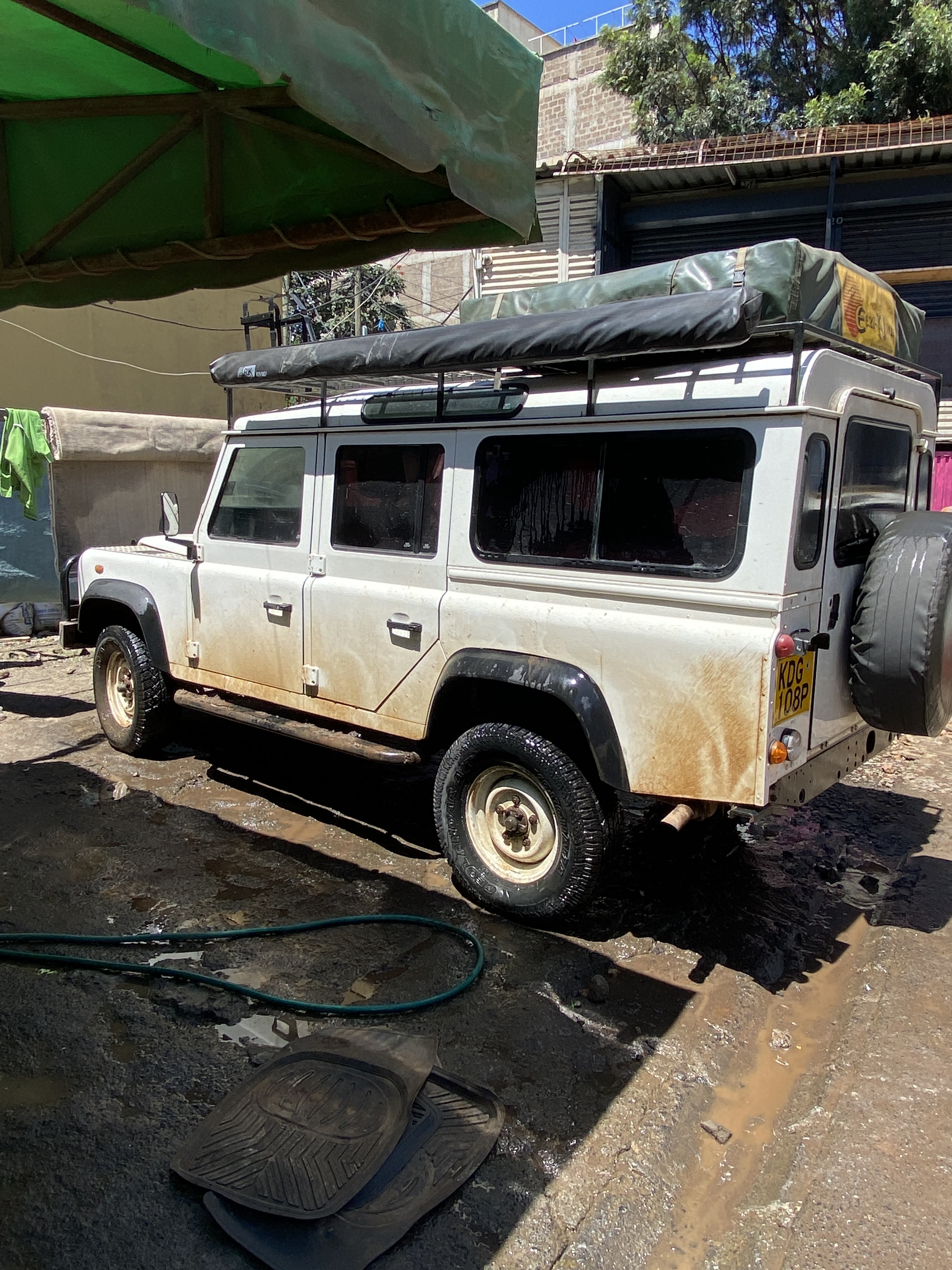
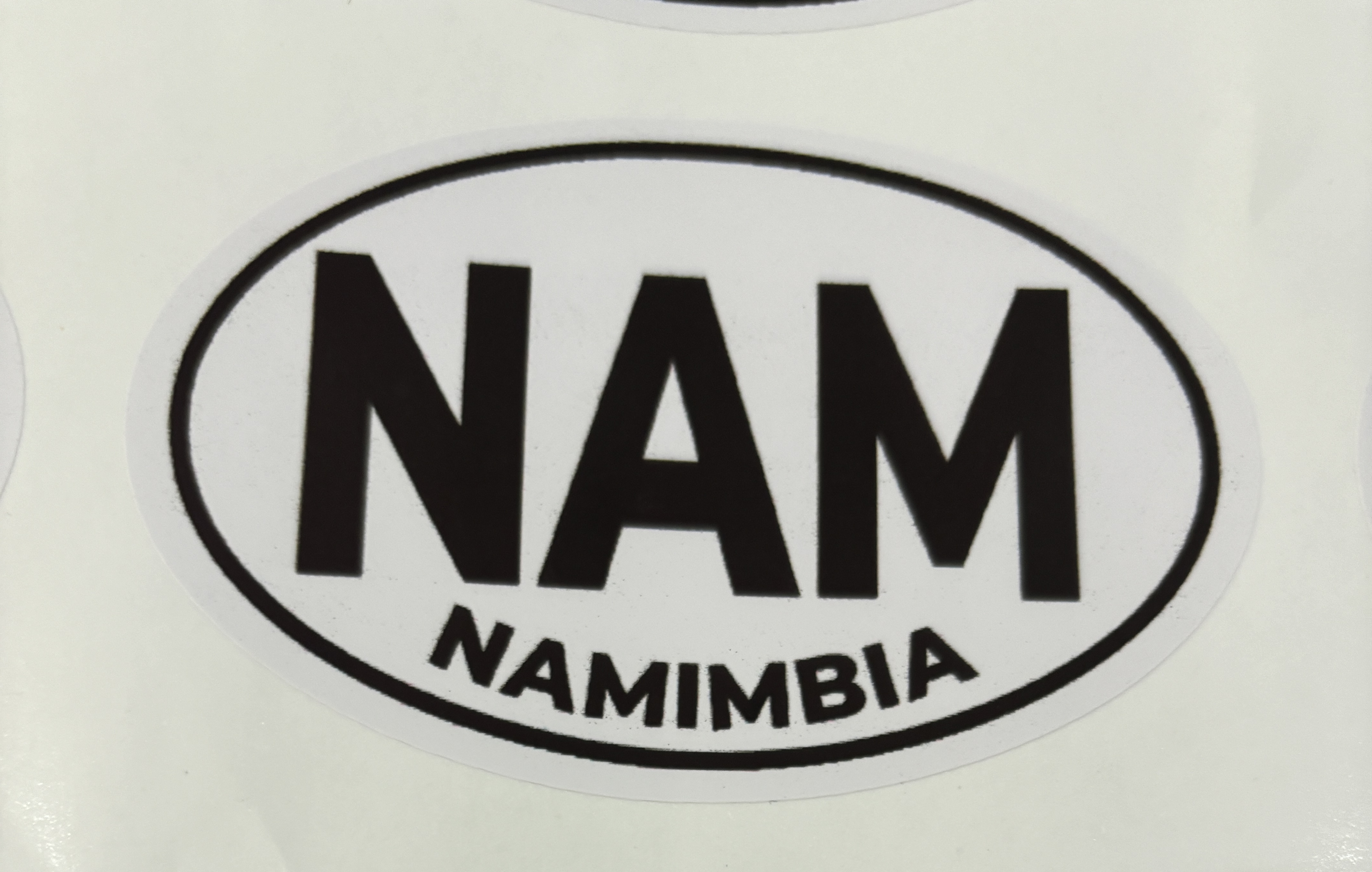
Sounds simple, but there’s no hand book that says what each country rules are. We found out just a week ago that if you don’t have a Namibia vehicle identification sticker on your car, you’ll end up getting a fine from the police. It was one of those random posts on Facebook that will save the day.

So, we downloaded some designs and sent them off to the printer. Simple instructions, print one each. A few days later we get back 5 of each sticker and two with major errors. On one of them Tanzania was places in Zambia and Namibia was spelt incorrectly. The printing company said they would redo them, but to date, still no word.

We’ll use what we can and see what we can find on the road.

Check out the video below on what else we had to do to the landy to make sure we don’t get pulled up by the police in different countries.

Do We Know What We’re Doing?

It sounds awesome to spend a few months on the road camping and seeing some of the amazing wildlife and scenery of Africa. The closer we get to going on safari (trip) the more nervous we get about making sure we’re really ready to go.

I just read about a couple who were on safari in South Africa who were in a rooftop tent and a lion came up and started making holes in their tent. When you hear of safety precautions like not visiting the toilet at night and sitting with your back to the vehicle, it makes you a bit nervous.

This week we aim to buy an air horn as apparently that will keep the lions and leopards away.

One thing we’re doing is knowing how to put up our rooftop tent properly. It’s taken a bit of practise but once it’s up it’s great. We bought it from an American missionary who had been in Djibouti for 10 years but came back to Kenya occasionally for a rest, and camping. Unfortunately he got cancer so had to spend a few years going back and forth to the US for treatment. Once he got better, he and his wife decided to return permanently to the US to take up a leadership role in a church.

We bought the tent off him and it had hardly been used.

When we went to Northern Uganda last year to build some toilets, we slept in it for a few nights. It was way more comfortable than what we anticipated. You definitely have to be careful for a midnight toilet visit. It took is a few days to realise there was another piece that attached to the ladder to make it lean on a better angle.

We haven’t slept in the tent when it is pouring down with rain, but it does have a waterproof cover on it. I guess we’ll find out very soon.

There are a couple of windows in the tent for ventilation and lots of pockets on the inside walls for putting in things such as phones.

You can hear everything from the tent, so if we’re in a campground that is noisy, we’re going to have to suck it up. I’m a light sleeper, so hear every animal moving, birds singing and people talking – even from a long distance.

Do we actually know what we’re doing? Sort of, but in the end like everything else, we’ll just have to figure it out.

Powered Up

Power cuts are not an unusual thing in Kenya.Sometimes you’ll have weeks when it’s all good, and then a week where it is off and on. The worst we’ve ever had it was 48 hours without power. Just last week the power was off for 24 hours.

The weird thing is that there are two phases on our street and our building is split by this. So, sometimes when the power is off at our apartment, the office has electricity. It’s quite handy because when the power is off for a long time, we can go over there and have a hot shower, use the internet and have dinner there.

We also have some small solar panels to charge up our phones, and of course power banks. A generous donor purchased for us a generator which is really handy when the power goes off for a long time. You can’t run computers off it because they do fluctuate in power, which isn’t good for electronics. But it’s awesome for the internet and if we use a surge protector, then we can do small items.

And of course, we have a gas BBQ and a gas oven, which is very handy in power cuts. The BBQ is on it’s last legs as it’s about 10 years old, but we make the most of it while we can.

So what happens when we go camping? Pete was a smart cookie and got power points plus USB points in the landy when he was getting it done up. We also installed a couple of extra batteries. We have a fridge/freezer in the landy but if you’re totally off grid for a while, you need something to keep it going longer.

This is where the Dune Solar Blanket came into play. We bought it when we were in Australia earlier in the year as it was one quarter of the price we would pay in Kenya. The import duties here are quite ridiculous and make things so expensive. The blanket folds up nicely and we were able to fit it into our suitcase to bring home.

We’re still trying to work out a few things on it, but so far we’ve been able to tell it takes a good 5 hours in the sun to give our batteries a full charge. It’s just a matter of putting it out in the sun, plug in the cord to the panels, the other end into the battery holder and off it goes. Apparently it should be enough to charge the laptop and cameras, which is the main reason for buying it.

Check out the video below of how quick and simple it is to set up.

Where Do You Sleep?

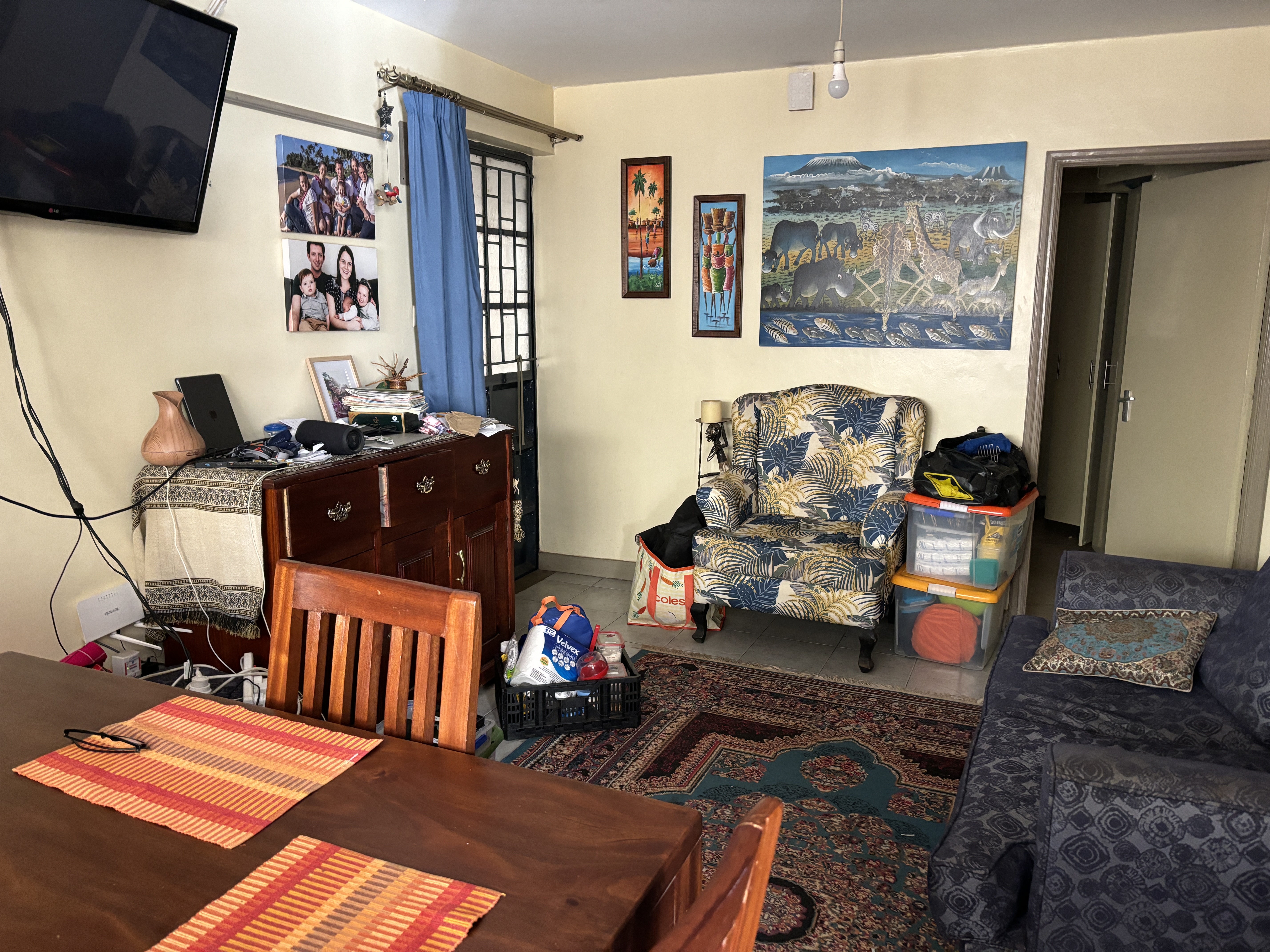
Our home is a rented two bedroom apartment in a suburb called Jamhuri in Nairobi. It’s really small but it’s affordable and across the hallway from the office. That means it’s a quick 3 second trip between the two.

The downside is that it doesn’t have a security grill, only a direct door to the hallway. If someone comes to the door, you have to ask loudly who it is. It’s a bit of a dodgy area but we actually like it. Downstairs is a open air marketplace where you can buy fruit and veges, as well as a supermarket.

Our lounge/dining area which currently has lots of camping gear ready to go.

When it comes to camping, it’s a whole other story.

We have a rooftop tent that we adults sleep in. It has a thin mattress, windows and you have to go up in it with a ladder. The downside is that if you want to go to the toilet in the middle of the night you have to go down the ladder.

Liz sleeps in a side room on the ground that comes out from the Land Rover. When we first had to put up it took a bit of working out but now it makes sense. It has sides you can let down for fresh air but keep the mossies out. Liz will have direct access to the landy at night just in case there’s a lion or leopard roaming around.

Check out our quick video of how we set up Lizzies room here.